

What to Look for When Buying a Sofa That Lasts


A sofa can look perfect on a screen and still feel wrong after it arrives. The color may shift in the room, the seat may be too deep for upright sitting, or the frame may start making noise long before anyone expects to replace it. For a family settling into a new house, a relocator furnishing several rooms, or a decorator chasing a particular look, the purchase affects daily comfort far more than a quick style decision suggests.
The right approach treats a sofa like a small piece of architecture. The room needs a suitable footprint, the frame needs a dependable foundation, the cushions need the right kind of support, and the upholstery needs to match the household's real habits. The Blushing Ivy Housewarming Guide is also a useful resource for thinking about how a living room becomes part of a welcoming home, especially when comfort and hospitality matter as much as appearance.
A careful buyer doesn't need to become a furniture engineer. A few practical checks can reveal whether a sofa is built for occasional sitting or repeated family use. By the end of this guide, shoppers will know how to measure the room, inspect construction, compare cushion materials, evaluate fabric durability, perform a proper Sit-Test, and decide between In-Stock Today convenience and a custom order.
Introduction Why Your Sofa Choice Matters More Than You Think
A family might choose a sofa after seeing a styled photograph with perfect lighting and carefully arranged pillows. At home, the same piece can dominate a narrow room, block a walkway, or feel uncomfortable because the seat depth doesn't suit the people using it. Those problems rarely appear in a product thumbnail.
Daily use exposes the difference between appearance and construction. A sofa's expected lifespan is commonly placed in the 7–15 year range for a well-made model under normal household use, while budget models often last about 3–5 years and premium, repairable pieces can reach 15–20+ years. The spread reflects the parts that shoppers can inspect, including the frame, joinery, suspension, cushion foam, and upholstery durability. Independent sofa durability guidance connects those construction choices with the length of service a buyer can reasonably expect.
The real cost of choosing by appearance
A sofa that loses its shape quickly creates more than an inconvenience. Cushion sag changes posture, worn upholstery can make a room look tired, and a frame that creaks or shifts can undermine confidence in every seat. Replacing a sofa sooner than planned also means repeating the measuring, delivery, and setup process.
The strongest buying decision starts with a simple question: How will the household use this sofa? A formal sitting room, a television room, a busy family room, and a home with pets may need different seat depths, cushion feels, fabrics, and frame specifications.
Practical rule: A sofa should suit the people, the room, and the routine before it suits the mood board.
That's why a physical Sit-Test matters. Shoppers can feel whether the support is even, see how the color responds to actual light, check the arm height, and try any reclining mechanism before committing. A large local showroom gives new homeowners the chance to furnish a whole home quickly, while custom programs give style-focused decorators room to refine the details.
How to Measure Your Space and Ensure the Perfect Fit
A sofa must fit twice. It needs to fit the room once it's placed, and it needs to fit the path from the delivery vehicle to that room. Measuring only the wall where the sofa will sit leaves out the narrow doorway, turn at the stairwell, or low ceiling that can stop a delivery.
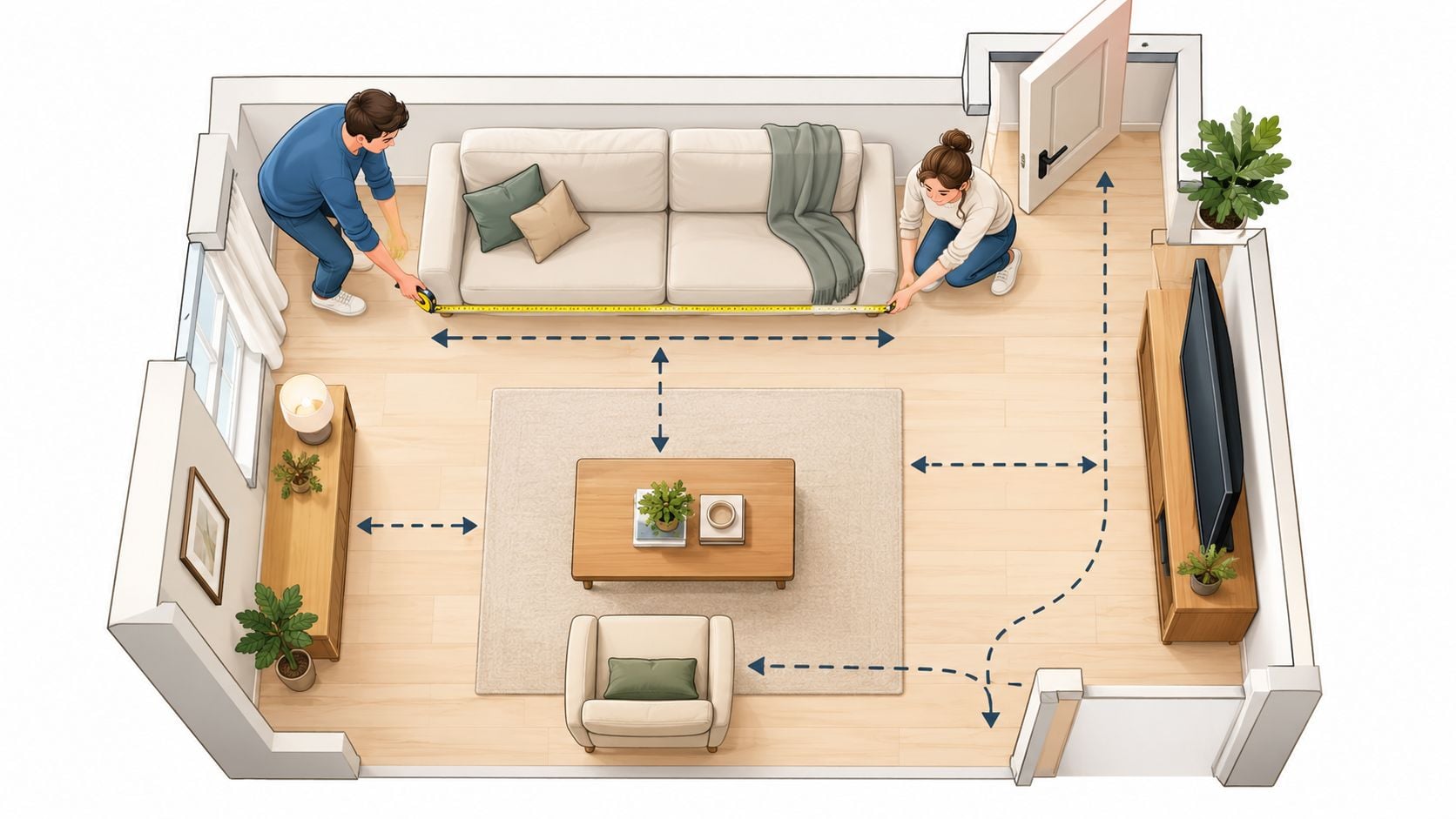
Start with the room footprint
Measure the wall length, available floor depth, and distance to nearby furniture. Record windows, doors, vents, outlets, fireplaces, and built-in shelves. A sofa's overall depth can affect circulation more than its length, particularly in a compact living room.
Mark the proposed footprint on the floor with painter's tape. This simple outline shows whether the sofa will crowd a coffee table, narrow a walkway, or leave too little space for a recliner to operate. For sectionals, tape every piece, including the chaise, because the extended portion often creates the biggest surprise.
The room measuring guide can help households organize these dimensions before visiting a showroom.
Measure the route, not just the destination
Record the width and height of:
- Entry doors: Measure the clear opening with the door open, not just the frame.
- Interior doors: Include the doorway into the living room and any hallway turns.
- Stairwells: Check width, ceiling height, landings, and railing placement.
- Elevators: Note the usable interior space and door opening where relevant.
- Tight corners: Photograph turns where a sofa may need to rotate or stand upright.
Bring the measurements, floor plan, and photos to the showroom. A salesperson can use them to identify practical shapes and flag potential access problems before purchase. Shoppers who need to furnish a whole home quickly should also ask about stock status, customer pickup, and scheduled professional delivery before choosing a model.
Match scale to the people using it
A large room can handle a deeper sofa, but the household's height and sitting habits still matter. A shorter seat depth may support upright reading, while a deeper seat can feel better for lounging. Arm height also affects whether someone can rest a shoulder or head comfortably.
A taped outline reveals scale better than imagination. The best-fitting sofa leaves enough visual breathing room around it without making the room feel unfinished, and it supports the household's normal movement instead of forcing everyone to walk around it.
Understanding Frame Construction and Suspension Systems
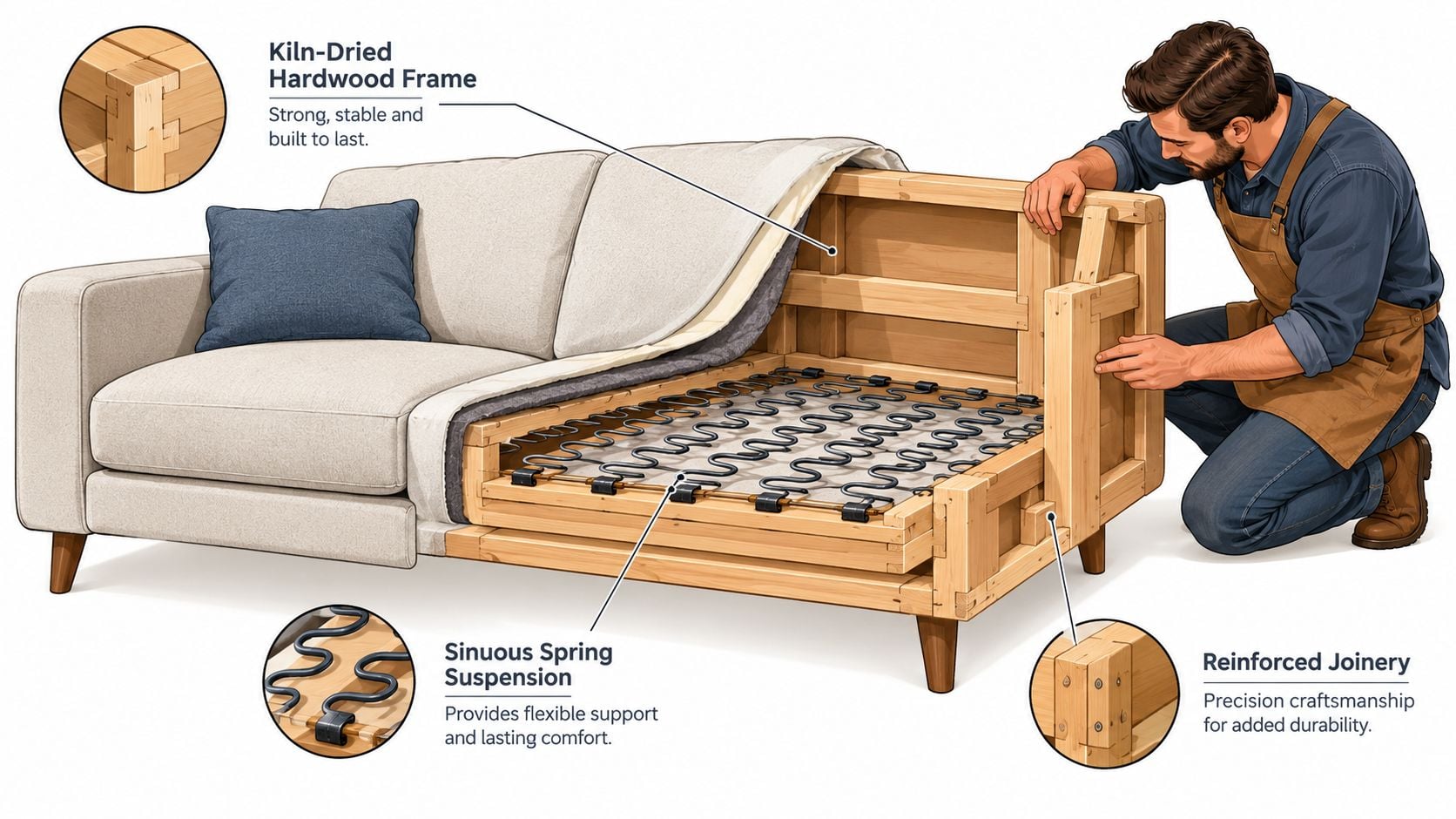
Start beneath the upholstery. A sofa may look polished while its frame twists, its joints loosen, or its support carries weight unevenly. To judge construction, ask what the frame is made from, how its joints are reinforced, and how the suspension distributes pressure under the cushions.
A kiln-dried hardwood frame provides a stable foundation because controlled drying helps reduce movement in the wood. The joinery matters just as much. Reinforced corner blocks, secure connections, and properly fastened components help the frame handle the repeated actions of sitting, standing, shifting, and reclining. Durability should also match the manufacturer's warranty terms, since those terms show which structural problems the maker is prepared to cover.
Suspension spreads the workload
Suspension sits between the frame and the cushions. Its role is to spread body weight across the seat instead of concentrating every sitting force in one small area. Uneven support can make cushions wear faster and may lead to sagging, creaks, or an unstable sensation.
Eight-way hand-tied springs are generally treated as a premium craftsmanship benchmark. The springs connect in multiple directions, creating distributed support when the work is done correctly. This construction often suits higher-end sofas where long-term resilience and the possibility of repair matter. For a closer explanation, see this eight-way hand-tied spring guide.
Sinuous springs are common in mass-market furniture, but their presence alone does not determine quality. Spring gauge, spacing, attachment, and reinforcement all affect performance. A sofa using sinuous springs can provide durable service when the frame, joints, and seat structure are properly engineered and assembled.
Use a Good-Better-Best inspection
A practical quality framework keeps one feature from deciding everything.
- Good: Sound basic construction, suitable support, and a clear warranty.
- Better: A frame, joinery, suspension system, and cushions specified for regular household use, with stronger reinforcement and longer-wearing materials.
- Best: Premium structural craftsmanship, repairable components, resilient suspension, and upholstery selected for extended service.
Ask direct questions: What wood forms the frame? How are the corners joined? Which suspension system is used? Is support reinforced beneath the seats used most often? What does the warranty cover, and for how long?
Then perform the Sit-Test. Press around the seat and back, listen for movement, and sit in several positions. Shift as you would at home. A stable frame should feel like one solid platform, not a group of parts moving separately. This quick in-store check connects construction claims with something you can verify before buying.
A firmer showroom feel alone proves little. The support beneath the cushions should remain even as you sit, shift, and stand.
Cushions and Comfort What Density and Fill Really Mean
A cushion's first impression can be misleading. Softness feels luxurious during a brief showroom visit, but the more useful question is how the cushion will respond after repeated compression. Foam density predicts durability more reliably than firmness alone, because density describes how much material is packed into the foam.
For daily-use seating, furniture guidance commonly presents about 1.8 lb/ft³ as a practical residential minimum, while 2.5–2.9 lb/ft³ is positioned as a stronger range for high-use cushions. Lower-density foam may feel comfortable at first, but it tends to soften, bottom out, and lose its shape sooner under repeated use. Cushion foam guidance explains why density is a more useful durability specification than firmness by itself.
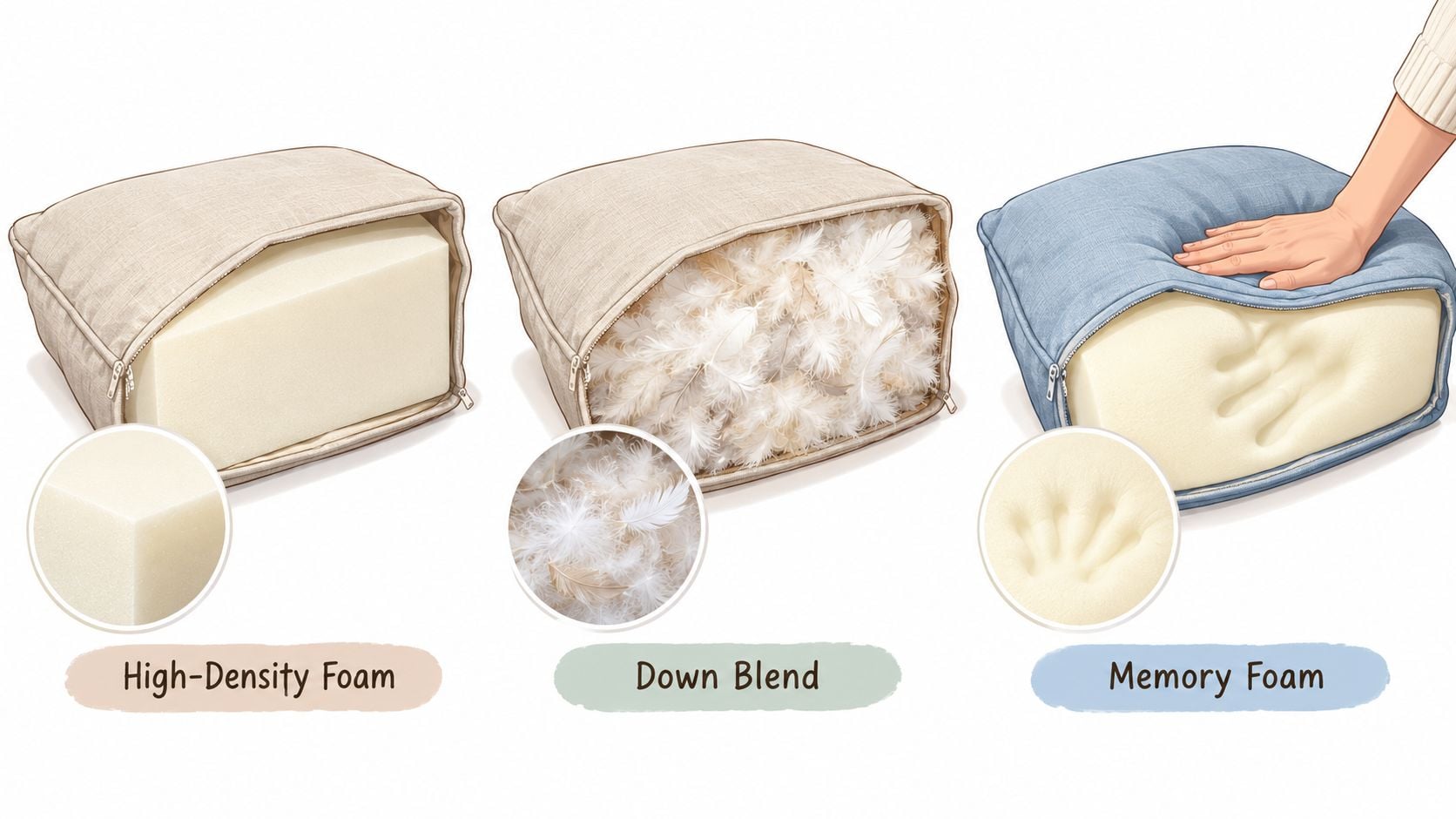
Compare the main cushion feels
High-density foam gives consistent support and tends to hold its shape well. It suits households that use the sofa every day, particularly when several people sit in the same places. A firmer foam core can also make standing easier for right-sizers and active retirees.
Foam wrapped in fiber adds a softer surface around a supportive core. This construction can provide a comfortable initial feel without relying entirely on a loose fill that needs frequent adjustment.
Down-blend cushions offer a relaxed, sink-in sensation. They can feel inviting in a formal room or lounge area, but they usually need regular fluffing to maintain an even appearance. Readers considering this feel can review the down-filled cushion guide before choosing.
Test comfort beyond the first minute
A proper Sit-Test should imitate home use. Sit upright, lean back, shift sideways, tuck in a leg, and remain seated long enough to notice pressure points. Check whether the feet rest naturally, whether the lower back receives support, and whether standing requires excessive effort.
Seat depth and back height work together. A deep seat may encourage relaxed lounging, while a shallower seat can support a straighter posture. A sofa can be well made and still be the wrong choice if its proportions don't suit the household.
Cushion construction also affects maintenance. Removable cushions can make rotation and cleaning easier, while a bench cushion avoids a center gap but concentrates wear across one continuous surface. Neither layout is universally superior. The right choice depends on whether the household values easy rearrangement, a clean look, lounging room, or individual seat support.
Choosing Fabric and Performance Options for Real Life
Fabric is the sofa's daily contact layer. It handles spills, sunlight, pet hair, and repeated movement, so the right choice follows the household's routine rather than showroom lighting. A pale decorative textile may suit a low-use room. A busy family room usually needs a tighter weave, practical finish, and care routine the household will follow.
The double rub count gives shoppers a useful comparison, much like checking a shoe's sole before buying it for daily walking. Residential upholstery commonly falls within 10,000–25,000 rubs, while more durable residential options begin at 15,000+ rubs. Commercial-grade fabrics may reach 35,000–250,000 rubs. These figures are reference points, not a complete durability promise. Weave, fiber, cushion construction, cleaning instructions, and the kind of wear in the home matter too. Sofa fabric guidance explains how to use rub counts when comparing upholstery.
Sofa Fabric Durability at a Glance
| Fabric Type | Typical Double Rubs | Best For |
|---|---|---|
| Residential upholstery | 10,000–25,000 rubs | Light to regular household use |
| Durable residential fabric | 15,000+ rubs | Living rooms with regular activity |
| Commercial-grade fabric | 35,000–250,000 rubs | Very high-use settings |
| Performance fabric | Varies by construction | Homes needing stain resistance and practical care |
Use the table as a starting point, then ask what the number measures and which cleaning methods the fabric permits. A high rub count cannot compensate for a loose weave that catches claws or a finish the household cannot maintain.
Match material to household habits
Performance fabrics can be a practical all-around option because some resist stains at the fiber level instead of depending only on a surface treatment. They can give someone more time to respond to a spill, but prompt cleanup and proper care still matter.
Wool, cotton and linen, and real leather can show different wear results. A Which? survey found wear or damage in 16% of sofas with wool, compared with 37% for cotton or linen and 40% for real leather. Its reported average sofa fabric rating was 15,000–25,000 rubs. Which? sofa fabric durability information offers that material comparison, while the table above keeps the broader rub-count benchmarks in one place.
Pets and children often call for tighter weaves, easier cleaning, and a willingness to put function ahead of delicate texture. Design flexibility can remain. Custom upholstery programs may provide hundreds of fabrics and configurations, including body cloth, pillow choices, finishes, arm styles, and leg styles, as shown by custom upholstery options.
Sectionals have more exposed surface and may receive heavier traffic. The sectional sofa fabric guide helps connect material selection with that larger seating area before you order.
Style Scale and the In Store Sit Test
Style works best when it supports the room's architecture. Track arms often create a cleaner profile, rolled arms bring a softer traditional presence, and reclining sofas prioritize function through moving components. Sectionals can define a conversation area, but their chaise orientation and overall footprint need careful planning.
Scale determines whether the sofa anchors the room or overwhelms it. A low, deep piece may feel relaxed in a large open space but visually heavy in a smaller room. A taller back and more upright posture may work better where the sofa needs to provide clear support without consuming the entire visual field.

Follow a repeatable Sit-Test
A reliable in-store test takes more than a quick perch.
- Sit naturally: Use the posture the household uses at home, whether that means sitting upright, reclining, or curling into a corner.
- Check leg position: Feet should rest comfortably rather than dangle or force the knees too high.
- Test the back: Lean fully into the cushion and notice whether the shoulders and lower back receive support.
- Change positions: Try the center, edge, and corner. Uneven support can reveal problems hidden by a single brief sit.
- Operate mechanisms: Test power recliners, reclining sofas, and lift chairs through their full comfortable range.
- Inspect color and texture: View the fabric from several angles and under the showroom's actual lighting.
A spacious local showroom can make this process easier because shoppers can compare silhouettes, cushions, reclining functions, and upholstery in one visit. Stahl Home Center operates an 88,000+ sq. ft. showroom, identifies itself as Indiana's Largest La-Z-Boy Dealer, and offers Rowe Furniture for custom style and performance. Those options support both immediate selection and a Design Your Way approach with hundreds of fabrics and configurations.
Connect the sofa to the rest of the room
Bring photos of the room and existing furniture. A sofa should relate to the rug, tables, lighting, and nearby chairs instead of looking like an isolated purchase. Wall decor matters too, and Colorado Art Services' art height tips can help homeowners position artwork so the wall and sofa feel intentionally connected.
Online browsing helps narrow preferences, but it can't reproduce the Sit-Test or show the exact color in the buyer's room. Physical validation remains especially valuable for power seating, custom fabrics, and pieces that will carry the household's daily routine.
Warranty Delivery and Bringing Your Sofa Home Today
A warranty gives shoppers a useful window into what the manufacturer is prepared to stand behind. Buyers should read coverage for the frame, springs, cushions, reclining mechanisms, and upholstery, and should ask whether labor, transportation, exclusions, and ownership conditions apply.
Before signing, record the specifications that matter most:
- Construction: Frame material, joinery, and suspension type.
- Cushions: Foam density, fill type, and maintenance expectations.
- Fabric: Double rub rating, cleaning code, and stain response.
- Fit: Room footprint, delivery path, doorways, and stairwells.
- Timing: Customer pickup, in-stock status, or scheduled professional delivery.
Thousands of items at Stahl Home Center are described as in stock and ready to take home today, which can help a relocating professional or new homeowner furnish a whole home without waiting for a custom production cycle. The selection includes sofas, sectionals, recliners in stock, power recliners, lift chairs, bedroom sets, mattresses, and other living room furniture in Bloomington. For pieces that need assistance getting into place, shoppers can review the furniture assembly and delivery service.
Care still matters after delivery. Prompt spill response and suitable cleaning methods can protect upholstery, and practical professional stain removal advice from Maid in America offers useful maintenance context.
A sofa that lasts begins with an honest match between construction, comfort, fabric, room, and timing. Shoppers who need immediate availability can select an in-stock piece for customer pickup or scheduled professional delivery. Those with a precise vision can choose custom sofas through Design Your Way, including Rowe configurations and performance fabrics.
Visit the Westside Bloomington showroom to compare construction, cushions, fabrics, recliners, and complete-room options in person. Explore the selection and services at Stahl Home Center, then choose an In-Stock Today sofa or begin a custom order that fits the household's room and routine.