
Furniture Assembly and Delivery Guide for Bloomington IN


You've found the sofa that fits your style, the power recliner that feels right the second you sit down, or the bedroom set that finally makes the new place feel finished. Then the practical question hits fast. How do you get it home, through the doorway, into the right room, and set up without turning the day into a project?
That's where good furniture assembly and delivery matters. It's not just moving a piece from one address to another. It's timing, access, handling, setup, and knowing when a fast pickup makes sense versus when professional delivery saves you trouble.
For a lot of Bloomington-area shoppers, especially relocators and right-sizers, speed matters. Recent market data points to a 28% surge in demand for “1-4 hour assembly + delivery” in major markets, and the same report says 42% of Gen X and Boomer buyers prioritize “today delivery” for quality pieces (Assemble Chicago market summary). That lines up with what people ask every day in a big showroom. They don't just want to buy well. They want the purchase to go smoothly from the sales floor to the living room.
Table of Contents
- From Our Showroom to Your Living Room
- The Stahl Difference Our In-House Experts
- Immediate Joy or Custom Design Your Choice
- What to Expect From Our Delivery and Assembly Service
- Your Pre-Delivery Preparation Checklist
- Common Questions About Furniture Delivery
- Can I get furniture the same day?
- What if my home has a tight entry?
- Do I need to clear the room completely?
- What's usually included in furniture assembly and delivery?
- Can I request an exact delivery time?
- What should I do if something doesn't look right after setup?
- Is pickup ever the better choice?
From Our Showroom to Your Living Room
A typical Saturday looks like this. A new homeowner walks through an 88,000+ sq. ft. showroom, tests a few sectionals, compares fabric by actual light instead of a phone screen, and lands on the one that feels right. The next question isn't about style anymore. It's about logistics.
There are usually two good answers.
One is In-Stock Today pickup. If you've got the vehicle, the tie-downs, and the help to move it safely, taking home a piece the same day can be the fastest path from shopping to relaxing. That option is especially appealing for recliners in stock, occasional tables, and many bedroom or living room pieces that don't need a lot of on-site setup.
The other answer is scheduled furniture assembly and delivery. That's the better fit when the item is bulky, the route into the home is tight, or you don't want to wrestle a large piece around a hallway after a long day.
Two paths that work for different buyers
| Option | Best for | Main trade-off |
|---|---|---|
| Take it home today | Fast movers, weekend furnishers, smaller or manageable pieces | You handle loading, unloading, and placement |
| Professional delivery and assembly | Large pieces, stairs, tight turns, busy households | You schedule a delivery window instead of leaving immediately |
Practical rule: The right delivery plan depends less on what you bought and more on access, weight, room placement, and how much setup the piece needs.
This is where local service matters. Big stores and online orders often leave buyers in the awkward middle. They've purchased the furniture, but the path from checkout to usable setup still feels uncertain. A simpler approach is to decide at the point of purchase whether you want immediate pickup or a scheduled team to handle the hard part.
If you're still sorting out how to choose between speed, comfort, and long-term value, this guide on shopping for furniture smartly is a useful place to start before delivery day even gets on the calendar.
The Stahl Difference Our In-House Experts
The delivery experience usually succeeds or fails long before the truck reaches your driveway. It comes down to who handled the order, who prepared the piece, and who walks it into your home.
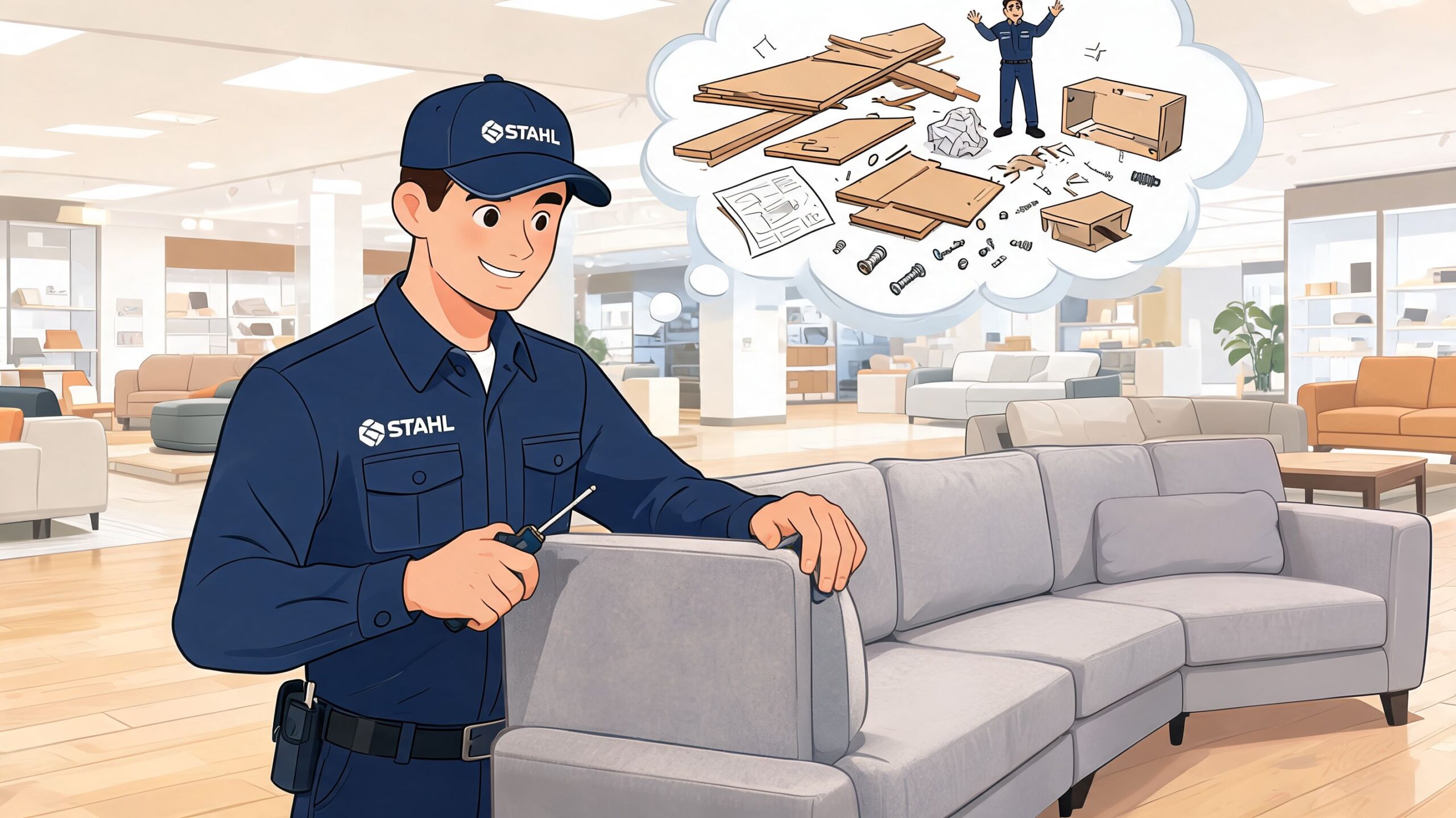
That distinction matters more now because the service category itself keeps growing. The global furniture assembly services market was valued at USD 19.8 billion in 2024 and is projected to reach USD 35 billion by 2035, driven by convenience and the growth of ready-to-assemble furniture (Wise Guy Reports furniture assembly services market). As more buyers expect setup help, trustworthy execution becomes part of the product, not an extra.
Why in-house knowledge changes the outcome
A team that works with furniture every day spots problems early. They know the difference between a simple chair setup and a more delicate install involving a power recliner, a sectional connection point, or a fabric-protected custom piece that needs careful handling at corners and thresholds.
That shows up in practical ways:
- Product familiarity matters. Teams who regularly handle La-Z-Boy Indiana favorites and Rowe Furniture pieces understand how those items are built, how they separate if needed, and where they're most vulnerable during a move.
- Room placement gets smarter. Experienced crews don't just carry and drop. They look at traffic flow, wall clearance, and how the piece will be used.
- Assembly goes cleaner. A trained installer is less likely to force hardware, scrape a finish, pinch a power cord, or leave a sectional misaligned.
The same logic that makes the in-store sit test valuable applies at delivery. You want the last step handled by people who understand the furniture, not just the route.
What buyers often underestimate
Most delivery problems come from small misses, not dramatic ones. A door swing blocks a turn. A rug bunches under a dolly. A reclining sofa gets pushed too close to the wall. None of that is unusual. It just requires people who notice details before they become damage or frustration.
That's one reason local ownership still matters. A family business that's served neighbors since 1967 has a different stake in the final experience than a handoff chain where the store, warehouse, and delivery crew all feel disconnected.
For shoppers trying to avoid common buying mistakes before they ever schedule delivery, these furniture shopping dos and don'ts help connect showroom choices to what happens in the home.
Immediate Joy or Custom Design Your Choice
Most furniture purchases fall into one of two lanes. You either want it now because the room needs to function this week, or you want it your way because details matter more than speed. Both are valid. The trouble starts when a store treats those paths like they're the same.

The in-stock path for fast move-ins
If you're furnishing a house after a move, replacing a worn-out recliner, or setting up a guest room before family arrives, speed wins. The availability of thousands of items in stock changes the conversation. Instead of choosing from a tag and waiting, you can often choose from furniture that's already available for pickup or scheduled delivery.
This route works well for:
- New homeowners and relocators who need a living room, bedroom, or mattress fast
- Second-home owners getting a place ready for use
- Multi-generational households that need practical comfort without a drawn-out process
- Shoppers who want to test living room furniture Bloomington options in person, then move quickly
The biggest benefit isn't just time. It's certainty. You know the comfort, the color, and the scale because you've already seen it on the floor.
The custom path for a specific look
Custom ordering is a different mindset. You're choosing the exact silhouette, arm style, cushion feel, fabric, and configuration that fits your room and your taste. That's where Design Your Way makes sense, especially with custom sofas, sectionals, and accent pieces from Rowe or selected La-Z-Boy options.
The process works best when expectations are clear:
| Path | Best choice when | What matters most |
|---|---|---|
| In-stock | You need furniture soon | Availability, fit, immediate comfort |
| Custom order | You want a specific design result | Fabric, configuration, finish details |
A custom buyer usually cares about things an in-stock shopper may not. Performance fabric for kids or pets. A sectional layout that suits an awkward room. A cleaner profile that works with existing case goods. Those details are worth slowing down for.
Clear timelines prevent buyer frustration
The custom side only works when the process is explained plainly. Industry data shows 35% of premium buyers abandon custom furniture orders due to unclear timelines and process (Helping Hand Assembly custom-order context). That doesn't mean buyers dislike custom. It means they dislike uncertainty.
If you're ordering custom, the smartest thing a store can do is remove mystery. People are patient when the process is clear.
That's why fabric selection, order confirmation, lead-time expectations, delivery planning, and final setup should all be explained in straightforward language. For style-focused shoppers, the extra wait can be worth it, especially when the result is a piece that fits the home instead of merely filling space.
If you're considering that route, this guide to getting started with a custom order helps you prepare for the decisions that matter most.
What to Expect From Our Delivery and Assembly Service
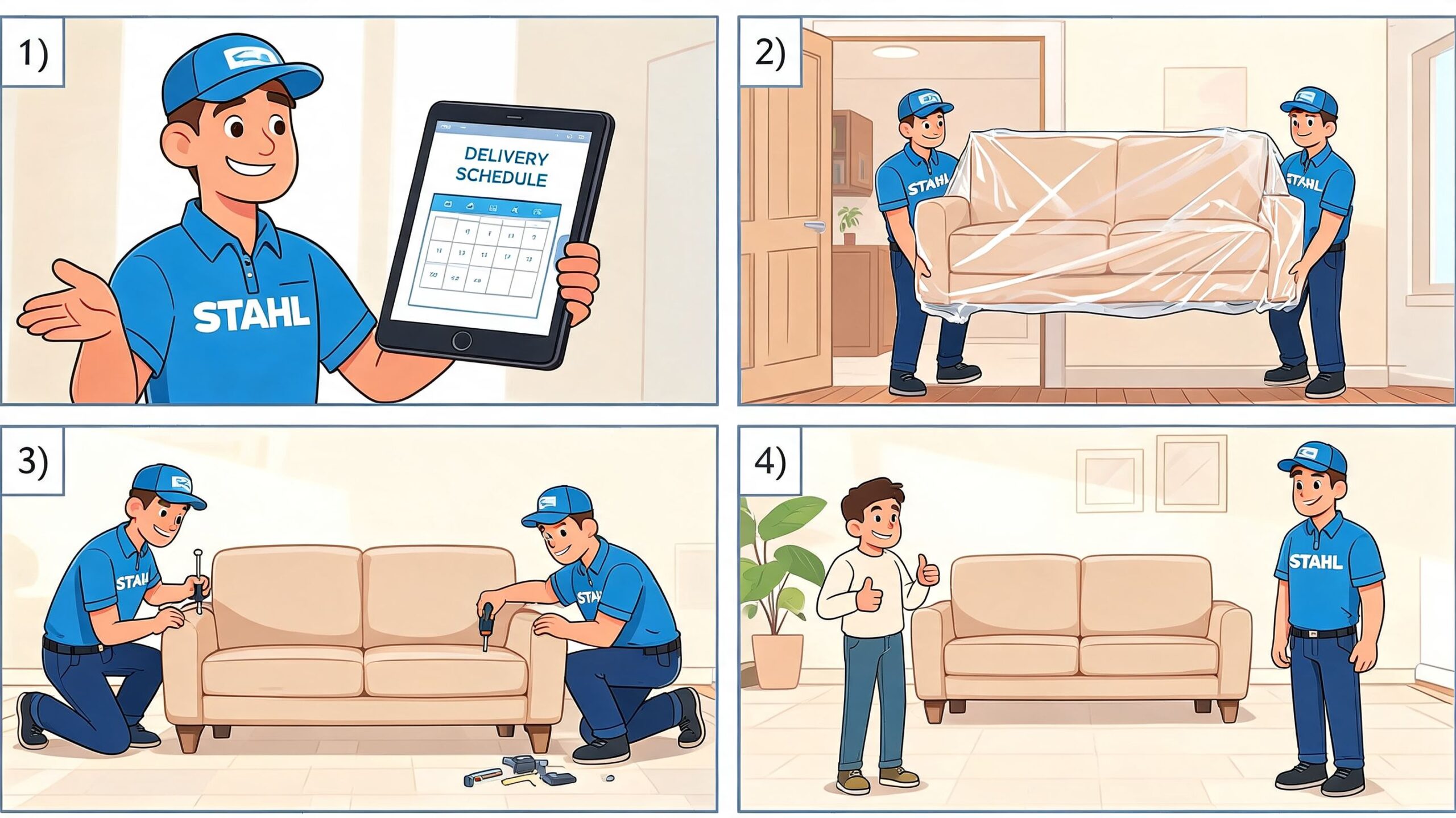
A good delivery feels organized before the truck ever pulls up. You should know who's coming, what's being delivered, and what the team will handle once the furniture is inside.
Before delivery day
Once your order is ready, the next step is setting a delivery window that fits both your schedule and the route for that day's stops. For the crew, timing is tied to more than distance. Piece size, access conditions, and any assembly work all affect how the day is planned.
Share the details that change the job. Front steps with a tight turn. An apartment elevator with reserved hours. A back entry that works better than the front door. Upstairs placement for a bed or office setup. Those details help the team arrive prepared with the right plan instead of figuring it out in your hallway.
For homes with delicate surfaces, it also helps to review a few basics on how to protect your floors from your furniture before delivery day.
What happens when the team arrives
The first few minutes matter. A careful crew confirms the path, checks the destination room, and makes sure placement is right before assembly begins. That avoids unnecessary shifting once heavy pieces are in place.
Typical service includes:
- Careful transport into the home using the agreed entry path and destination room
- Room-of-choice placement so large items go where they belong, not just inside the front door
- Assembly of qualifying items such as many bed frames, dining sets, sectionals, and selected motion furniture
- Positioning and basic alignment so the furniture sits correctly in the room
- Packaging removal so boxes, wrap, and protective inserts do not stay piled in your space
Good crews also ask practical questions while they work. Which side should the chaise face? How much clearance does the recliner need to open fully? Do you want the dresser centered on that wall or shifted for lamp access? Those small decisions save a lot of repositioning later.
Assembly that protects the product
Proper assembly is part mechanics, part finish protection. Hardware needs to be tightened correctly, connections need to seat fully, and power components need to be tested before the crew leaves. That matters even more with adjustable bases, power reclining furniture, and modular pieces that must lock together cleanly.
Local service makes a significant difference here. The same team that handles delivery and setup knows the product, the common fit issues, and the small adjustments that make a room work better on day one.
A well-run delivery is calm, careful, and clear. You should not have to supervise every step or deal with cleanup after the crew leaves.
After placement and cleanup
Before the team heads out, sit in the piece, check the orientation, and test any moving parts. Open drawers. Run the recliner. Confirm the sectional layout. It is much easier to correct a small placement issue while the crew is still there.
A few quick follow-ups help after delivery:
- Let rugs and floor protectors settle if anything was shifted during placement.
- Keep warranty and care paperwork in one spot.
- Recheck pads or guards under heavy furniture if you plan to rotate or slide it later.
Your Pre-Delivery Preparation Checklist
Delivery day goes much better when the route is measured and the room is ready before the truck arrives. The pieces that cause delays are usually the ones that fit on paper but not through a tight turn, stair landing, or elevator opening.

Start with the furniture dimensions, but do not stop there. Measure the item at its tallest, deepest, and widest points, including arms, backs, and any curves that change how it travels. Then measure the full path into the home. Front door, storm door, hallway width, stair turns, ceiling height, and elevator interior all matter. A piece can fit the room perfectly and still stop at the first sharp corner.
Measure the route, not just the room
This is the part buyers skip most often. In our work, the trouble spot is rarely the long straight run. It is the turn into a hallway, the top of the stairs, or the angle at the front entry.
Use this checklist before delivery day:
- Start outside: Check gate openings, porch space, railings, and any steps that reduce the carrying angle.
- Measure the actual doorway opening: Open the door fully and measure the usable clearance, not just the frame.
- Walk the inside path: Look for tight turns, low fixtures, trim, wall art, and anything that narrows the route.
- Check stairs carefully: Measure width, headroom, and landing space where the piece has to pivot.
- Measure the elevator interior: In apartments and condos, elevator depth and diagonal clearance often decide whether a piece can go up assembled.
Large furniture usually gets stuck at the turn, not in the middle of the hallway.
Prepare the room so the crew can work safely
Once the furniture is inside, the team needs enough open floor space to unpack parts, protect the finish, and assemble the piece without bumping walls or décor. Crowded rooms slow the job and create avoidable risk.
Clear the work area before the delivery window:
- Move small items first: Accent tables, lamps, baskets, ottomans, and floor plants are easy to relocate and free up useful space.
- Roll back or secure rugs: Loose rug edges and pads can shift underfoot while the crew is carrying weight.
- Keep children and pets out of the path: Fewer interruptions make the carry-in safer and faster.
- Open the final placement area: Remove wall décor or tall accessories near the spot where the piece needs to be turned and set.
If you are unsure how to measure a tight entry or stair turn, this guide on how to measure furniture for delivery walks through the process clearly.
Share access details before the truck arrives
A smooth handoff starts with good information. Tell the store or delivery team about gate codes, parking limits, service elevator rules, loading dock instructions, or neighborhood access restrictions ahead of time. That gives the local crew a fair shot at getting the piece from the showroom into your home, often the same day for in-stock items, without last-minute scrambling at the curb.
Common Questions About Furniture Delivery
A delivery usually goes smoothly when the questions get answered before the truck leaves the showroom. These are the ones we hear most from Bloomington-area customers buying from our floor.
Can I get furniture the same day?
Yes, sometimes. In-stock pieces can often move fast, especially when the order is simple and the schedule has room.
Pickup is usually the quickest option if the item fits your vehicle and you have enough help to load, protect, and carry it safely. Delivery timing depends on route availability, crew capacity, and how much setup the piece needs once it arrives. A boxed nightstand is different from a power reclining sectional that has to be brought in, assembled, tested, and placed correctly.
What if my home has a tight entry?
Tell the team early. A narrow front door, steep stair run, condo elevator, or sharp turn near the final room can change how we plan the stop.
Some pieces are forgiving. Others are not. Sectionals, sleeper sofas, lift chairs, and deep-seat living room furniture often need more clearance and more careful handling than they appear to need on the sales floor. Good measurements and honest access details save time and prevent the classic problem of a piece reaching the house but not the room.
Do I need to clear the room completely?
No. The crew does need enough open space to bring the furniture in, set parts down safely, and complete any assembly without working around lamps, baskets, or accent tables.
A good rule is simple. Clear more space than you think the piece needs. That gives the team room to protect the finish, attach backs or legs, connect power components, and position the item without scraping walls or crowding existing furniture.
What's usually included in furniture assembly and delivery?
For qualifying items, professional service usually covers carry-in, placement in the room you choose, basic assembly, and removal of packaging. The exact scope depends on the item.
Dining sets, bed frames, motion furniture, and large entertainment pieces do not all require the same amount of labor. If you want old furniture moved, a mattress set installed a certain way, or packaging left behind for any reason, ask before delivery day so the crew can plan for it.
Can I request an exact delivery time?
A delivery window is more realistic than an exact minute. Road conditions, previous stops, traffic, weather, and the amount of work at each home can shift the route.
Good local teams usually give you a window and update you if the schedule changes. That approach keeps expectations clear and makes the day easier for everyone involved.
What should I do if something doesn't look right after setup?
Check the piece before the crew leaves when you can. Sit on it. Open the drawers. Test the recline function. Make sure the placement is right and the item looks as expected under your lighting, not just in the showroom.
If something is off, say it right away. Small adjustments are easiest to handle while the team is still in the house. If you notice an issue later, call the store promptly and explain exactly what you are seeing.
Is pickup ever the better choice?
Yes. Pickup makes sense for smaller, manageable items, short drives, and homes with easy access.
Delivery is usually the better choice for heavy case goods, large sofas, adjustable bases, upstairs placements, or anything that needs assembly. For many customers, the trade-off comes down to speed versus effort. Pickup can be faster. Delivery removes the lifting, the risk, and the guesswork.
Visit Stahl Home Center to see the 88,000+ sq. ft. Westside Bloomington showroom in person. If you're shopping for living room furniture Bloomington, recliners in stock, custom sofas, power recliners, lift chairs, bedroom sets, or mattresses, you can compare comfort, color, and scale firsthand, then choose the pickup or scheduled professional delivery option that fits your home.