

Rowe Furniture Fabric Options Made Simple

A living room can look perfect on a fabric card and still feel wrong after a few weeks at home. A pale textured sofa may suit a new Bloomington living room beautifully, but children, pets, direct sunlight, reclining friction, and everyday spills can change which Rowe furniture fabric options make practical sense. The right choice begins with the household, not the color name.
That's where a local showroom adds value. Stahl Home Center combines an 88,000+ sq. ft. showroom, thousands of items In-Stock Today, and Rowe custom style and performance. As Indiana's Largest La-Z-Boy Dealer, Stahl also offers recliners in stock, power recliners, lift chairs, custom sofas, bedroom sets, mattresses, and living room furniture Bloomington shoppers can experience in person.
Why Rowe Fabric Choice Matters More Than Color
A homeowner furnishing a new room often starts with a color. A warm gray seems versatile, a cream looks refined, and a deep blue feels dramatic. Then the practical questions arrive: Will the fabric handle a dog jumping onto the sofa? Will sunlight wash out the seat near the window? Will a sectional used every evening develop pills or show flattened cushions?
Two Rowe sofas with the same frame and configuration can have very different lives because upholstery affects hand feel, cleanability, visual texture, and resistance to daily wear. A formal sitting room may suit a delicate-feeling textile that receives occasional use. A family-room sectional needs a fabric selected around friction, spills, sunlight, and the way people sit.
Start with the room, not the swatch
Before choosing a color, a shopper should identify the room's demands:
- Daily traffic: Is the piece used for quiet reading, family television, entertaining, or frequent reclining?
- Household activity: Children, pets, caregivers, and frequent guests all change the care standard.
- Light exposure: A sofa beside a bright window needs attention to fading, not only abrasion.
- Comfort preference: Smooth, nubby, soft, crisp, and substantial fabrics create different tactile experiences.
- Maintenance tolerance: Some households want straightforward spot care, while others accept more delicate routines for a particular look.
Rowe's made-to-order approach connects the fabric to the selected frame, size, cushions, and configuration. The company says most of its furniture can be customized in more than 1,000 fabrics, covering different colors, patterns, textures, and performance characteristics according to Rowe's company information. That breadth is useful, but it can also overwhelm shoppers who haven't narrowed the lifestyle requirements first.
Practical rule: Choose the performance requirements before choosing the color family. A beautiful swatch that doesn't suit the room will become a daily compromise.
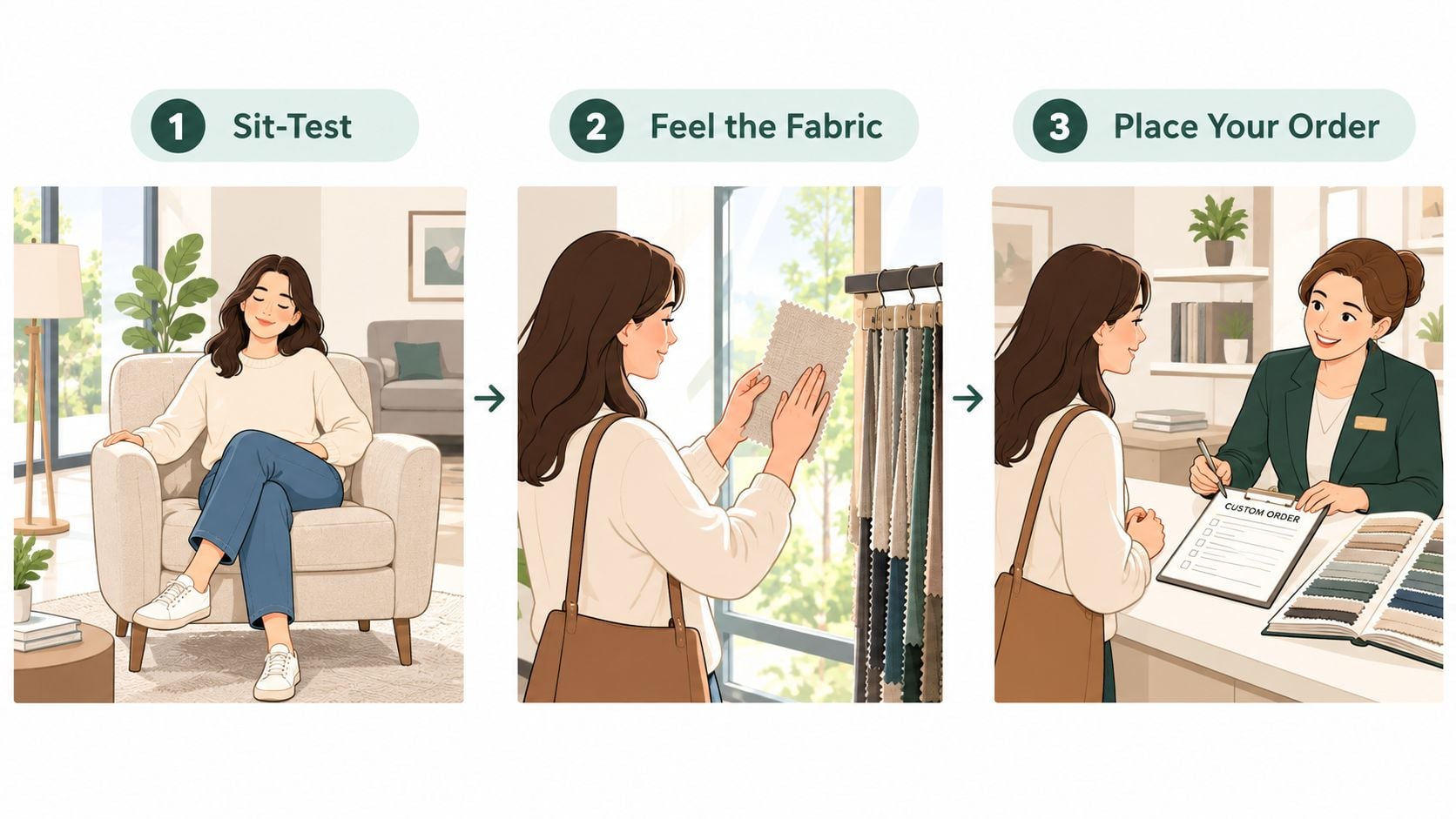
At Stahl's Westside Bloomington showroom, the Sit-Test helps solve a problem online shopping can't: fabric and comfort look different in person than they do on a screen. A shopper can feel the texture, compare the true color under showroom lighting, test the seat depth, and decide whether a Rowe piece fits the way the household lives.
For a relocator, that may mean furnishing a whole home this weekend with in-stock pieces. For a style-focused decorator, it may mean taking time to build a custom sofa around a specific textile. Both paths begin with the same question: what must the upholstery do every day?
Understanding Rowe Fabric Families and Textures
Rowe's large assortment becomes easier to manage when shoppers sort fabrics into broad families before comparing individual colors. The aim isn't to memorize every textile. It's to identify the feel, visual character, and care direction that fit the room.
A practical starting point includes performance fabrics, natural fibers, and blended upholstery. Each family can include different weaves, finishes, and ratings, so the category is a screening tool rather than a final verdict.
Three useful starting groups
Performance fabrics are designed around practical household demands. They may offer resistance to stains, moisture, odors, or repeated contact, but those properties aren't interchangeable. A fabric can be abrasion-resistant without being highly fade-resistant, and a textile that handles a spill well may still require careful cleaning.
Natural fibers often appeal to shoppers who value breathable softness, organic variation, and a relaxed appearance. Cotton and linen-inspired textures can bring warmth to a room, though the exact fiber content, construction, finish, and performance rating matter more than a broad label. A natural-looking fabric isn't automatically fragile, but it may require more careful matching to the room.
Blends combine fibers to balance appearance, touch, and practical use. A blend can offer visual depth and a softer hand while supporting easier care than a single delicate fiber. The only reliable way to judge a particular Rowe option is to request its exact content and performance information.
Texture deserves equal attention. Textured neutrals can add depth without dominating a contemporary room, while patterned upholstery can turn a chair or sofa into the room's focal point. Smooth surfaces reveal color clearly, velvet-like textures change appearance with direction, and nubby or woven surfaces create shadow and dimension.
For shoppers who want a plain-language introduction to how weave and fiber affect upholstery, the B-Sew Inn fabric guide offers useful background. Stahl's upholstery materials guide can also help organize the vocabulary before a showroom visit.
Narrow the assortment before judging details
A good showroom process starts with two or three fabric families, not a table covered in every swatch. A decorator might begin with textured neutrals, a busy household might start with performance weaves, and a formal room might begin with natural or richly colored textiles.
Then the shortlist can be tested against the sofa's size and shape. A small geometric pattern may read differently on a compact chair than on a broad sectional. A heavily textured fabric may emphasize the scale of a large piece, while a quiet solid can let the frame silhouette lead.
That first narrowing step makes the 1,000-plus-fabric benchmark useful rather than intimidating. The selection becomes a design system that connects appearance, comfort, configuration, and household needs.
Performance Natural and Blended Upholstery Compared
The three broad fabric families answer different priorities. Performance upholstery generally starts with practical care, natural fibers start with feel and character, and blends aim for balance. None is automatically the right choice for every Rowe sofa.
A family-room sectional used every day needs a different screening process from a decorative chair in a room reserved for guests. A style-focused decorator may prioritize a particular weave and accept a more deliberate care routine. A new homeowner may choose one fabric direction for immediate seating and another for a future custom order.
A quick comparison
| Fabric Family | Best For | Feel and Look | Upkeep Note |
|---|---|---|---|
| Performance | Busy households, pets, children, and frequent guests | Often available in soft, textured, or tailored looks rather than only utilitarian surfaces | Check the exact cleaning code, stain guidance, abrasion result, and treatment information |
| Natural | Formal rooms, relaxed interiors, and shoppers drawn to breathable softness | Organic variation, tactile warmth, and a more collected appearance | Match the textile to traffic, sunlight, and willingness to follow careful care instructions |
| Blended | Homes seeking a middle ground between character and everyday practicality | Can combine visual depth, comfort, and a broad range of textures | Fiber content and testing determine the actual care profile |
The word performance needs careful interpretation. Stain resistance, liquid repellency, abrasion resistance, UV stability, odor control, and cleanability describe separate qualities. A shopper should ask for the specific properties of the selected fabric rather than assuming one promise covers everything.
Natural fabrics can be appealing in rooms where touch and atmosphere matter most. A softly textured chair in a reading area doesn't face the same pressure as a family sectional used for meals, naps, and reclining. A lighter-duty textile may be a sensible value choice when the room's traffic is light, while a harder-working upholstery specification can make more sense for the household's main seating.
Blends often suit shoppers who want a custom room without giving up practical flexibility. They can support textured neutrals, subtle patterns, or richer colors, but their behavior depends on construction and fiber mix. A swatch deserves both a visual review and a performance conversation.
A softer performance direction
Rowe's Crypton Home Recycled Cotton is described as combining at least 50% recycled cotton with stain- and odor-resistant performance technology and GREENGUARD Gold certification as described by Rowe's material information. It offers a softer, textured direction for households that want practical upholstery without a strictly utilitarian appearance.
That option illustrates an important point: performance doesn't have to mean a stiff or visually plain surface. The hand feel, pattern scale, and weave still matter because a sofa is a tactile object as much as a protective shell.
For a more detailed look at practical upholstery choices, Stahl's guide to a performance fabric sofa can help shoppers prepare questions. The final shortlist should include the fabric family, the exact colorway, the cleaning code, and the performance details that match the room.
How Durability Ratings Guide Everyday Choices
A rub count is useful, but it isn't a promise that a sofa will last for a particular number of years. It measures resistance to a specific kind of repeated friction, and different testing methods produce values that shouldn't be compared casually.
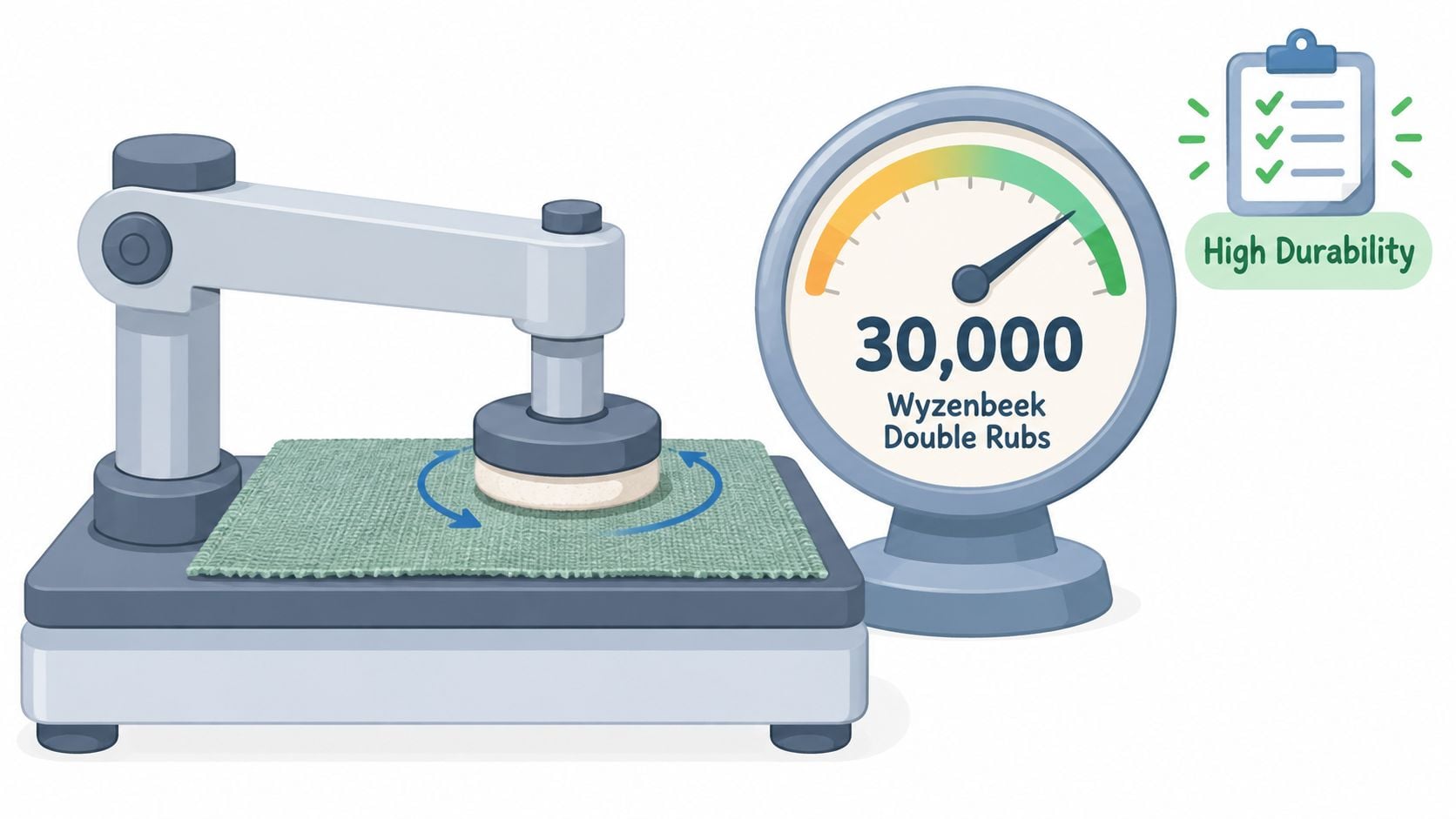
The Wyzenbeek method reports abrasion in double rubs. One double rub represents a complete back-and-forth movement of the testing material across the fabric. The Martindale method reports circular rubbing cycles, so a Wyzenbeek result and a Martindale result are not directly interchangeable.
Read the number in context
General residential upholstery commonly falls between 10,000 and 25,000 Wyzenbeek double rubs, while 12,000 to 20,000 double rubs is described as adequate for many ordinary residential applications in upholstery testing guidance. That range can suit many chairs, sofas, and occasional-use pieces, but the right result depends on the room.
Independent textile guidance places residential upholstery broadly in the 15,000-to-30,000 abrasion-resistance range, while heavy-duty commercial or public seating commonly reaches 30,000 to 50,000 or more according to textile performance guidance. These benchmarks help a household match the specification to traffic instead of choosing the largest number automatically.
A practical room-by-room reading looks like this:
- Formal chair: A fabric near the lower end of residential guidance may be reasonable when contact is occasional and the chair isn't exposed to pets or constant friction.
- Everyday sofa: A mid-range residential result can be a sensible starting point, followed by questions about cleaning, fading, pilling, and cushion use.
- Family-room sectional: A documented heavy-use rating deserves attention when children, pets, reclining, and frequent guests create repeated contact.
A separate industry reference describes heavy-duty performance around 30,000 Wyzenbeek double rubs or 40,000 Martindale cycles, while noting that everyday residential seating may require less in upholstery specification guidance. Because testing can vary by specimen, backing, pressure, and endpoint, the method and exact result matter together.
Ask for the full swatch record
Abrasion is only one screening metric. It doesn't measure stain resistance, fading, pilling, softness, or cleanability. A high rub count can coexist with fading beside a window or surface pills caused by fiber migration.
At the showroom, a shopper should ask for:
- The abrasion method and result.
- The fiber content and fabric construction.
- The cleaning code and approved products.
- Lightfastness and pilling information where available.
- Warranty limitations and household-use restrictions.
A guide to choosing upholstery fabric for a sofa can help organize those questions before a custom order. The best rating is the one that fits the room without overspecifying a lightly used piece or under-specifying the home's main seating.
Cleaning Codes Sunlight and Pilling Explained Simply
A fabric can survive repeated rubbing and still disappoint if it fades, pills, or reacts badly to an improvised cleaner. Cleanability, lightfastness, and pilling are separate performance jobs, so each deserves its own question at the swatch stage.
Cleaning begins with the manufacturer's code for the specific fabric. The word “performance” doesn't tell a homeowner which solution to use, whether water is appropriate, or how repeated cleaning may affect texture. A spill response should follow the approved instructions for that fabric rather than a generic household remedy.
A calm response to spills
The safest first move is usually to remove excess material and blot instead of rubbing, then consult the fabric's care code. Rubbing can push a spill deeper into the weave or create a visible change in the surface direction. Allergy-conscious buyers, caregivers, and multi-generational households should keep the cleaning instructions accessible rather than relying on memory.
“Easy-clean” can describe different constructions and treatments. It doesn't automatically mean removable upholstery, washable covers, or unlimited scrubbing. Buyers should ask whether the specific Rowe fabric is wipe-clean, what products are approved, how repeated cleaning affects the hand, and whether odor resistance is part of the documented performance.
Chemical treatment also deserves a direct question. Several U.S. states began restricting intentionally added PFAS in upholstered-furniture textiles from January 2025, and Minnesota rules are cited as including a 100-ppm total-organic-fluorine threshold for new textile articles in current material-sustainability guidance. A shopper asking whether a selected Rowe fabric is PFAS-free should request current documentation rather than infer the answer from “stain resistant.”
Check the room's light and friction
Lightfastness is commonly graded from 1 to 8, with 8 representing the strongest resistance to fading. Synthetic fibers such as polyester and acrylic generally provide higher lightfastness than cotton or nylon, although the dye, construction, and finish still affect the result as explained in upholstery care guidance.
Pilling is commonly graded from 1 to 5, with 5 best. Pills form when loose fibers migrate and entangle on the surface through repeated contact. A practical target for heavily used seating is a pilling grade of at least 4, while a lower grade may be acceptable in an occasional-use or formal room.
For a bright Bloomington room, UV-filtering window treatments can reduce exposure. Cushion rotation, where the design permits it, can distribute contact more evenly. These simple habits won't replace suitable fabric selection, but they can help preserve the appearance of a custom order. Stahl's performance-fabric cleaning guide provides a useful care reference before a shopper selects a textile.
Design Your Way From Sit Test to Custom Order
Custom selection works best as a clear process rather than a long afternoon of random swatch handling. A shopper who knows the room's traffic, light, cleaning expectations, and comfort preference can move through Rowe's broad assortment with much less guesswork.
Begin with the Sit-Test
The first step is physical. A shopper should sit in the actual frame or a closely related piece, test the seat depth, check the back support, operate any reclining feature, and examine how the fabric looks across the furniture rather than only in a small square.
Color also needs a real-room perspective. A swatch that looks cool under showroom lighting may appear warmer beside a Bloomington window or next to existing flooring. Borrowing or ordering swatches for home review helps the household compare the textile with paint, rugs, wood tones, and natural light.
Separate immediate needs from custom plans
Stahl keeps thousands of items in stock and ready to take home today, which matters to new homeowners, relocators, and anyone trying to furnish a whole home this weekend. Available living room furniture, bedroom sets, mattresses, recliners in stock, and other pieces can be evaluated through the Sit-Test without turning every room into a long planning project.
A custom Rowe order serves a different need. It allows a shopper to choose from hundreds of fabrics and configurations, adjust the look around a particular room, and prioritize a specific sectional layout, sofa scale, or performance profile. Custom planning requires patience because the selected fabric must be matched to the frame, dimensions, cushions, and configuration before production.
Stahl's custom furniture made-to-order service supports that Design Your Way process. The showroom can also help a shopper compare customer pickup with Scheduled professional delivery, without promising a delivery window before the actual order details are confirmed.
Bring a short checklist
A useful showroom visit includes:
- Room measurements: Doorways, stairways, wall length, and walking paths.
- Household details: Pets, children, caregivers, guests, and reclining frequency.
- Light conditions: Window location, direct sun, and existing window treatments.
- Fabric questions: Fiber content, cleaning code, abrasion method, pilling, lightfastness, and treatment documentation.
- Timing preference: Take it home today or plan a custom order around a specific design.
That process gives a relocator speed without sacrificing comfort and gives a decorator the control needed for a specific room.
Choose the Right Rowe Fabric for Your Lifestyle
The most useful Rowe fabric decision isn't the one with the most impressive-sounding label. It's the option that fits the household's traffic, care habits, sunlight, tactile preferences, and timetable.
Busy families with pets should start with documented cleanability, a suitable abrasion result, and a pilling grade appropriate for frequent contact. A textured performance fabric may provide the desired warmth without forcing the room into a strictly utilitarian look. The care code still matters after the purchase.
Quality seekers can use a Good-Better-Best approach. A formal chair may need a different specification from an everyday sofa, while the main family sectional deserves closer attention to heavy-use testing, seams, cushions, and cleaning instructions. Upholstery guidance places residential choices broadly within the 15,000-to-30,000 abrasion-resistance range, while heavy-duty seating commonly reaches 30,000 to 50,000 or more according to independent textile guidance. The higher figure isn't automatically better for every room.
Style-focused decorators can begin with pattern scale, texture, and color relationship, then verify performance. Rowe's made-to-order assortment supports custom sofas, sectionals, chairs, and other upholstered pieces in more than 1,000 fabrics as stated by Rowe. That makes it possible to pursue a distinctive look while still asking disciplined questions about use and care.
Relocators and right-sizers may prefer a two-part strategy. Select an in-stock piece that can be tested and taken home today, then use Design Your Way for a later room where scale, comfort, and fabric need more planning. Stahl has served Bloomington as a family-owned business since 1967, combining local service with an 88,000+ sq. ft. showroom and a broad selection across the home.
For shoppers searching for a Furniture store Bloomington IN, La-Z-Boy Indiana, or living room furniture Bloomington, the practical advantage is being able to compare immediate availability with custom ordering in one visit. The same showroom supports the Sit-Test for ready-to-take-home furniture and fabric planning for Rowe custom style.
Visit our Westside Bloomington showroom today to see our massive selection in person.
Stahl Home Center offers Rowe custom fabrics and configurations alongside thousands of in-stock furnishings, including recliners, living room pieces, bedroom sets, and mattresses. Visit Stahl Home Center to feel the fabrics, test the comfort, compare ready-to-take-home options, and start a Rowe Design Your Way order with practical guidance.