

Custom Furniture Design Explained from Idea to Home


A homeowner finds the right sofa, then notices the fabric clashes with the room, the standard depth crowds the walkway, and the sectional configuration leaves the television in an awkward spot. The piece looks good on a showroom floor, but a home has different rules. Doors, windows, pets, children, mobility needs, lighting, and daily routines all affect whether furniture feels right after delivery.
That's why custom furniture design now sits between two practical choices. A buyer can personalize a piece around the room and lifestyle, or choose In-Stock Today furniture that can come home immediately. Understanding that difference helps shoppers avoid paying for features they won't use, waiting for changes they don't need, or settling for a shape that never quite works.
The shift reflects a broader interest in personalization. One market report estimated the global custom furniture category at $23.51 billion in 2021, with a projection of $74.60 billion by 2033 at a 10.1% compound annual growth rate. The same report estimated North America at $6.75 billion and the United States at $5.13 billion in 2021, figures that place customized furniture well beyond a luxury niche. Cognitive Market Research's custom furniture market overview provides that market context.
Personalization also shapes expectations for tailored shopping experiences at home, especially when buyers want products to reflect real spaces rather than generic room photographs. For high-consideration purchases, Stahl's guidance on why furniture purchases deserve careful consideration offers a useful starting point.
This guide follows the decisions that matter: what “custom” includes, when waiting makes sense, how approvals and materials affect timing, what drives quality and cost, and how a local showroom can make the choice less complicated.
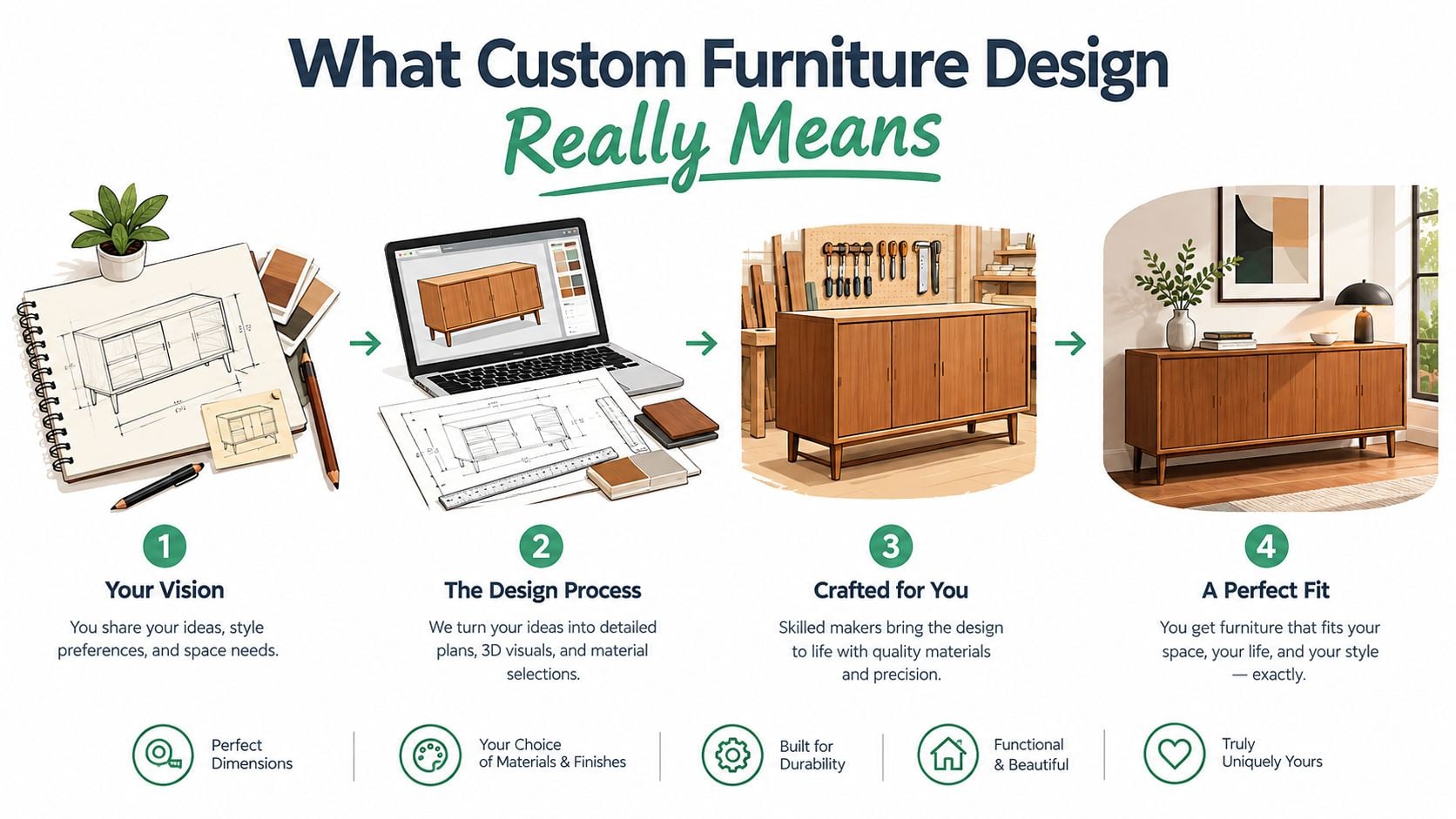
What Custom Furniture Design Really Means
Custom furniture design is best understood through a tailoring analogy. Buying an off-the-rack suit means accepting a standard cut and making limited adjustments. A custom suit starts with the wearer's proportions, purpose, and preferences. Furniture works similarly. A standard sofa comes in a predetermined frame, while a made-to-order piece can be selected around the room, the people using it, and the way they live.
Customization can happen at several levels:
- Fit: Width, depth, seat height, and sectional configuration can respond to a room's dimensions.
- Appearance: Upholstery, wood tones, leg finishes, and arm profiles shape the visual character.
- Comfort: Cushion construction and seating feel can be matched to preferences such as firmer support or a softer sit.
- Performance: Performance fabrics can help a busy household choose a covering based on practical maintenance needs.
- Function: Power recline, lift-chair features, storage, and sleeping or conversation arrangements can address specific daily needs.
Brands such as La-Z-Boy and Rowe make this process accessible through broad combinations of fabrics and configurations. A buyer might select a compact seating arrangement for a right-sized home, a deeper sofa for relaxed lounging, or a sectional layout that preserves a clear route through the family room.
Custom is more than a special order
A special order may involve selecting a color from a limited menu while leaving the frame and proportions unchanged. True custom work gives the buyer meaningful control over fit, function, and finish, even when the available choices come through a manufacturer's structured collection rather than a one-off workshop.
That distinction matters for shoppers who need a specific result. A decorator may care most about a performance fabric and a precisely cut silhouette. A multi-generational household may prioritize supportive seating and power functions. A relocating professional may want a polished look that coordinates across several rooms.
Guidance about broader personalized home projects can also help buyers think through how choices affect the finished environment. The SouthRay Kitchen & Bath custom guide offers useful perspective on planning made-to-order decisions across a home.
Custom furniture means fit, function, and style built around a person's life, not around the showroom floor.
Custom Versus In Stock How to Choose the Right Path
The right choice depends less on whether customization sounds appealing and more on what the household needs today. A new homeowner furnishing an entire house may value a coordinated solution that can be taken home immediately. A style-focused decorator with an unusually shaped room may gain more from choosing the exact layout and covering.
| Factor | Custom Design Your Way | In-Stock Today |
|---|---|---|
| Timeline | Requires selections, approvals, production, and delivery planning | Available for customer pickup today, with scheduled professional delivery also available |
| Selection | Hundreds of fabrics and configurations can support a specific look | Selection is limited to what is currently available, but can be viewed in person |
| Price approach | More choices can add material and production complexity | Existing pieces make comparison and budgeting more direct |
| Best fit | Odd room sizes, defined style goals, and specific performance needs | Immediate furnishing, whole-home projects, and buyers who want the Sit-Test |
| Main risk | Changes after approval can create delays or confusion | The perfect fabric or configuration may not be available immediately |
Choose custom when the room has a problem to solve
Custom makes sense when a standard shape creates a practical compromise. An L-shaped room may need a particular sectional orientation. A narrow passage may require a shallower frame. A household with pets, children, or frequent guests may want a performance fabric selected for everyday use instead of choosing upholstery based only on color.
Style-focused decorators also benefit from Design Your Way because the desired result may depend on several details working together. The arm shape, cushion appearance, leg finish, and fabric need to support one coherent look.
Choose In-Stock Today when time matters more
Immediate availability serves a different but equally valid need. New homeowners and relocators can furnish a whole home this weekend instead of arranging a room around a future arrival. Buyers can test recliners, sofas, mattresses, and dining chairs in person, then confirm whether the true color and comfort suit the household.
A practical comparison, much like the difference between standard and choosing cabinets in South Jersey, starts with the project's constraints rather than a preference for one category.
Quality seekers can use a Good-Better-Best approach in either path. The decision isn't about buying more. It's about directing the budget toward the features that matter most, such as frame construction, supportive seating, a durable covering, or a function that gets used every day.
For shoppers ready to move quickly, Stahl's furniture delivery information explains the practical next step without promising an artificial delivery window. The important distinction is simple: take an available piece home today, or plan a made-to-order piece around a specific vision.
How the Custom Furniture Process Works Step by Step
A successful custom furniture project follows a sequence. Each stage answers a different question, and rushing one stage usually creates uncertainty later.
Start with the room and the routine
The consultation should begin with use, not upholstery. A family room may need stain-conscious fabric, supportive seating, and enough room for conversation. A right-sizer may care about easier sit-to-stand transfer. A second-home owner may want durable materials with straightforward care.
Useful preparation includes:
- Room measurements: Record wall lengths, doorway widths, stair access, window locations, and the intended furniture footprint.
- Room photographs: Include wide views, floor transitions, outlets, vents, and nearby pieces that must remain.
- Lifestyle notes: Identify pets, children, mobility needs, sleeping habits, entertaining patterns, and preferred seating positions.
- Inspiration: Bring fabric colors, room images, and examples of silhouettes that feel appropriate.
The Design Your Own Sectional resource can help a shopper think through layout choices before a showroom consultation.
Select the structure and covering
The design takes shape through frame scale, arm style, cushion feel, leg finish, and upholstery. A fabric sample should be viewed under the lighting conditions where possible, because showroom lighting and home lighting can make colors appear different.
Ergonomics deserves equal attention. Common guidance places chair seat height around 440 to 470 millimeters, sofa seat height around 400 to 450 millimeters, standard table height around 750 to 760 millimeters, and counter height around 870 to 900 millimeters. Clear passage should allow at least 900 millimeters, or 1,200 millimeters for accessible circulation, according to Studiomatrx's ergonomics guide. These ranges aren't a substitute for trying furniture, but they provide a sound starting point.
Approve before production
The buyer should review the configuration, dimensions, fabric, finish, functions, and access plan before approval. This is the point to ask whether a recliner needs wall clearance, whether a sectional can enter through the doorway, and whether the chosen fabric has care requirements that conflict with the household.
Lead time has several parts. Independent guidance places custom contract upholstery around 4 to 10 weeks from approved drawings and material receipt, while broader manufacturing guidance cites 25 to 60 days after sample approval for simpler to mid-complexity orders. Another timeline source places many custom pieces at 12 to 20 weeks from consultation to delivery, with 2 to 4 weeks sometimes used for material sourcing. These ranges come from custom furniture lead-time guidance, and they show why an approval date alone doesn't tell the whole story.
Build, inspect, and deliver
Construction time depends on the approved design, material availability, and complexity. For wood furniture, moisture content deserves attention because furniture-grade woodworking commonly targets 6 to 8%, while premium casework inspections often specify 6 to 9%. Wood held above roughly 9 to 12% before assembly or finishing can carry a greater risk of shrinkage, swelling, joint creep, and finish failure as it adjusts indoors, as explained by Sensora Home's wood moisture guidance.
Once production is complete, delivery planning should account for entrances, floors, stairways, and room protection. A clear access plan prevents last-minute surprises and helps the finished piece arrive ready for use.
What Drives Cost Quality and Sustainability in Custom Pieces
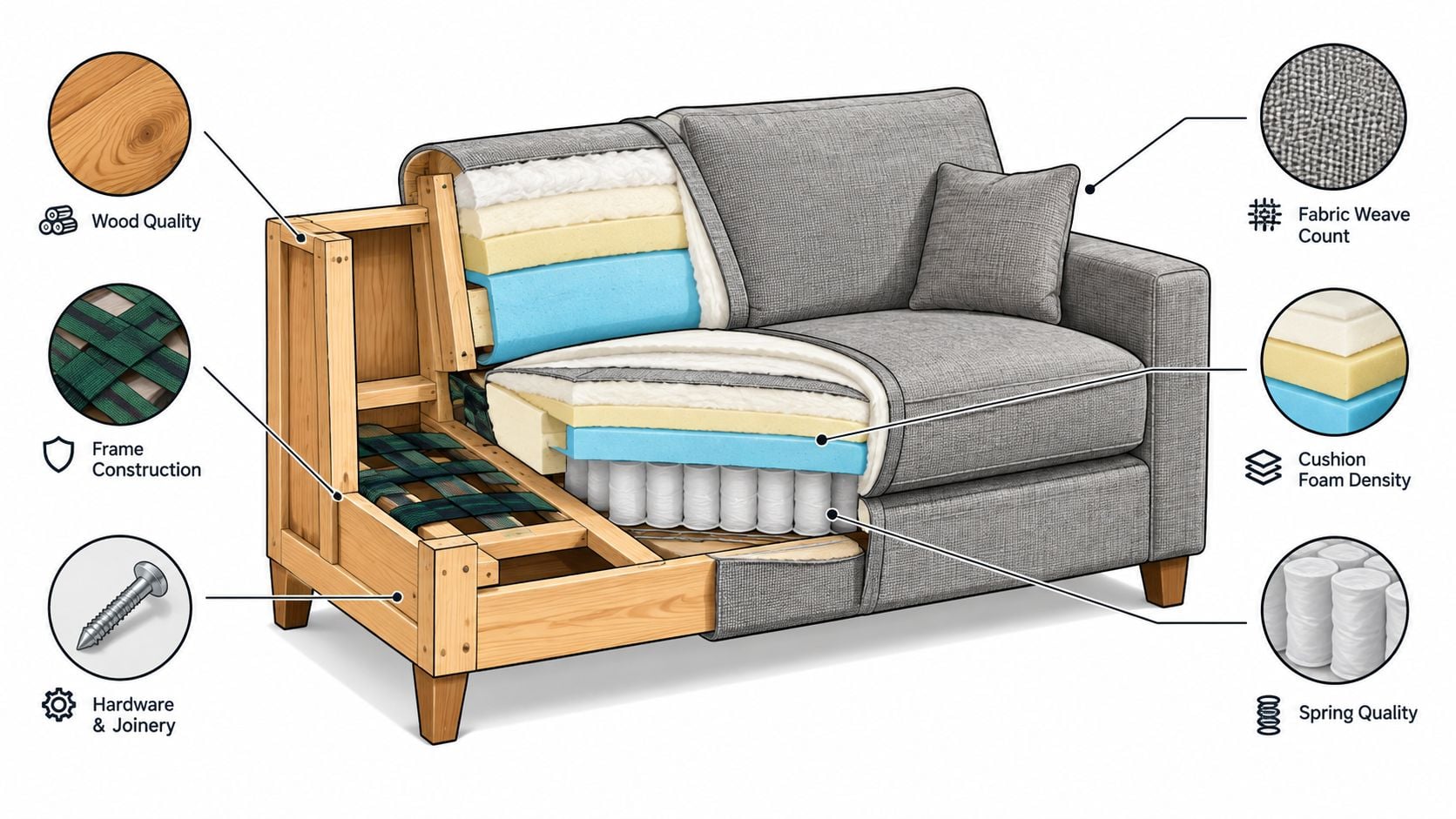
Custom furniture cost reflects the decisions inside the piece, not just its visible color. A sturdy frame, carefully engineered support, durable upholstery, refined finish, and complex configuration each require materials and labor. Buyers get clearer value when they separate the features that improve daily performance from the details that mainly change appearance.
Spend first on the parts used every day
For seating, the frame and cushion construction affect how the piece feels over time. Upholstery grade influences appearance and maintenance. Performance fabrics can be a sensible investment for households that expect spills, frequent guests, pets, or constant use.
The visible design still matters, but it shouldn't consume the entire decision. A style-focused decorator may prioritize a distinctive arm profile or leg finish, while a quality seeker may put more emphasis on support, fabric durability, and repairable construction.
A useful budget order is:
- Fit and function: Pay attention to dimensions, support, recline, lift, and circulation.
- Durability: Evaluate frame construction, cushion core, seams, and fabric suitability.
- Appearance: Choose color, texture, wood species, and finish after the practical needs are clear.
- Extras: Add decorative details only after the piece works for the people using it.
That approach supports a Good-Better-Best philosophy. It gives a household room to choose value without treating budget-friendly options as disposable or assuming every premium feature is necessary.
Sustainability changes the specification
Sustainability isn't one finish or one label. Buyers increasingly ask for FSC-certified wood, recycled metal, and water-based low-VOC finishes, particularly in Europe and North America. Research also notes that European regulation is tightening from 2026 onward, while the average number of customization parameters per commission increased by 31% between 2022 and 2025, according to Dataintelo's bespoke furniture market research.
More choices can improve the result, but each added parameter can create another approval, sourcing, or maintenance question. FSC-certified wood may support responsible sourcing, recycled metal may fit a material strategy, and a water-based low-VOC finish may align with indoor air preferences. The buyer should still ask how each option affects durability, cleaning, repair, and lead time.
For a deeper explanation of material selection, veneer versus solid wood provides practical context. The strongest sustainable choice is often the one that keeps the furniture useful for a long time, because a durable piece that remains comfortable and repairable avoids premature replacement.

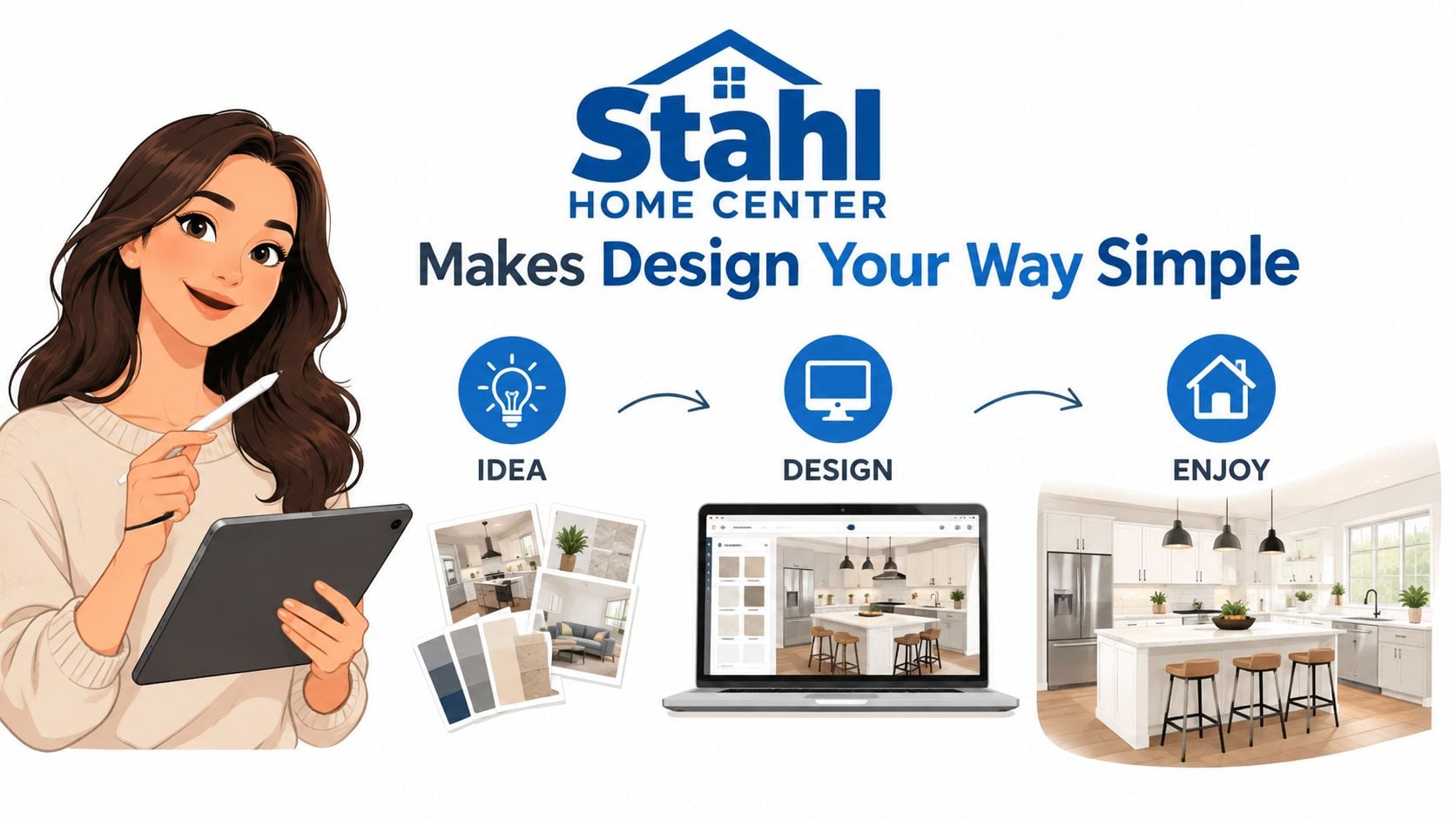
How Stahl Home Center Makes Design Your Way Simple
A large showroom can make custom furniture design easier because shoppers can compare scale, comfort, color, and construction in one visit. Stahl Home Center's Bloomington showroom covers 88,000 square feet, and the store says it keeps thousands of pieces in stock and ready to take home today. That combination gives buyers a practical choice instead of forcing every project into either a long wait or a compromise.
Start with the Sit-Test
Online photographs can't reveal how a recliner supports the legs, whether a sofa depth feels natural, or how a fabric looks beside a home's actual flooring. The Sit-Test lets shoppers assess those details directly. It's particularly useful for quality seekers comparing supportive seating, power recliners, lift chairs, mattresses, and living room furniture.
The showroom also supports immediate needs. A new homeowner can review bedroom sets, mattresses, sofas, recliners in stock, and other rooms' essentials, then choose customer pickup or scheduled professional delivery based on the project.
Use Design Your Way when the details matter
Stahl identifies itself as Indiana's Largest La-Z-Boy Dealer and offers custom ordering with hundreds of fabrics and configurations. That gives a style-focused decorator room to specify a sectional arrangement, upholstery, or performance fabric around a particular home.
Rowe Furniture adds another path for custom style and performance. Rather than asking every shopper to wait, the showroom approach supports both directions: choose a ready piece when time matters, or create a more specific combination when the room calls for it.
Local ownership since 1967 adds a neighbor-to-neighbor quality to the experience. The useful distinction isn't a louder sales pitch. It's having a place where shoppers can ask practical questions, test furniture, compare Good-Better-Best options, and return to the same local team when a project includes more than one room.
Visit our Westside Bloomington showroom today to see our massive selection in person.
Bring Your Vision Home With Confidence
Every custom furniture decision comes down to three questions. Does the piece fit the room? Does the material fit the lifestyle? Does the timeline fit the need? Answering those questions early keeps the project focused, whether the result is a made-to-order sectional or an available sofa taken home today.
Custom is the right path when the room, fabric, or function demands a specific answer. In-stock furniture is the right path when a household needs comfort now, wants to furnish a whole home this weekend, or needs to see the true color and feel before committing. Both choices can deliver lasting satisfaction when the buyer tests the fit and understands the tradeoffs.
Before visiting, shoppers should bring room photos, basic measurements, inspiration images, and a short list of daily requirements. A buyer arranging a right-sized home may note seat height and transfer comfort. A family may identify performance-fabric needs. A relocating professional may list the rooms that need immediate furnishing.
For delivery support after the selection is complete, Stahl's white-glove delivery service provides a more supported transition from showroom to home. The larger goal remains simple: large-scale selection paired with local, immediate service.
Visit our Westside Bloomington showroom today to see our massive selection in person.
Stahl Home Center offers thousands of pieces ready to take home today, along with Design Your Way custom ordering through hundreds of fabrics and configurations, including La-Z-Boy and Rowe Furniture options. Visit Stahl Home Center to test the comfort, compare materials, and find the right balance between immediate availability and personalized design.