

How to Clean Performance Fabric: A Complete Care Guide


A glass of red wine tips onto a new sofa, and the first instinct is usually to grab the nearest towel and scrub. That reaction often makes the mark larger, pushes liquid deeper into the upholstery, and leaves behind the kind of residue that attracts more dirt. Knowing how to clean performance fabric means responding quickly, but it also means choosing the right amount of moisture, pressure, and cleaning chemistry for the mess.
Performance upholstery is designed for real homes, including households with children, pets, frequent guests, and daily lounging. It can make spills easier to manage, but stain-resistant doesn't mean stain-proof. The fabric still needs careful handling, especially when it has a protective finish, a blended construction, or a textured pile.
Why Performance Fabric Needs a Different Approach
A performance sofa usually combines engineered fibers, a dense weave, or a protective finish that helps liquid remain near the surface long enough to be removed. Standard cotton and linen upholstery can absorb a spill quickly, while performance materials often give the homeowner more time to blot. That difference is useful, but it can create false confidence.
A homeowner may see wine bead on the surface and assume the cushion can tolerate any cleaner. It can't. Strong chemicals, excessive water, aggressive brushing, and heated drying can affect the fibers or the finish that gives the upholstery its cleanability. The safest approach treats the fabric as durable but specific, not indestructible.
Practical rule: A performance finish buys time. It doesn't replace immediate blotting or the manufacturer's care instructions.
The care label remains the starting point because performance fabrics aren't all constructed or finished the same way. Some respond well to water-based cleaning, while others may require a solvent-based product. A useful overview of upholstery categories and their maintenance differences appears in this guide to upholstery materials.
Stain-resistant versus stain-proof
“Stain-resistant” generally means a fabric is better equipped to resist immediate absorption, release common soil, or tolerate careful spot cleaning. It doesn't promise that red wine, grease, ink, pet accidents, or food coloring will disappear without treatment. The longer a spill sits, the more opportunity it has to move into the weave or interact with residue already present in the fabric.
The practical framework is straightforward:
- Act quickly while the spill is still fresh.
- Remove dry grit first so wet cleaning doesn't grind particles into the fibers.
- Use the least aggressive suitable cleaner for the fabric and stain.
- Rinse away residue rather than allowing soap to dry in the pile.
- Air-dry completely before judging the result.
That process protects both appearance and texture. It also helps set realistic expectations. A well-maintained performance sofa can be forgiving, but the best results still come from disciplined care rather than force.
Preparing Your Fabric Before Cleaning
Jumping straight into a wet cloth is one of the easiest ways to turn a small spot into a broad, damp area. Preparation keeps loose grit from becoming abrasive and gives the cleaner a controlled surface to work on. Care guides commonly recommend vacuuming or brushing away dry debris first, then testing the cleaner on an inconspicuous area before treating the visible stain. A performance-fabric care guide specifically recommends waiting 10 minutes after a spot test before proceeding.
Clear the surface first
Use a vacuum with a soft brush attachment, or gently lift crumbs and dust with a dry microfiber cloth. Work around seams, cushion edges, and crevices without pressing the nozzle directly into the fabric. Embedded grit can act like fine sandpaper when a sponge or brush moves across damp upholstery.
Gather the supplies before applying anything:
- Mild dish soap: Choose a simple, mild formula rather than a heavily fragranced or highly concentrated product.
- Clean white cloths: White fabric makes it easier to see what is being lifted and reduces the risk of dye transfer.
- Spray bottle: A light mist gives better control than pouring liquid onto the cushion.
- Sponge or soft-bristle brush: Use soft contact, not force.
- Distilled water: This can help limit mineral-related marks when the local water supply leaves visible residue.
- Vacuum or soft brush attachment: Dry debris should come off before the stain treatment begins.
Test before treating the stain
Choose a hidden section beneath a cushion or along the back edge. Apply a small amount of the intended cleaner, allow it to sit for 10 minutes, and inspect for color bleeding, a change in texture, water marking, or damage to the finish. If the test area reacts badly, stop and consult the fabric label or a professional.
This preparation matters for sectional owners, particularly those choosing a large configuration for a busy household. Anyone comparing options can review performance-fabric sectional choices while considering how cushion layout, seams, and removable components may affect future care.
The Core Cleaning Method for Performance Fabric
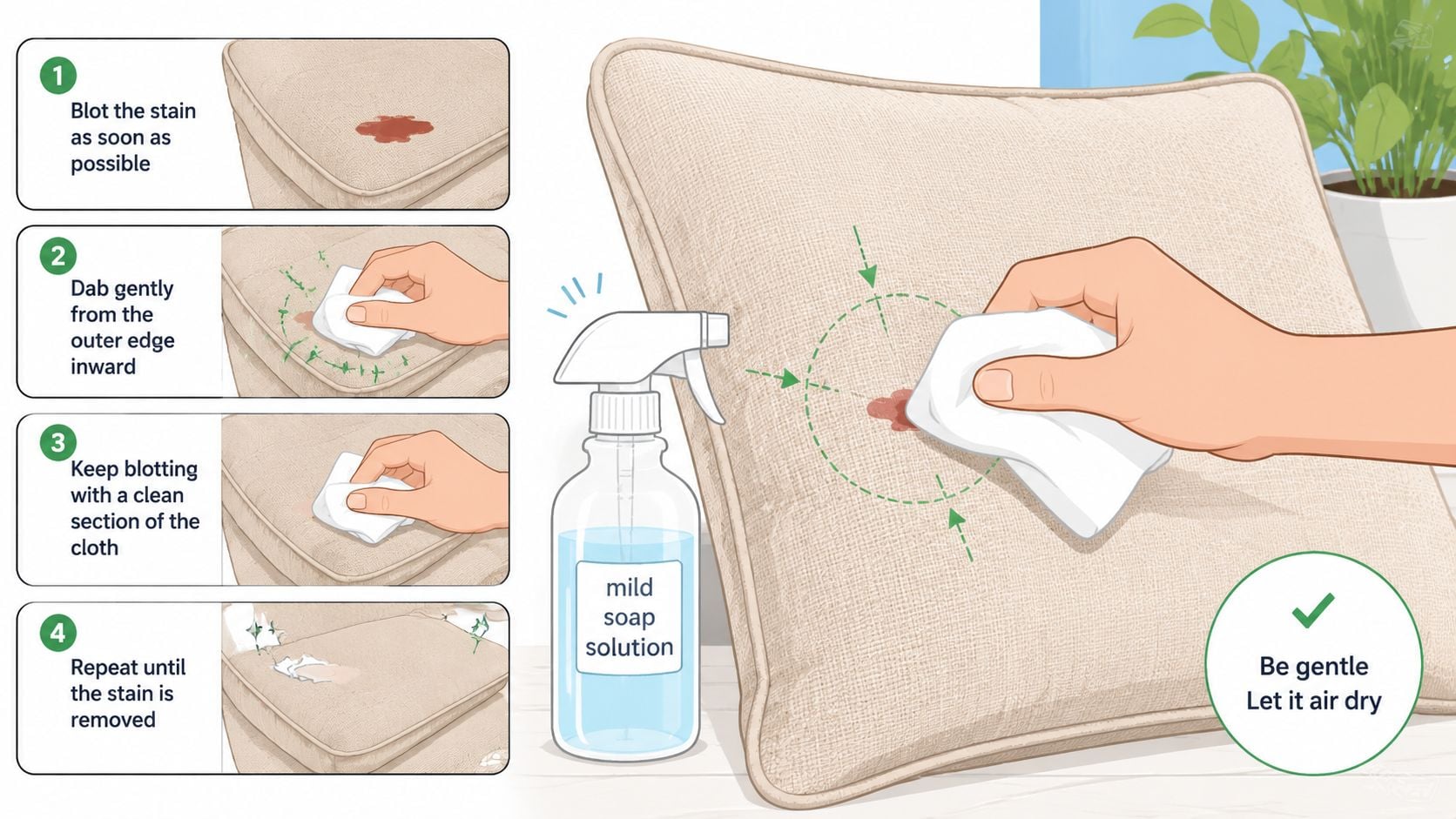
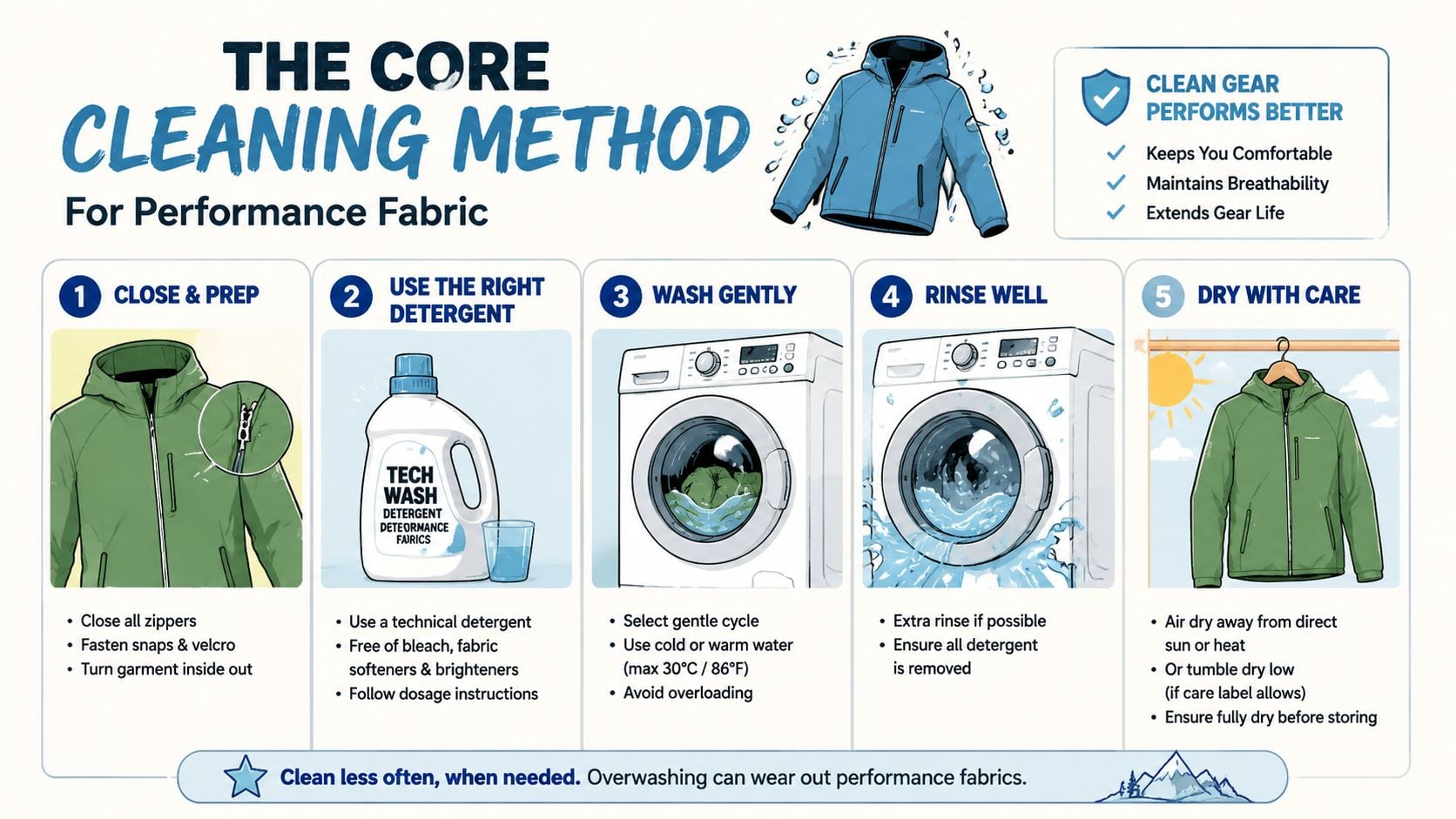
For most performance fabrics, the dependable method follows a controlled sequence. A manufacturer care guide recommends removing dry debris, blotting fresh spills, applying mild soap and water with a spray bottle, gently working from the outside inward, rinsing with clean water, and allowing the fabric to air-dry fully. This performance-fabric cleaning guide also notes that the process may need to be reapplied until the stain lifts.
Follow the fabric, not the panic
Blot fresh liquid immediately. Place a clean white cloth over the spill and press gently. Lift and reposition the cloth as it absorbs moisture. Rubbing creates lateral movement, which can spread the stain beyond its original boundary and work it deeper into the weave.
Mix a mild soap-and-water solution. Add a small amount of mild soap to water and place the solution in a spray bottle. The goal is a lightly dampened surface, not a saturated cushion. Spray the cloth or sponge when greater control is needed, especially on a delicate texture or a seam.
Work from the outside toward the center. Start at the outer edge of the mark and move inward with a sponge or soft-bristle brush. This keeps the treatment focused and reduces the chance of creating a larger ring around the original spot.
Rinse thoroughly. Use a separate cloth dampened with clean water to lift away soap. Repeat with fresh water as needed. Soap left in the pile can create a sticky surface that attracts new soil.
Remove excess moisture and air-dry. Press with a dry white cloth to extract moisture, then let the upholstery dry in a well-ventilated area. Don't use a hair dryer, iron, steam, or direct heat to speed up the process.
The useful test: After drying, inspect the treated area in natural light. If the mark has faded but remains visible, repeat the gentle process instead of escalating immediately to harsher chemistry.
For households trying to reduce reliance on aggressive whitening products, Fillaree's eco laundry guide offers broader context on bleach-free cleaning approaches. Upholstery still requires its own care label and spot test, but the same less-is-more principle applies.
Matching the Right Cleaner to Each Stain Type
Soap and water are a strong first response for many everyday spills, but they're not a universal answer. A care guide notes that performance-fabric stains may call for soap and water or a solvent-based cleaner depending on the manufacturer's instructions. Another furniture-care reference describes using rubbing alcohol for red wine before following with dish soap and water, while some brand care sheets allow diluted bleach or a household spray cleaner for tougher marks on compatible fabrics. The correct choice depends on the stain, the fabric code, and the manufacturer's directions.
Stain-to-Cleaner Quick Reference
| Stain Type | First Response | Follow-Up |
|---|---|---|
| Red wine | Blot immediately. A care guide says rubbing alcohol may be used first when permitted by the fabric instructions. | Follow with mild dish soap and water, then rinse and air-dry. |
| Coffee | Blot away liquid before it spreads. | Use the mild soap-and-water method, working from the outside inward. |
| Grease | Lift surface residue without rubbing. | Use a solvent-based cleaner only if the manufacturer permits it, then follow its directions carefully. |
| Ink | Avoid spreading the mark with water or friction. | Check the fabric instructions before using any solvent-based treatment. |
| Pet accidents | Blot liquid promptly and remove loose solids carefully. | Use the approved water-based method, rinse thoroughly, and seek professional help if odor or discoloration persists. |
| Food spills | Remove solids with a blunt edge or dry cloth without grinding them into the weave. | Treat remaining residue with mild soap and water unless the care instructions specify another cleaner. |
| Tough stains | Confirm that the fabric is compatible before using stronger chemistry. | Some performance-fabric care sheets permit diluted bleach or household spray cleaner, but only when the manufacturer allows it. |
The decision tree should always favor the least aggressive approved option. A solvent can help with an oily mark but may be inappropriate for a water-cleanable fabric. Diluted bleach may be permitted on one bleach-safe textile and damaging on another.
Detailed guidance on stain-resistant upholstery fabric can help homeowners understand why cleaning codes matter before they treat a visible area. For valuable upholstery, recurring accidents, or a whole-sofa refresh, professional stain protection services may be more appropriate than repeated home experiments.
Common Cleaning Mistakes That Damage Performance Fabric
Most upholstery damage doesn't come from a lack of effort. It comes from using too much water, too much pressure, or too much product. The fabric may survive one rushed treatment, but repeated mistakes can leave rings, flatten texture, weaken a finish, or create a surface that soils faster.
The over-wetting problem
Soaking a cushion drives moisture below the visible surface and makes complete drying more difficult. It can also create water marks, particularly when moisture dries unevenly across a cushion panel. Apply cleaner lightly, then press with a dry cloth to extract excess moisture.
Detergent residue creates a separate problem. If soap remains in the pile, it can leave a tacky film that attracts fresh soil. The next spill then bonds to that residue, making the upholstery appear to stain more easily even though the original problem was incomplete rinsing.
Pressure and heat make matters worse
Aggressive scrubbing can spread a stain, disturb the weave, and create visible abrasion. A soft sponge or soft-bristle brush should move gently across the affected area, with the outside-in technique controlling the treatment boundary.
Heat drying sounds efficient, but care instructions warn against hair dryers, steam, ironing, and other heat sources because they can damage the fabric or its finish. Pet-friendly sofa fabric guidance is especially useful for homes where frequent spot treatment creates a temptation to rush drying.
Stop before the fabric feels saturated. More product doesn't equal more cleaning power. Controlled application, complete rinsing, and ventilation produce a safer result.
Long-Term Maintenance and When to Call a Professional
A performance sofa stays easier to care for when dry maintenance happens before visible soil builds up. Vacuuming or brushing away loose grit helps prevent particles from working into the weave during everyday use. Spills should still receive immediate attention, but routine care reduces the amount of material that later requires wet cleaning.
Repeated cleaning deserves restraint. Protective finishes and blended constructions can respond differently over time, so a household with pets, children, or rental occupants should track which cleaner has been used and whether the fabric's texture or color changes after treatment. Growing demand for durable, cleanable textiles reflects the appeal of performance materials, but recent industry care guidance still emphasizes avoiding heat, steam, ironing, and harsh chemicals. Industry coverage of cleanable comfort fabrics provides context for that continuing focus on cleanability and durability.
Professional help makes sense when a stain has set, a large area has been saturated, odor remains after careful cleaning, or repeated DIY treatment has changed the fabric's appearance. A professional can also assess whether the problem is a stain, finish residue, water marking, or wear. Seasonal upkeep can support the broader routine outlined in this furniture maintenance checklist.
For shoppers replacing a difficult-to-maintain sofa, Stahl Home Center's 88,000+ sq. ft. showroom in Bloomington displays performance-fabric furniture from La-Z-Boy and Rowe, allowing customers to see and feel upholstery before choosing. The store is Indiana's Largest La-Z-Boy Dealer, with thousands of items in stock and ready to take home today, plus Design Your Way custom ordering across hundreds of fabrics and configurations. Its selection includes custom sofas, power recliners, lift chairs, bedroom sets, mattresses, and other living room furniture, supported by scheduled professional delivery.
Visit Stahl Home Center to test performance fabrics in person at the Westside Bloomington showroom and compare comfort, color, and construction before buying. With 88,000+ sq. ft. of selection, recliners in stock, and thousands of pieces ready to take home today, Stahl can help furnish a whole home this weekend or create a custom look through Rowe and La-Z-Boy.


