
Full Plush Mattress: A Friendly Guide to Better Sleep

You're standing there with your hand on two mattresses that both look inviting. One feels soft right away, the other feels a little less dreamy for the first thirty seconds. That's usually where the bad decision starts, because the surface feel gets all the attention while the support underneath does the work night after night.
A full plush mattress can be exactly right for a guest room, a smaller bedroom, or a sleeper who wants more cushion at the shoulders and hips. It can also be the wrong call if the support core is too soft, the fit is too tight, or the sleeper needs easier movement and stronger alignment. The smart move is to treat plush as the top layer of a system, then judge whether the whole bed keeps the body in line.
Why a Full Plush Mattress Feels Right Until It Isn't
The first five minutes in a showroom can fool people. A soft surface feels generous, warm, and immediately calming, so the body relaxes before the brain has a chance to check what the mattress is really doing underneath.
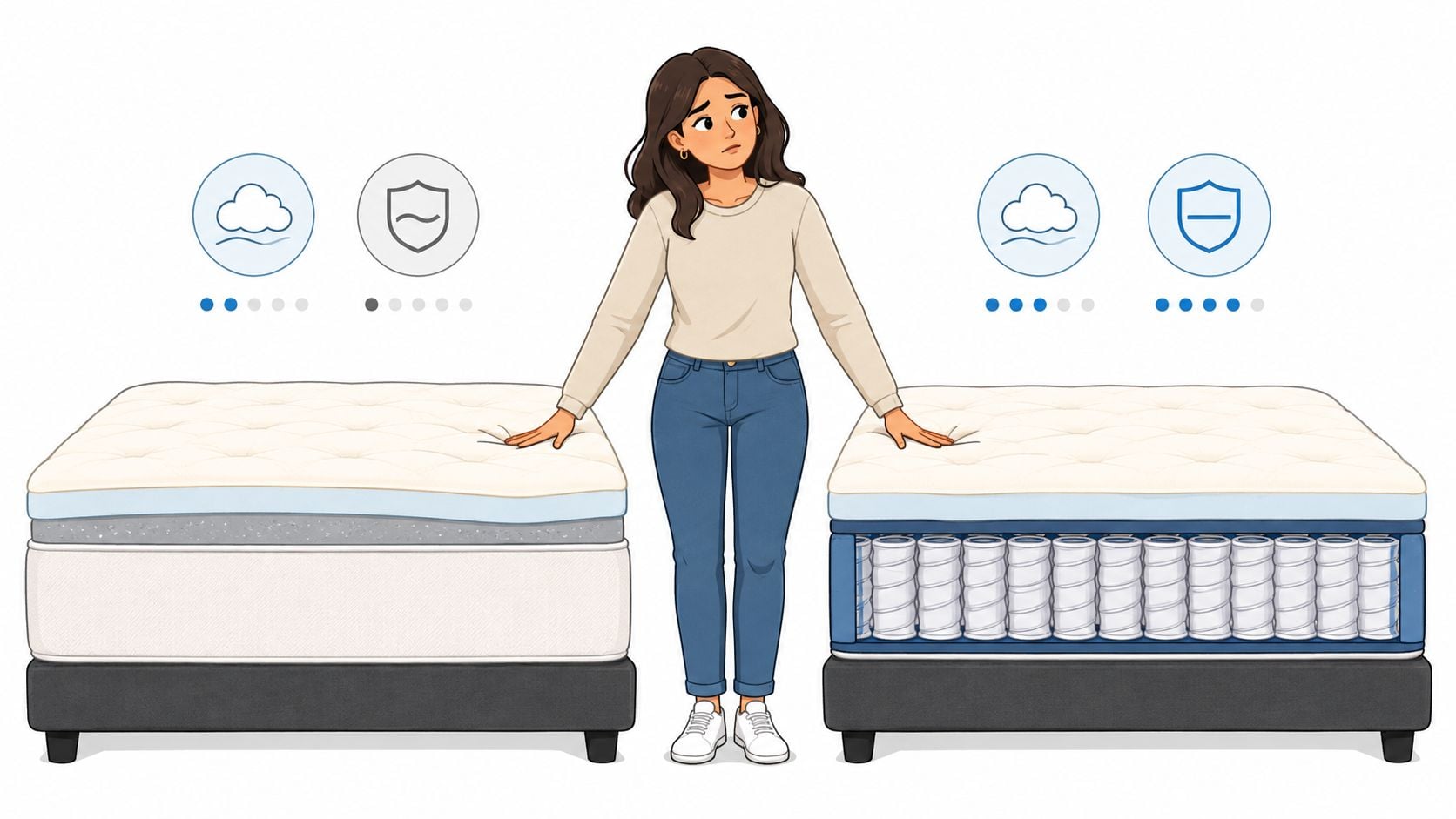
Soft on top is not the same as soft everywhere
A plush feel is only the comfort layer. The support core underneath decides whether the mattress keeps the spine steady or lets the middle collapse over time. That's why a bed can feel wonderful in the store and still leave a sleeper with sinking hips, a tight lower back, or a restless morning.
The safest way to think about it is simple. Plush should relieve pressure first, then the core should stop the body from folding into the mattress. When those two parts work together, the bed feels gentle without turning sloppy.
For people building a better sleep routine, the mattress is only one piece of the puzzle. Small habits matter too, and a practical set of tips for restful nights can help the rest of the bedroom support the bed instead of fighting it.
Practical rule: if the mattress feels great but the spine doesn't look calm and level after a few minutes, the softness is winning over the support.
What "Full" and "Plush" Actually Mean
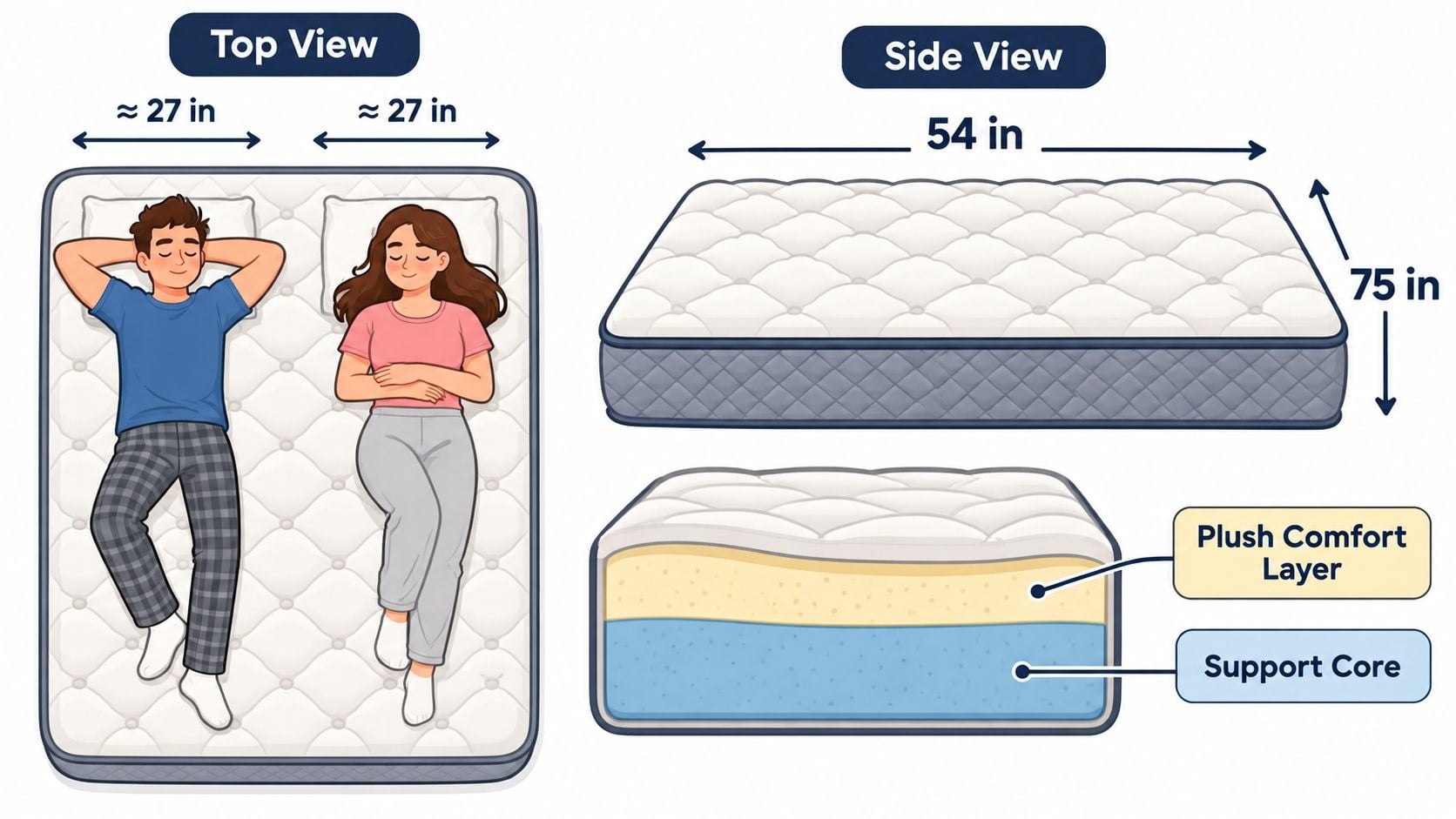
A full mattress, also called a double, measures 54 inches wide by 75 inches long, or about 137 by 191 centimeters, according to standard bed size dimensions. That works out to 4,050 square inches of sleep surface. More room than a twin. Less room than a queen.
Why the size still makes sense
A full still fits real life well. It works in guest rooms, children's rooms, apartments, smaller primary bedrooms, and older full-size bed frames. If the room is tight, a full often gives you the best balance between usable floor space and a bed that still feels grown-up.
For one adult, a full usually feels comfortable without swallowing the room. For two adults, the math gets less forgiving. Each person gets only 27 inches of nominal width, compared with 30 inches per person on a queen. That difference looks small on paper and feels bigger at night, especially if one sleeper sprawls, changes position often, or sleeps hot.
Good buying habit: measure the room, the frame, and the fitted-sheet depth before the purchase, because plush models vary in height and construction.
“Plush” describes feel, not size. On a full plush mattress, the plush part is the top comfort system, the layers that cushion pressure at the shoulders, hips, and ribs. The support core underneath still does the heavier job of holding the body in line. That distinction matters, because two mattresses can share the same full footprint and feel nothing alike once your weight and sleep position settle into them.
Why Softness Alone Does Not Guarantee Good Sleep
A soft mattress can feel kind to the body and still be wrong for alignment. Research on firmness points in a clear direction, medium-firm surfaces tend to perform well for comfort, sleep quality, and spinal alignment, and a randomized controlled trial involving 313 adults with chronic nonspecific low-back pain favored medium-firm mattresses over firm ones for pain in bed, pain on rising, and disability, with one summary reporting odds ratios of 2.36, 1.93, and 2.10 respectively pmc.ncbi.nlm.nih.gov/articles/PMC8655046/.
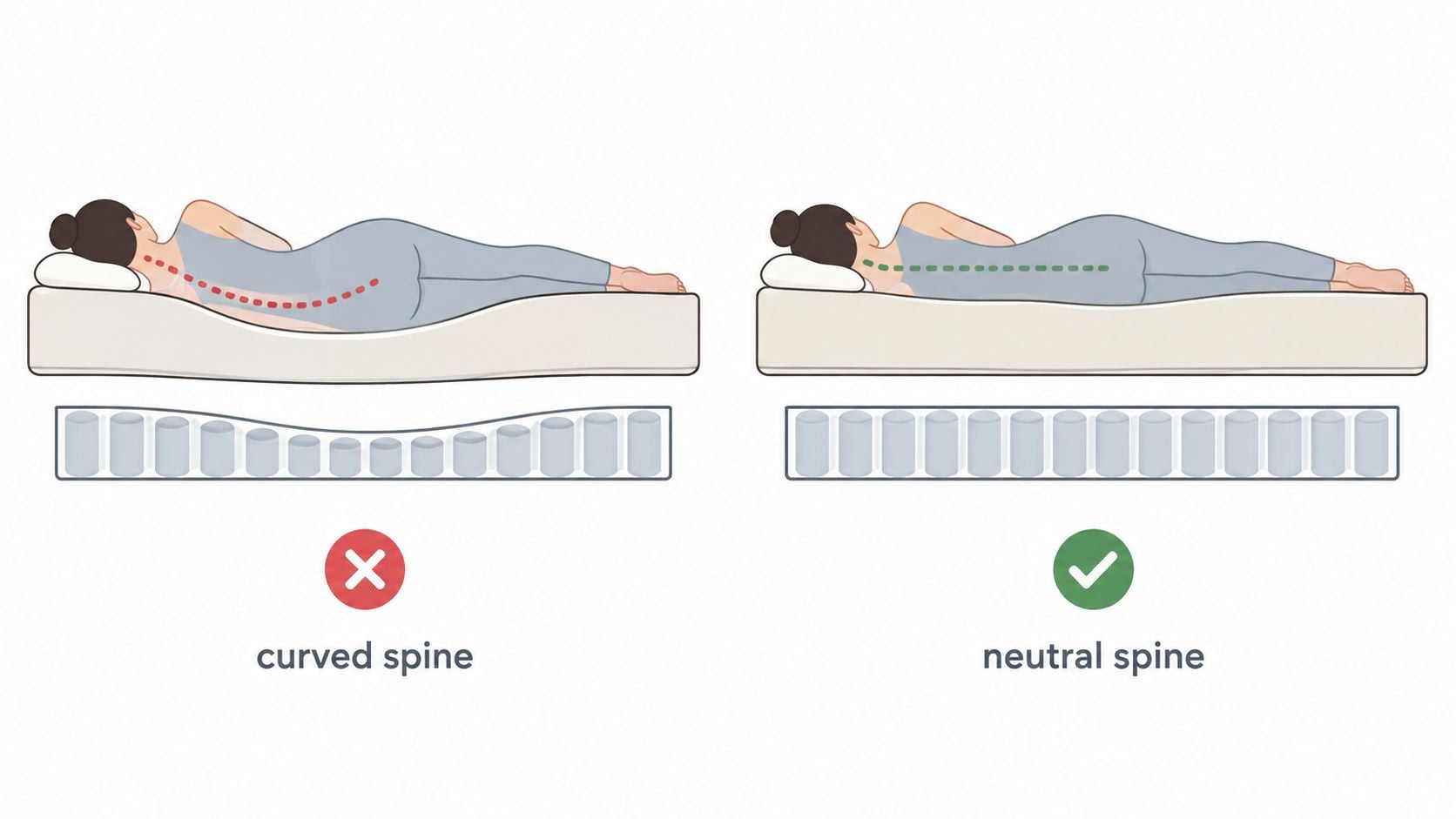
What the body does on a soft surface
Biomechanical research shows that mattress stiffness changes spinal curvature, cervical positioning, and pressure distribution. In one controlled study, moving from a medium to a soft mattress increased craniocervical height by 26.7 ± 14.9 mm and head distance by 30.5 ± 15.9 mm, which is a real posture change, not a tiny sensation issue pmc.ncbi.nlm.nih.gov/articles/PMC9311775/.
That matters because a plush surface can be great at pressure relief and still be wrong if it lets the hips and midsection sink too much. The support core has to keep the body from folding at the middle. That's especially important for anyone who sleeps on the stomach or carries more weight through the pelvis.
The mattress-comfort guide at Stahl's mattress comfort levels is worth using as a reference point, because comfort labels only make sense when they're tied to support behavior, not just surface softness. The same soft top can sit on a sturdier core or a weaker one, and those two beds live in different worlds once the sleeper settles in.
A plush mattress should feel like pressure relief, not like a hammock.
For anyone balancing mattress choice with general sleep comfort, find sleep aid supplements can be useful reading, but the bed still comes first. No supplement fixes a mattress that lets the spine sag every night.
Matching Plush Comfort to Your Sleep Position and Body
A full plush mattress makes the most sense for sleepers who need cushioning at the shoulders and hips. Side sleepers usually feel that first, because those contact points take most of the pressure when the body is curled or partly curled.
Who tends to like plush
- Side sleepers: The shoulder and hip sink a little, which can reduce pressure and make the bed feel less harsh.
- Lighter adults: Softer comfort layers can let them sink enough to get contour without forcing them onto a board-like surface.
- Shorter frames: A softer top often feels more accommodating because the body doesn't press as hard into the support system.
Who should be careful
Stomach sleepers need restraint, not sink. If the pelvis drops too far, the lower back arches and the spine loses its neutral line. Heavier sleepers can run into the same problem if the plush layer compresses too easily and the core doesn't push back hard enough.
Body shape matters as much as position. Research on visually identical mattresses found that no single firmness worked for everyone, and higher-body-weight participants generally aligned better on firmer surfaces while lower-weight and shorter participants did better on softer ones bmjopenrespres.bmj.com/content/6/Suppl_1/A1.2. That's the cleanest way to think about plush. It's not “good” or “bad,” it's a fit question.
If neck pain is part of the equation, the body still needs the same neutral setup, pillow included. SunnyBay neck pain sleep tips can help with that side of the equation, but the mattress has to stop the shoulders and hips from pulling the spine out of line in the first place.
The best mattress for combination sleepers angle matters here too, because people who change positions a lot usually need a little less sink and a little more responsiveness than a deep, slow plush bed provides.
Full Plush Compared to Medium, Plush Pillow-Top, and Firm
The easiest way to place a full plush mattress is to compare it against the other common feels without getting lost in marketing language.
| Option | Surface Feel | Best-Fit Sleeper | Support Core to Look For |
|---|---|---|---|
| Full plush | Soft, cushioned, pressure-relieving | Side sleepers, guest rooms, lighter adults | Medium to firm support that prevents hip sink |
| Full medium | Balanced, less sink, more versatile | Most sleepers, especially mixed-position adults | Supportive core with moderate contouring |
| Full plush pillow-top | Softer and more padded at the top | Sleepers who want a luxurious first touch | Strong core plus durable transition layers |
| Full firm | Level, stable, least conforming | Stomach sleepers, heavier sleepers, back sleepers who like structure | Very supportive core with minimal give |
The difference that matters is not the label on the showroom tag. It's how much the comfort layer masks the core. A pillow-top can feel more luxurious than a standard plush, but it still needs a durable foundation underneath or it will lose shape faster and feel uneven sooner.
The memory foam vs innerspring question fits naturally into that decision. Foam-heavy builds usually feel more enveloping, while coil-based builds often feel more responsive and easier to move around on.
What to Test in the Showroom and What to Ask
A real mattress test takes longer than a quick sit-down. A sleeper should lie in the normal sleep position for more than a few minutes, then check whether the spine feels supported from neck to hips and whether any part of the body is being pushed up or swallowed down.
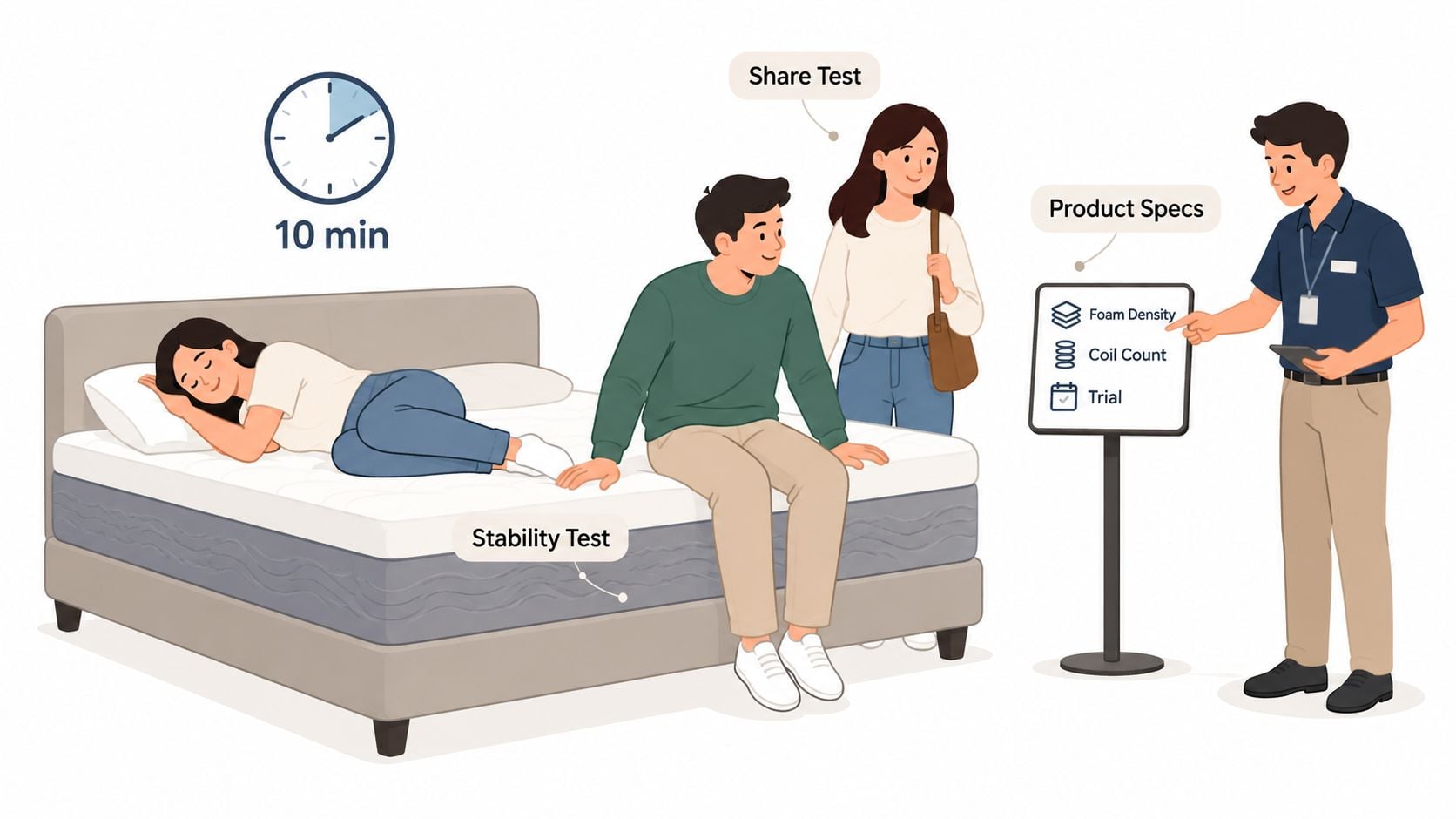
The in-store checklist that actually matters
- Edge stability: Sit on the side and see whether the perimeter feels secure or collapses.
- Repositioning ease: Roll from back to side, then side to stomach. If movement feels sticky, the surface may be too conforming.
- Heat feel: Notice whether the mattress traps warmth, especially if the top layers feel dense.
- Partner motion: Bring the other sleeper if possible and check whether movement transfers across the bed.
- Support details: Ask about foam density, coil gauge, weight rating, and trial or return policy.
The word plush is only useful if the build underneath earns it. That's the part to interrogate. A soft display model can hide weak edges or a thin support unit, and those problems show up after the sale, not during the first glance.
The how to buy a new mattress guide is a good companion if the shopper wants a more methodical approach, but the rule stays the same. Feel the bed in the position used at home, not the position used for a quick showroom pose.
Showroom rule: if a mattress feels great while the body is standing still but awkward the moment it turns, it's not a good fit.
A local showroom also helps with immediate comparison. Shoppers can see the true fabric color, compare finishes side by side, and take home what's in stock instead of waiting on an online shipment that may not feel the same as the photo.
Care, Lifespan, and Buying It Local in Bloomington
A full plush mattress needs routine care because its comfort layer does more of the daily work. Rotate it periodically, place it on the correct foundation, and use fitted sheets deep enough for the mattress height. Those simple steps help the surface wear more evenly and keep bedding from pulling at the corners.
What keeps it performing
- Rotate it periodically: Change the sleep position on the mattress so one area does not absorb all the compression.
- Use a sound foundation: A weak or poorly matched base can shorten the useful life of a good mattress.
- Match the sheet depth: Plush designs vary in height, so measure the mattress before buying fitted sheets.
- Watch for changes: Sagging, morning aches, or an uneven surface indicate that the comfort system is losing its shape.
Care also starts with the setup. Follow the foundation requirements for the specific mattress, keep the base level, and avoid treating the bed as a place for rough use. A plush surface should feel inviting, but it still needs stable support underneath.
Most plush mattresses are expected to last roughly seven to ten years before the comfort layers begin losing their shape, according to Stahl's mattress lifespan guide. Treat that range as a practical replacement window, then judge the actual bed by its support, surface condition, and the quality of your sleep.
For Bloomington shoppers, buying locally makes comparison and follow-up easier. Stahl Home Center has been family-owned and locally operated since 1967, operates at 3175 W. 3rd Street, and identifies itself as Indiana's Largest La-Z-Boy Dealer, with premium brands including Rowe stahlfurn.com/about-us. Those details matter when you need to ask about mattress construction, confirm availability, or arrange delivery with a nearby team.
If the right mattress is in stock, you may be able to take it home today. If delivery needs scheduling, a local store can handle that conversation directly. That access is valuable when comfort and support need to be judged in person.
Quick Answers Before You Buy
A full plush mattress can work for couples, but it's a tighter fit than a queen. When two adults share a full, each person gets less width, so it's manageable only if both sleepers are comfortable with close quarters.
Adjustable frames are a model-by-model question, not a blanket yes. The buyer needs to confirm compatibility with the retailer before assuming a plush build will flex correctly.
Replacement usually becomes obvious before the mattress fully collapses. Visible sagging, new morning aches, and disturbed sleep are the most practical warning signs, especially when the bed is already past the expected comfort window.
A plush pillow-top is softer at the surface, but it doesn't automatically count as the same thing as a true plush mattress in performance terms. The support core still decides alignment, and that's the part worth testing in person.
Visit Stahl Home Center on the Westside of Bloomington to compare full plush mattress options in person and feel the difference between surface softness and real support. The showroom has the selection and local service to help a sleeper get the fit right, take it home today, or set up professional delivery on a schedule that works.