

Shop Performance Fabric Sectionals at Stahl Home Center

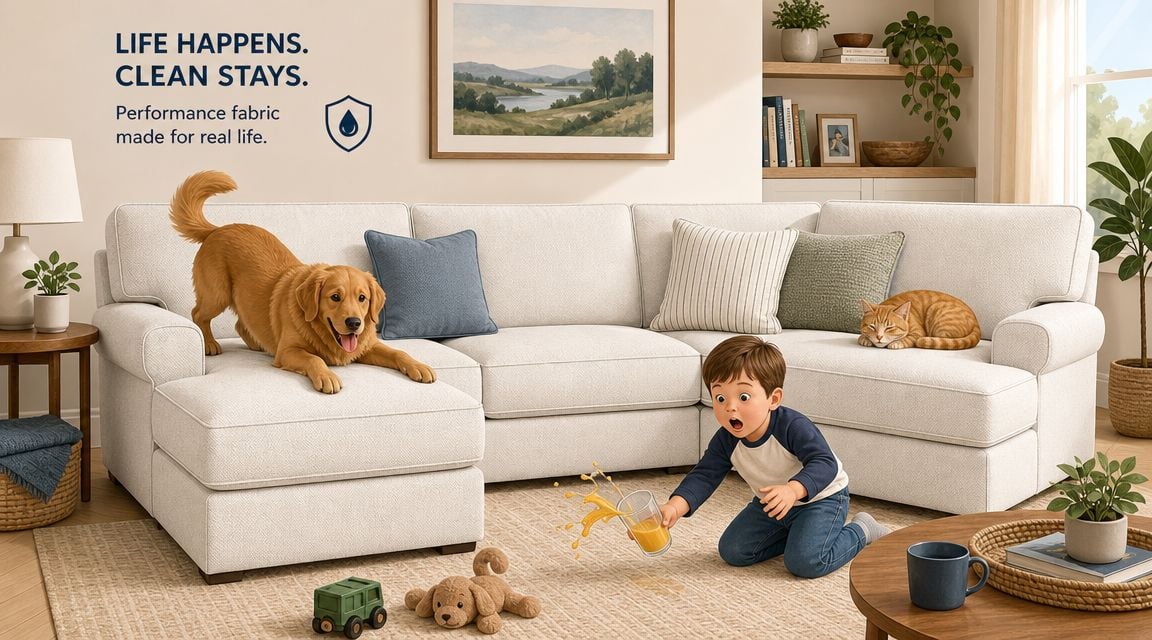
A sectional gets tested fast in a real home. Juice tips over. A dog jumps up after the yard. Someone drops into the same corner seat every evening. By the end of a normal week, a sofa has done a lot more work than most shoppers expect.
That's why so many families start asking about a performance fabric sectional. They want something comfortable and attractive, but they also want a living room that doesn't feel fragile. For households with kids, pets, guests, or heavy daily use, the upholstery choice can matter just as much as the size or shape of the sectional.
Table of Contents
- What Is a Performance Fabric Sectional?
- Top Benefits for Busy Homes and Families
- Performance Fabric vs Leather and Other Options
- Your Smart Shopper's Guide to Choosing a Sectional
- Simple Care for a Long-Lasting Sectional
- Experience the Stahl Difference in Bloomington
- Ready to Find Your Forever Sectional?
What Is a Performance Fabric Sectional?
A performance fabric sectional is a sectional sofa upholstered in textiles engineered to handle heavier real-world use. That's the key point. Performance fabric isn't one single material. It's a category of upholstery designed to offer practical benefits such as easier cleanability and stronger resistance to stains, wear, fading, and damage.
Many shoppers get tripped up by the name. They assume “performance” means a special fabric fiber, the way cotton or linen names a specific material. It doesn't. It usually means the fabric has been built or finished to improve how it behaves in everyday living.
Why the category matters
Performance fabrics became a practical mainstream option after textiles first developed for outdoor upholstered furniture were adapted for indoor home use. That shift helped expand the category from weather-resistant materials into everyday upholstery for living rooms and family rooms, as described in this overview of performance fabric benefits.
That history matters because it explains why the category is so useful on a sectional. A sectional is large, heavily used, and often the main seat for the whole household. When upholstery can better resist spills, fading, wear, and general mess, the entire piece becomes easier to live with.
What “engineered for durability” really means
A performance fabric sectional usually relies on a mix of design choices, such as:
- Tighter weaving: Less open space can make it harder for liquid and soil to sink in quickly.
- Synthetic fiber content: Many durable options use materials chosen for resilience and easier maintenance.
- Protective finishing: Some upholstery includes treatments that help repel moisture or resist staining.
- Functional features: Depending on the fabric, shoppers may see stain resistance, liquid repellency, color retention, tear resistance, or odor-control properties.
Practical rule: “Performance” means more protection, not magic. It's built to help with everyday life, not eliminate care entirely.
For readers comparing upholstery terms, this guide to upholstery materials can help sort out the differences between fiber types, textures, and performance categories.
A simple way to think about it is this. A standard sectional may look beautiful on day one. A performance fabric sectional is designed to keep looking good after the living room starts acting like a living room.
Top Benefits for Busy Homes and Families
The appeal of a performance fabric sectional isn't hard to understand once daily life enters the picture. Families don't shop for a sofa in a vacuum. They shop around snack time, nap time, movie night, muddy paws, and holidays when every seat gets used.
Performance fabrics are designed to withstand heavy use and frequent cleaning, and some guidance also notes that while the upfront cost may be higher, the durability, easier maintenance, and longer lifespan can offer better long-term value, especially on a large purchase like a sectional, according to this performance fabric guide.
What households usually notice first
- Spills feel less catastrophic: A tipped drink or food smudge is less likely to feel like permanent damage.
- Frequent use is part of the plan: Large sectionals often serve multiple people every day, and performance upholstery is made with that workload in mind.
- Cleaning is more manageable: Families often want a sofa they can maintain without panicking over every mark.
- Appearance holds up better: In many cases, the fabric is chosen to better resist everyday wear and help the sectional keep its look longer.
Where the value shows up
A busy home puts pressure on furniture in small, repeated ways. Kids climb across the arms. Pets choose the same cushion. Guests gather in one corner during every game or holiday. A sectional that's hard to maintain can start looking tired long before its frame or cushions are worn out.
That's where performance upholstery often earns its keep. It supports normal living instead of asking the household to tiptoe around the furniture.
A family-friendly sectional should let people relax on it, not worry about it all evening.
For shoppers with children or pets, these kid-friendly and pet-friendly furniture tips can help narrow down what features matter most.
Who benefits most
Some homes gain more from performance fabric than others:
- Parents with young children: Messes happen quickly and often.
- Pet owners: Fur, paws, odor concerns, and accidental spills all add up.
- Frequent entertainers: More guests usually means more wear.
- Rental or second-home owners: Easy upkeep matters when many different people use the furniture.
- Sun-filled rooms: Some performance fabrics are selected in part for stronger color retention.
A sectional is one of the hardest-working pieces in a home. For many households, performance fabric isn't an upgrade for looks alone. It's a practical choice that makes everyday ownership easier.
Performance Fabric vs Leather and Other Options
No upholstery material is perfect for every home. The smarter question is which trade-offs fit the household best. Some buyers want softness and warmth. Others care most about cleanup, structure, or a certain look.
A balanced comparison helps clear up the confusion.
Upholstery Comparison Find Your Best Fit
| Feature | Performance Fabric | Leather | Standard Fabric (Cotton/Linen) | Microfiber |
|---|---|---|---|---|
| Durability | Built for heavy daily use when well constructed | Can wear well, but shows scratches and needs upkeep | Varies widely by weave and blend | Often durable for everyday family use |
| Stain Resistance | Often designed to resist spills and staining better than standard upholstery | Wipes clean in many situations, but can absorb oils and show marks | Usually more vulnerable to staining | Often handles basic spills fairly well |
| Feel and Comfort | Wide range from soft and cozy to tailored and smooth | Distinct hand and temperature feel that some love and others don't | Often breathable and comfortable | Usually soft, casual, and approachable |
| Maintenance | Depends on cleaning code and finish, but generally easier than many standard fabrics | Requires product-specific care to maintain appearance | May need more frequent careful cleaning | Usually fairly simple for routine upkeep |
| Typical Cost | Can range from moderate to premium | Often premium | Varies from budget-friendly to premium | Often value-oriented to moderate |
How performance fabric compares in real life
Performance fabric usually lands in the middle of the Venn diagram. It can offer a softer, more relaxed seating experience than leather while still giving households a stronger defense against daily wear than many standard upholstery fabrics.
Standard cotton or linen can be beautiful. It can also be less forgiving in homes where spills, pets, and repeated use are part of the routine. That doesn't make it wrong. It makes it better suited to lower-stress rooms or buyers who prioritize a certain natural look and don't mind more care.
Microfiber often appeals to practical shoppers because it tends to feel approachable and family-friendly. Still, “microfiber” and “performance fabric” aren't interchangeable terms. Some microfiber pieces are durable and easy to maintain, but performance fabric is a broader engineered category built around functional behavior, not just texture.
Leather still has a place
Leather remains a strong choice for many homes. It offers a distinct look, develops character over time, and can be appealing for buyers who prefer a refined style. But it also comes with its own care needs, especially in homes dealing with claws, body oils, or changing room conditions. Readers weighing that route can review how to protect leather furniture before deciding.
The right upholstery choice usually comes down to lifestyle first, style second, and cleaning habits third.
A useful way to decide
A shopper can narrow the decision quickly by asking four questions:
- Who uses the sectional most? Adults only, kids, pets, guests, or all of the above.
- How much maintenance feels realistic? Some buyers enjoy furniture care. Others want simple cleanup.
- What kind of comfort matters most? Cool and structured, soft and cozy, or something in between.
- Is the room formal or lived-in? A family room often needs different upholstery than a low-use sitting room.
For many active households, a performance fabric sectional hits the practical sweet spot. It doesn't replace every other option. It solves more of the problems that come with everyday living.
Your Smart Shopper's Guide to Choosing a Sectional
Saturday afternoon often starts with good intentions. A family walks into a showroom focused on color, then sits on two sectionals that look nearly identical and realizes the real decision is about how the piece will live in the room for years.
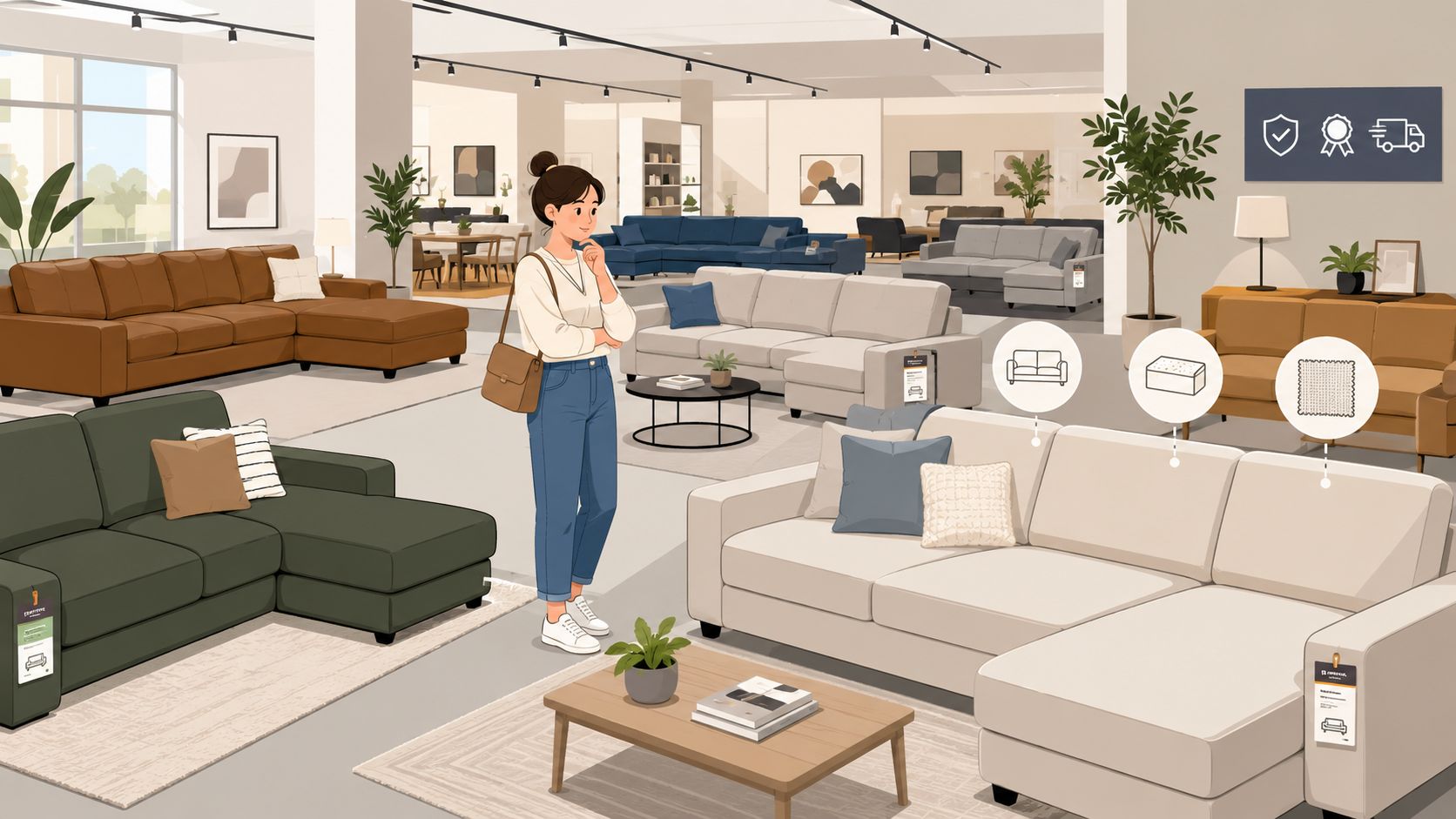
That is why a smart sectional purchase starts with the fabric, then moves outward to cushions, frame support, room fit, and daily habits. A sectional is a system. If one part falls short, the whole piece feels disappointing faster than shoppers expect.
Read past the words “performance fabric”
A tag can point you in the right direction, but it does not tell the whole story. Two sectionals may both use performance fabric and still behave very differently in a home with kids, pets, guests, and regular movie nights.
A useful way to judge the upholstery is to check four things:
- Fiber content: Polyester, olefin, and practical blends often show up in fabrics built for frequent use.
- Weave density: Tighter construction usually gives crumbs, pet hair, and spills fewer places to settle.
- Hand feel: Some fabrics feel smooth and structured. Others feel softer and more relaxed.
- Finish or treatment: Some materials include added stain resistance or fade resistance.
The fabric should match the room's job. A busy family room usually needs a different surface than a formal sitting area that gets occasional use.
Check what is happening under the fabric
A strong cover cannot rescue weak cushions. That catches shoppers off guard all the time. They blame the upholstery when the problem is poor seat support or uneven fill.
Sit in more than one spot before you decide. Stay there for a few minutes. Lean back the way you would at home. Put pressure on the chaise or corner seat, because those areas often reveal comfort problems first.
Look for these signs:
- Seat recovery: The cushion should regain its shape after someone stands up.
- Support level: The sectional should feel comfortable without forcing everyone into the same sitting posture.
- Consistency: One seat should not feel firm while the next feels hollow or overstuffed.
- Edge strength: Arms, corners, and chaise ends should feel stable during normal use.
A sectional wears well when the upholstery, cushions, seams, and frame support each other.
That is one reason visiting Stahl Home Center helps practical shoppers. You can compare textures, firmness, seat depth, and configurations in person instead of guessing from a photo.
Choose a layout that fits real life
Size matters, but shape matters just as much. A sectional that technically fits the room can still create daily frustration if it blocks traffic, crowds a walkway, or places the chaise on the wrong side.
A simple way to picture it is to treat the sectional like the room's traffic island. People need to move around it comfortably, and the shape should support how the household gathers.
Common layouts include:
- L-shape: A strong fit for corners and everyday family seating.
- U-shape: Helpful for larger groups or rooms built around conversation.
- Chaise sectional: Good for households that want to stretch out without filling every wall.
- Modular sectional: Useful for homes that may rearrange furniture, move, or adapt the space over time.
Modular designs can also spread out wear more evenly because households can reconfigure frequently used sections instead of wearing down the same seat every day.
For buyers comparing dimensions, traffic flow, and seating priorities, this sectional buying guide from Stahl Home Center is a practical planning tool.
Use a showroom checklist
A smart shopper walks in with a few questions and leaves with fewer surprises. That approach matters even more with a performance fabric sectional, because the right choice is rarely about one feature alone.
Check these details in person:
- Seams: Straight stitching and clean finishing usually signal better attention to detail.
- Arm stability: Arms should feel solid when someone leans on them.
- Seat depth: Shorter and taller family members may need very different proportions.
- Back height: Head and shoulder support can change comfort more than shoppers expect.
- Connection points: On modular pieces, the sections should align neatly and stay connected well.
The best question is not whether the sectional looks good under showroom lights. The better question is whether it will still feel comfortable, clean up reasonably well, and fit the way your household lives a few years from now.
Simple Care for a Long-Lasting Sectional
A performance fabric sectional is easier to live with than many standard upholstery options, but it isn't maintenance-free. That's where some owners get disappointed. They hear “performance” and assume the sofa is stain-proof, cleaner-proof, and nearly indestructible.
It isn't. It's more resilient.
Start with the cleaning code
The right way to clean any upholstered sectional depends on the manufacturer's cleaning code. That's the first thing to check before using water, solvent, or a household upholstery product. Guidance on performance fabrics also stresses testing any cleaner on an inconspicuous area first, because the wrong chemical or rough scrubbing can still damage the fabric, as explained in this care overview for performance upholstery.
A good routine looks like this:
- Check the tag first: The code tells the owner what type of cleaner is appropriate.
- Blot, don't grind: Pressing a clean cloth into a spill is safer than scrubbing aggressively.
- Test before treating: Even a safe-looking cleaner should be tried on a hidden spot first.
- Use a light hand: Harsh tools, high heat, and abrasive motion can do more harm than the original spill.
What everyday upkeep should include
Most sectionals last longer and look better when households keep up with simple maintenance.
- Vacuum regularly: Dust, crumbs, and pet hair can settle into seams and corners.
- Rotate use when possible: If the same seat gets used every night, the wear will show there first.
- Address spills promptly: Fresh messes are usually easier to manage than dried ones.
- Schedule deeper cleaning when needed: Body oils and embedded soil can still build up over time.
Performance fabric helps with cleanup, but it doesn't stop dirt from accumulating.
The biggest mistake to avoid
Many owners overclean in a panic. They reach for strong products, soak the area, or scrub hard because they want the mark gone immediately. That reaction can create water rings, surface distortion, or wear on the fabric face.
Calm, code-based cleaning is almost always the better move. A performance fabric sectional rewards steady care, not aggressive rescue attempts.
Experience the Stahl Difference in Bloomington
Saturday afternoon looks familiar in a lot of homes. Someone claims the corner seat, a child climbs up with a snack, the dog circles twice, and within five minutes the sectional is doing the hardest job in the house. That is exactly why shopping in person matters. A sofa can look perfect on a screen and still feel too deep, too firm, or too delicate once real family life gets involved.
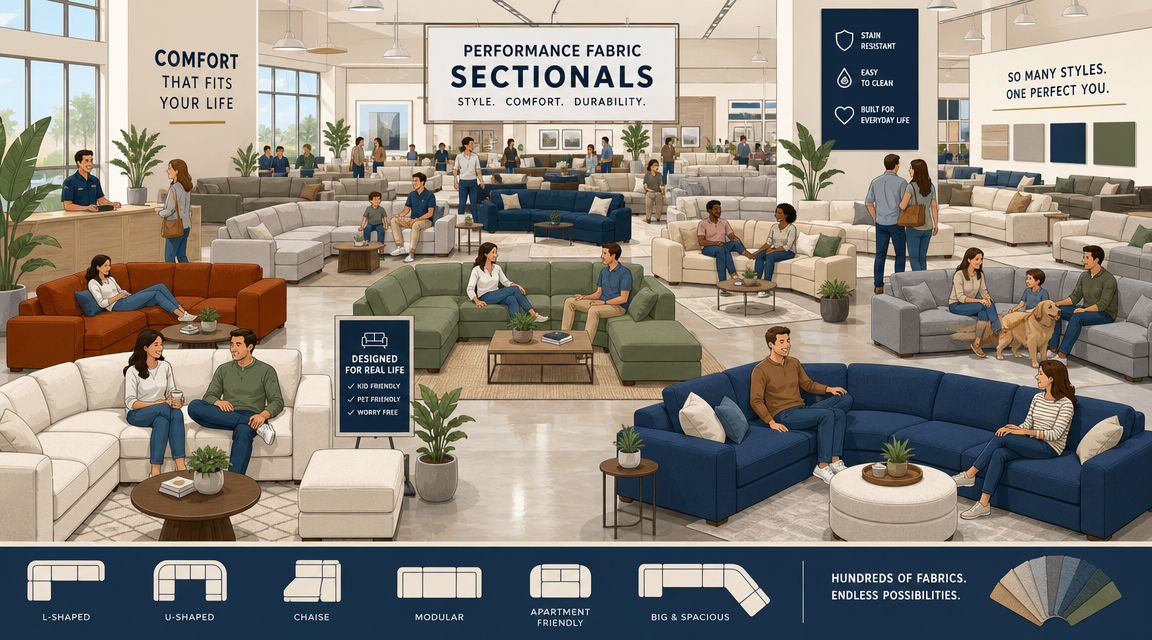
A sectional is not a throw pillow purchase. It is a room-defining piece, and small details change the whole experience. Arm height affects how you lounge. Seat depth changes whether your feet touch the floor comfortably. Fabric texture can feel cozy in one home and overly warm in another. Those differences become clear fast when you can sit, stretch out, and compare several models side by side.
That hands-on comparison helps different households for different reasons.
- New homeowners and recent movers: They often need to make a confident choice without guessing from photos alone.
- Families with kids or pets: They need upholstery that can handle daily traffic and still feel inviting.
- Shoppers focused on comfort: They want to test support, cushion feel, and back height before committing.
- Style-conscious buyers: They need to see true color, shape, and fabric character under real lighting.
At Stahl Home Center in Bloomington, that process becomes easier because shoppers can compare a wide range of sectionals in one place instead of piecing together clues from product pages. The showroom is large, the selection covers quick-ship and custom options, and the store offers both take-home availability on many items and scheduled delivery for households that want help from door to living room.
That matters more than many shoppers expect.
Some families need a sectional this week because they just moved. Others are willing to wait for the right layout, fabric, or cushion feel. A good showroom supports both paths. You can test ready-to-go models for immediate needs, then compare them with made-to-order options if your room calls for a specific size or configuration.
Modular sectionals are a good example. They work like building blocks for the living room. If your space changes, or one seat gets more wear than the others, that flexibility can make ownership easier over time. For busy households, that is a practical advantage, not just a design feature.
Stahl also brings a local layer of confidence that national product pages cannot provide. Families can ask real questions, get measured guidance, and work with people who know how furniture performs in everyday Midwestern homes. Readers who want that background can learn more about Stahl Home Center's family-owned furniture store approach.
A showroom visit replaces guesswork with firsthand proof.
For Bloomington shoppers, the benefit is simple. You can go from a common problem, finding a sectional that looks good but also stands up to daily life, to a local solution you can test before bringing it home.
Ready to Find Your Forever Sectional?
A performance fabric sectional makes sense for the way many households live now. It brings together comfort, practical durability, easier cleanup, and the flexibility to handle everyday traffic without making the room feel formal or off-limits.
The right piece still depends on details. Fabric construction matters. Cushion support matters. Layout matters. And for most shoppers, the fastest way to make a smart decision is to compare those details in person, not on a screen.
A good sectional should fit the room, support the people who use it most, and stay attractive through normal family life. That's why so many shoppers narrow their search to performance upholstery when they want something stylish but less stressful to own.
Visit Stahl Home Center today to see a massive selection in person at the Westside Bloomington showroom. From performance fabric sectionals and Rowe Furniture custom options to La-Z-Boy Indiana favorites and other living room furniture Bloomington shoppers can take home quickly, the store gives families a practical way to compare comfort, style, and durability face to face. For buyers who want guidance, the team can also help match room size, household needs, and fabric performance to the right sectional.