
Kitchens With Tables in the Middle: A Practical Guide


A lot of kitchens look good in photos and feel awkward in real life. You walk in expecting a warm gathering space, but the room revolves around a bulky island that blocks traffic, traps stools in place, and turns every quick meal into a perch at the edge of the action.
That's why more homeowners are looking again at kitchens with tables in the middle. A central table can make the room feel more useful on an ordinary Tuesday, not just during a holiday open house. It can be a prep spot, a coffee station, a homework landing pad, and a place where people sit facing each other.
If you're trying to choose between a built-in solution and something more flexible, the best answer usually comes down to layout, clearance, and how your household really moves. The style matters. The measurements matter more.
Table of Contents
- The Welcoming Kitchen A Return to the Central Table
- Why Choose a Table Instead of an Island
- Exploring Center Table Layouts and Hybrids
- Mastering Space Planning and Measurements
- Choosing Your Style Materials and Finishes
- Find Your Perfect Kitchen Table Today
The Welcoming Kitchen A Return to the Central Table
The center table isn't a new idea dressed up as a trend. It's a return to an older way of using the kitchen as the working heart of the house. In the postwar housing boom, over 80% of new suburban homes featured central tables for dining and daily tasks, and by 2025, 68% of interior designers surveyed preferred freestanding tables over fixed islands for their flexibility and homier feel, according to this Economic Times report on the return of center-table kitchens.
Why the room feels different
A fixed island often tells you exactly how to use the room. Stand here. Sit there. Work on one side. Watch from the other. That can work well in a large, open plan kitchen, but it can also create a hard divide between the cook and everybody else.
A freestanding table softens that boundary. People can gather around it from every side. You can pull up a chair for a conversation, spread out groceries, fold school papers, or set down a casserole without feeling like every inch has already been assigned.
Practical rule: If you want the kitchen to feel more social, choose a piece that invites people to sit facing one another instead of lining up shoulder to shoulder.
What makes a middle table appealing now
Homeowners want rooms that do more than photograph well. They want pieces that can adapt when the household changes, when kids visit, when grandkids come over, or when a quick breakfast turns into a long conversation.
That's where a center table usually wins. It feels less permanent, less rigid, and more personal. Antique-style work tables, farmhouse tables, and simple rectangular dining tables all bring a collected look that built-in cabinetry can't always deliver.
A good middle table also connects the kitchen to the rest of the home. If you're trying to coordinate seating, shape, and flow, this guide on table shapes and seating arrangements for dining spaces is a useful place to compare proportions before you commit.
- For busy households: a center table can shift from prep station to dinner table without feeling overdesigned.
- For right-sizers: it can make a smaller kitchen feel open instead of packed with built-ins.
- For new homeowners: it's one of the easiest ways to make a kitchen feel lived in quickly.
The best versions don't chase novelty. They make the room easier to use every day.
Why Choose a Table Instead of an Island
The biggest difference between a center table and an island isn't style. It's behavior. One acts like built-in architecture. The other behaves like furniture. That changes how the whole kitchen works.
A table can move, breathe, and adapt. An island asks the room to adapt to it.
Where a table usually works better
In family kitchens, lower seating and face-to-face conversation matter more than people realize. A 2025 designer poll found that 72% preferred center tables for improved child safety, and that their lower height reduced fall risks by 20% compared with 42-inch bar-height islands. The same poll also favored the face-to-face seating of tables over the side-by-side setup common with islands, as covered in Housing Design Matters on center tables and island alternatives.
That lines up with what works in real homes. Kids do better at a standard table height. Adults linger longer. Guests don't get parked in a row staring into the work zone.
A practical comparison
- Choose a table if: you want flexibility, softer sightlines, and seating that feels more natural for meals, visiting, and everyday spillover tasks.
- Choose an island if: you need fixed storage, built-in appliances, or a dedicated prep block in a larger kitchen.
- Avoid a table if: the room is already so tight that chairs will stay pushed in all the time and cabinet doors can't open comfortably.
- Avoid an island if: it forces narrow walkways, blocks appliance doors, or dominates a modest kitchen just because the plan says a kitchen should have one.
A middle table should make the kitchen easier to live in. If it creates a daily obstacle course, it's the wrong piece or the wrong size.
There's also a maintenance angle. A freestanding table is easier to clean around and easier to replace later. If your style changes, you can swap it out. If your household changes, you can move it.
For homeowners trying to make one room do more than one job, multi-functional furniture ideas for modern homes can help you think beyond the kitchen and see how flexible pieces support the whole floor plan.
A well-chosen table can age gracefully. Many trendy islands don't.
Exploring Center Table Layouts and Hybrids
Not every middle-table kitchen looks the same. Some need a classic freestanding piece that reads like furniture. Others do better with a hybrid setup that blends work surface and seating.

The right choice depends on how formal or casual you want the kitchen to feel, and whether the center piece needs to function more as a worktable or more as an everyday dining spot.
The fully freestanding table
This is the simplest version and often the most charming. Think rectangular farmhouse table, compact round pedestal, or a narrow worktable with room to walk all the way around it.
Round tables help soften tight paths and reduce sharp corners in family kitchens. Rectangular tables usually make more sense when the room is long and the cabinetry runs in a clear direction. Square tables can work, but they're often the hardest to place without wasting corners.
This format is best when you want the kitchen to feel furnished rather than built in.
The hybrid table and island approach
A hybrid works well when you still need a serious prep zone but want more welcoming seating. That might mean a table-height extension from a standard-height work surface, or a table-like center piece with open shelving and enough legroom to sit comfortably.
For multi-generational households, that flexibility matters. According to Home Glow Design's discussion of the center-table shift, emerging 2025 to 2026 trends show a 40% rise in “center table over island” preferences among Gen X and Boomer homeowners, with modular and height-adjustable tables gaining interest because they support varied task heights and accessibility needs.
Some households don't need one perfect surface. They need one surface that can change jobs without forcing everyone to use it the same way.
How to decide which format fits
Ask these questions before choosing a layout:
Do people sit here?
If yes, comfort and knee space matter as much as prep space.Does the kitchen need to host more than one user at a time?
If yes, a freestanding table often creates a friendlier shared zone.Do you need built-in function at the center?
If yes, a hybrid may be the better answer.
If your kitchen opens directly to living space, furniture arrangement strategies for open-concept rooms can help you keep the center table from feeling disconnected from nearby seating and traffic paths.
The best layout is the one that respects both movement and habit. That's where most successful kitchens with tables in the middle separate themselves from rooms that only look good on paper.
Mastering Space Planning and Measurements
This is the part homeowners skip, and it's the part that decides whether the room works. A center table can be beautiful and still be wrong. If the clearances are off, the kitchen will feel cramped no matter how attractive the materials are.
The easiest way to judge a middle table is with three checks: clearance, circulation, and capacity.
Clearance around the table
Kitchen planning benchmarks recommend 70 to 120 cm of clearance between a central table and the surrounding cabinets for workable flow, according to Dimensions' kitchen layout guidance. That range isn't decorative. It's what lets people pass, open doors, and work without bumping hips and elbows every few minutes.
At the tight end of that range, the setup may still function, but only if chair use is limited and the room isn't carrying heavy traffic. Closer to the generous end, the kitchen starts to feel easier and calmer.
Capacity at the table
Each diner needs 60 to 75 cm of personal space, and the same source notes that a 90 cm round table is ideal for three people, while a 105 cm round table comfortably seats four. Those numbers are practical because they help prevent the most common mistake: buying a table based on appearance instead of seat spacing.
Here's a quick reference.
| Measurement Area | Minimum Recommended Space |
|---|---|
| Clearance from table to cabinets | 70 cm |
| Personal space per diner | 60 cm |
| Round table for 3 people | 90 cm diameter |
| Round table for 4 people | 105 cm diameter |
Take note: A table that “technically fits” often doesn't function well once chairs, people, and open cabinet doors enter the picture.
A few sizing calls that usually work
- Round tables: best when you want softer circulation and no corner collisions.
- Rectangular tables: best when the room is longer than it is wide.
- Drop-leaf tables: smart in kitchens that need flexibility between daily use and occasional seating.
- Heavy trestle bases: attractive, but check leg placement carefully before pairing them with chairs.
A good test is to mark the table footprint on the floor with painter's tape, then simulate movement. Open the dishwasher. Pull out a chair. Stand at the sink. Carry a laundry basket through the room. That tells you more than a rendering ever will.
If you're weighing dining height against prep height, this guide to dining table heights and how they affect comfort can help you avoid choosing a table that looks right but feels wrong in daily use.
Choosing Your Style Materials and Finishes
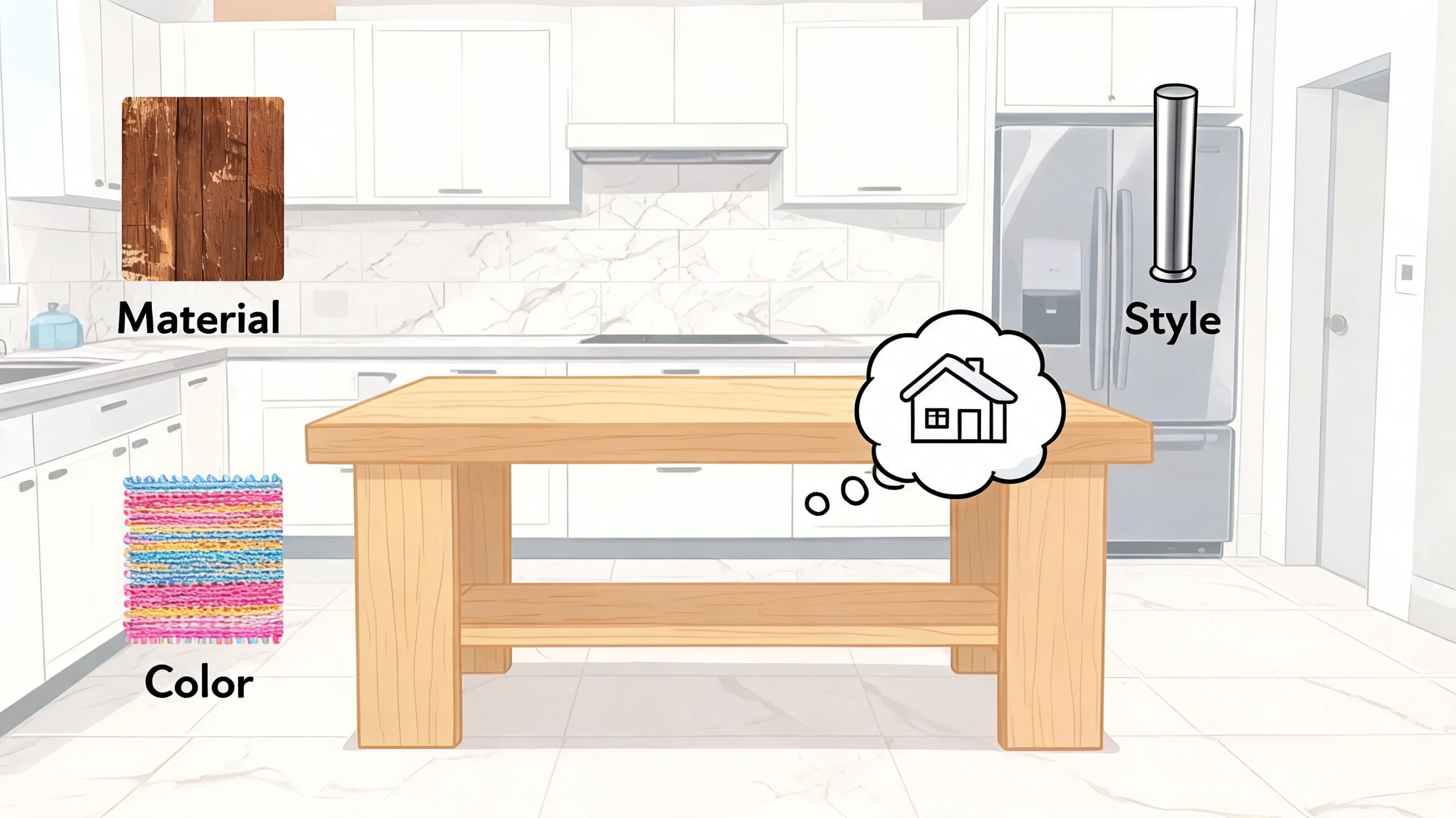
Once the layout works, the fun part starts. Style still needs to serve function, especially in kitchens with tables in the middle, where the piece is going to absorb wear from dishes, groceries, elbows, homework, and whatever lands there at the end of a long day.
Materials that earn their keep
Wood remains the most forgiving choice for a center table. It warms up painted cabinetry, ages well, and usually looks better with a few marks than a fussy surface does. A painted base with a stained top can also bridge traditional and updated finishes without making the kitchen feel theme-driven.
Metal bases can work in more contemporary rooms, especially if the cabinetry is simple and the goal is to keep sightlines open. They tend to feel lighter visually, though they need a top material that doesn't make the whole piece feel cold.
If the table doubles as a daily dining spot, chair comfort matters just as much as the tabletop finish.
Upholstery and everyday wear
In cabinet-heavy kitchens, a central table can add 20% to 30% more usable counter surface, and user trials for hybrid table-island layouts found 15% higher satisfaction rates when durable materials were chosen for high-traffic use, according to KitchenAid's overview of kitchen layout types.
That's one reason upholstered dining chairs need careful thought. They can make the room feel softer and more finished, but the fabric has to suit real life.
Consider these trade-offs:
- Performance fabrics: better for households that snack, spill, and use the kitchen all day.
- Wood seats: lower maintenance, easier to wipe down, and often better in tight spaces where chairs get moved frequently.
- Slipcovered looks: charming, but better in lower-splash zones than right next to a messy prep area.
Why seeing it in person matters
Color is one of the easiest things to misread online. Warm oak can arrive looking orange. A painted black finish can read blue under cool lighting. Upholstery that looks soft on a screen may feel stiff when you sit in it.
That's why a proper sit-test matters. You want to know whether the chair back supports you, whether the seat height feels right with the table, and whether the finish works with your flooring and cabinet tone in real light.
For homeowners who want both durability and style, La-Z-Boy Indiana options and Rowe Furniture custom looks often come up in broader home furnishing conversations because they offer dependable construction and performance-minded fabrics. In a full-home project, that same logic applies across adjoining spaces, whether you're selecting custom sofas, living room furniture Bloomington shoppers can coordinate with a kitchen refresh, or matching nearby seating to a more collected kitchen style.
An 88,000+ sq. ft. showroom makes that process easier because you can compare finishes, test chairs, and narrow the field quickly instead of guessing from swatches.
Find Your Perfect Kitchen Table Today
A center table works best when it solves a real problem. Maybe the island feels too bulky. Maybe the kitchen needs to be more social. Maybe the room needs one hard-working piece that can prep, seat, and gather without making the whole space feel overbuilt.
That's the appeal of kitchens with tables in the middle. They bring warmth without giving up function. They create a place to land. And when they're sized correctly, they improve the way the room moves.
What to remember before you buy
- Start with the floor plan: shape and clearance come before finish.
- Be honest about daily use: prep-only, dining-only, or both.
- Test the chairs: comfort changes everything.
- Choose materials for your actual household: not for a photo shoot.
A good kitchen table doesn't just fill the middle of the room. It gives the room a center.
If you're replacing a too-large island idea with a table, don't think of it as scaling back. Think of it as choosing a kitchen that behaves better. In many homes, that's the more refined move.
For a final gut check before you shop, these key steps to picking the perfect dining table are a good way to compare size, shape, and everyday practicality.
The best part is that this kind of change doesn't require a dramatic redesign to make an immediate difference. One well-proportioned table, the right chairs, and a layout that respects movement can completely change how a kitchen feels.
If you're ready to see options in person, visit Stahl Home Center, family-owned since 1967, and explore the 88,000+ sq. ft. Westside Bloomington showroom. You'll find thousands of items In-Stock Today, plus the benefit of being Indiana's Largest La-Z-Boy Dealer and a destination for Rowe Furniture style, performance fabrics, and Design Your Way custom options. Whether you're a relocator hoping to furnish your whole home this weekend, a quality seeker comparing dependable brands, or a style-focused shopper who wants to sit-test chairs and see true finishes before buying, Stahl offers local guidance, friendly service, customer pickup for take-home-today pieces, and scheduled professional delivery. Visit our Westside Bloomington showroom today to see our massive selection in person.