
Best Recliners for Tall People: Ultimate Comfort Guide


A tall shopper usually knows the problem before stepping into a store. The chair looks generous on the floor, feels soft for a moment, then the fit goes wrong fast. The head sits above the cushion line, the knees ride too high, and the footrest stops short enough that the legs never fully settle.
That's why the best recliners for tall people aren't just bigger recliners. They're better-fitted recliners. Comfort comes from dimensions that match the body, features that keep support in the right place as the chair moves, and the chance to test the whole thing in person instead of guessing from a product photo. A practical starting point is a solid recliner buying guide that helps narrow the field before a shopper ever sits down.
Table of Contents
- The Search for a Recliner That Actually Fits
- Why Standard Recliners Fail Tall People
- The Key Measurements That Guarantee Comfort
- Essential Features Beyond the Tape Measure
- How to 'Sit-Test' a Recliner in Our Showroom
- Find Your Perfect Fit at Stahl Home Center Today
The Search for a Recliner That Actually Fits
Tall people don't usually complain that a recliner feels bad in every way. The frustration is more specific than that. One part feels close, another part feels off, and the whole chair becomes tiring instead of relaxing.
A common example goes like this. The seat cushion feels plush enough, but it isn't deep enough to support the thighs. The backrest hits the shoulders well enough, but the head doesn't land where it should. Once reclined, the footrest stops short, so the calves carry the load and the body keeps shifting around trying to find a position the chair can't provide.
That mismatch is why “close enough” rarely works for taller frames. A recliner can look oversized and still be too short in the places that matter. Width often fools shoppers into thinking they've found roomier comfort, when the actual issue is length through the seat, back, and legrest.
A tall person can sit in a wide chair and still feel cramped if the support points stop too soon.
The good news is that this problem has a fix. The right recliner supports the body from shoulders to calves without forcing the neck forward or leaving the legs hanging. Once the fit is right, the chair stops feeling like furniture that must be tolerated and starts feeling like a place to stay for a while.
What comfort should feel like
A well-fitted tall-person recliner should let the body settle naturally:
- Head support: the head stays on the chair instead of floating above it.
- Thigh support: the seat carries more of the leg, not just the hips.
- Leg extension: the footrest reaches far enough that the lower body can relax.
- Easy posture: the back stays supported without slouching to “make” the chair fit.
That's the difference between shopping by appearance and shopping by fit. For taller shoppers, the second approach saves a lot of regret.
Why Standard Recliners Fail Tall People
Most standard recliners are built to suit a broad middle range of body sizes. That sounds practical until a tall person tries to use one every evening. Then the limits show up quickly.
Short chairs create long-term strain
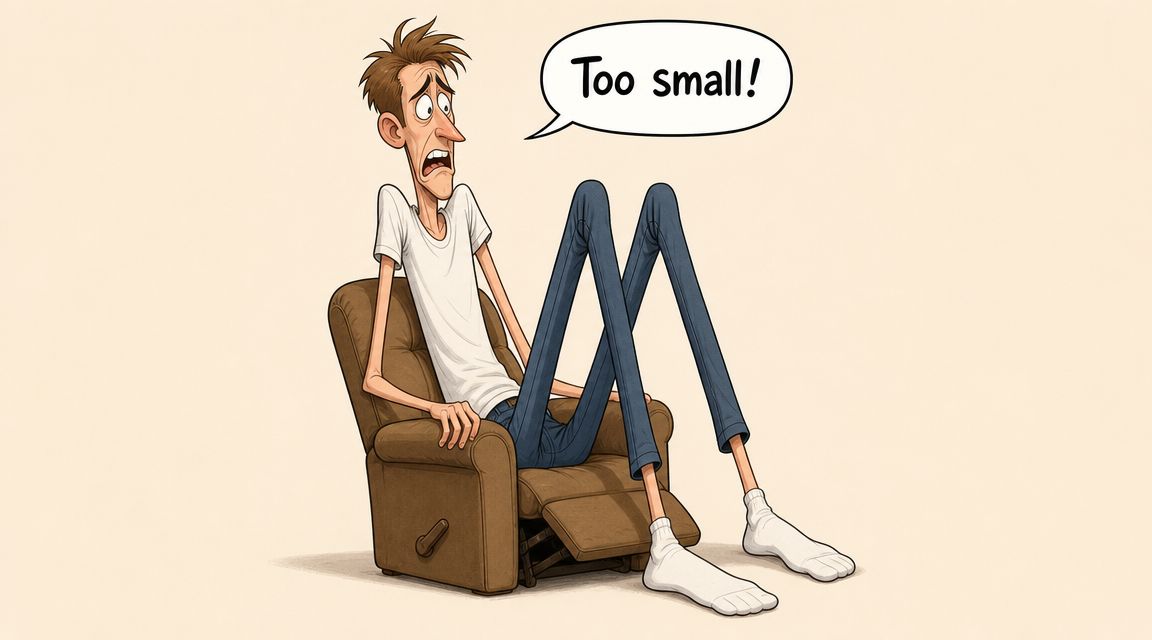
Using a too-small recliner is a bit like working all day at a desk chair made for someone much shorter. The body can adapt for a few minutes. It can't relax there for long.
If the back is too short, the neck does extra work because the head doesn't have a proper landing place. If the seat is too shallow, the body slides forward or perches at the edge. If the legrest is too short, the lower legs stay partly unsupported, which changes how pressure spreads across the body.
Those aren't luxury problems. They're fit problems.
Where the fit usually breaks down
Tall shoppers usually run into three trouble spots.
- Back height is too low: The upper back may touch the cushion, but the head ends up unsupported. That often leads to a chin-forward position when upright and awkward neck extension when reclined.
- Seat depth is too shallow: The chair may feel soft, yet the thighs don't get enough contact. Without that support, posture gets unstable and the lower back often loses its best position.
- Legrest length is too short: The feet might reach the end, but the calves don't rest evenly. The result is a reclined position that still feels unfinished.
Practical rule: Width should never be the first sign that a recliner fits a tall body. Length is usually the real issue.
A lot of shoppers learn this the hard way. They buy a chair because it feels roomy through the arms, only to discover that “roomy” and “supportive” aren't the same thing. A broad seat can still leave the knees, head, and lower legs in the wrong place.
That's also why the best recliners for tall people tend to be sold as a distinct category instead of a random oversized option. Tall frames need a different support map, not just extra bulk.
The Key Measurements That Guarantee Comfort
Once a shopper stops judging recliners by looks alone, the process gets much easier. A few measurements reveal most of what matters. For tall users, retail guidance commonly points shoppers toward seat depths around 21 to 23 inches and back heights of about 40 inches or more, with some specialty recliners extending much farther when fully reclined, as outlined in this tall-recliner sizing guidance.
That shift toward measurable fit is important. Tall-person recliners are now evaluated by dimensions first: seat height, seat depth, back height, and full extension. Before going shopping, it helps to review how to measure furniture for a better fit so the room and the body are both part of the decision.
The numbers that matter most
Back height affects whether the shoulders and head land where they should. Tall shoppers usually need enough height for the full upper body, not just the shoulder blades.
Seat depth decides whether the thighs are supported. Too little depth creates that perched feeling many tall people recognize immediately.
Seat height matters because getting in and out of the chair should feel natural. A seat that's too low can make the knees rise too sharply and can make standing up feel harder than it should.
Reclined length often decides the final verdict. A chair can seem acceptable upright, then fail the moment it opens because the leg support doesn't go far enough.
Weight capacity also deserves attention, even when the issue is height more than body weight. A taller person often puts stress across a longer support span, so overall construction still matters. This isn't just about whether the chair holds up. It's about whether the frame, mechanism, and cushions continue to support the body the way they did on day one.
Recliner Dimension Cheat Sheet for Tall Individuals
| Dimension | What It Affects | Target for Tall People (6'2"+) |
|---|---|---|
| Back height | Head, neck, and upper-back support | About 40 inches or more |
| Seat depth | Thigh support and posture | Around 21 to 23 inches |
| Seat height | Knee angle and ease of entry | High enough to avoid a cramped knee position |
| Reclined length | Calf and foot support at full extension | Look for extra-long designs built for longer legs and torsos |
If a recliner feels fine upright but awkward when fully open, the missing measurement is often reclined length.
A smart shopping habit is to bring these targets along and compare them against what the body feels in the chair. Numbers narrow the field. Actual sitting confirms the fit.
Essential Features Beyond the Tape Measure
Dimensions get a tall shopper into the right neighborhood. Features decide whether the chair stays comfortable through a movie, a nap, or an evening of reading.
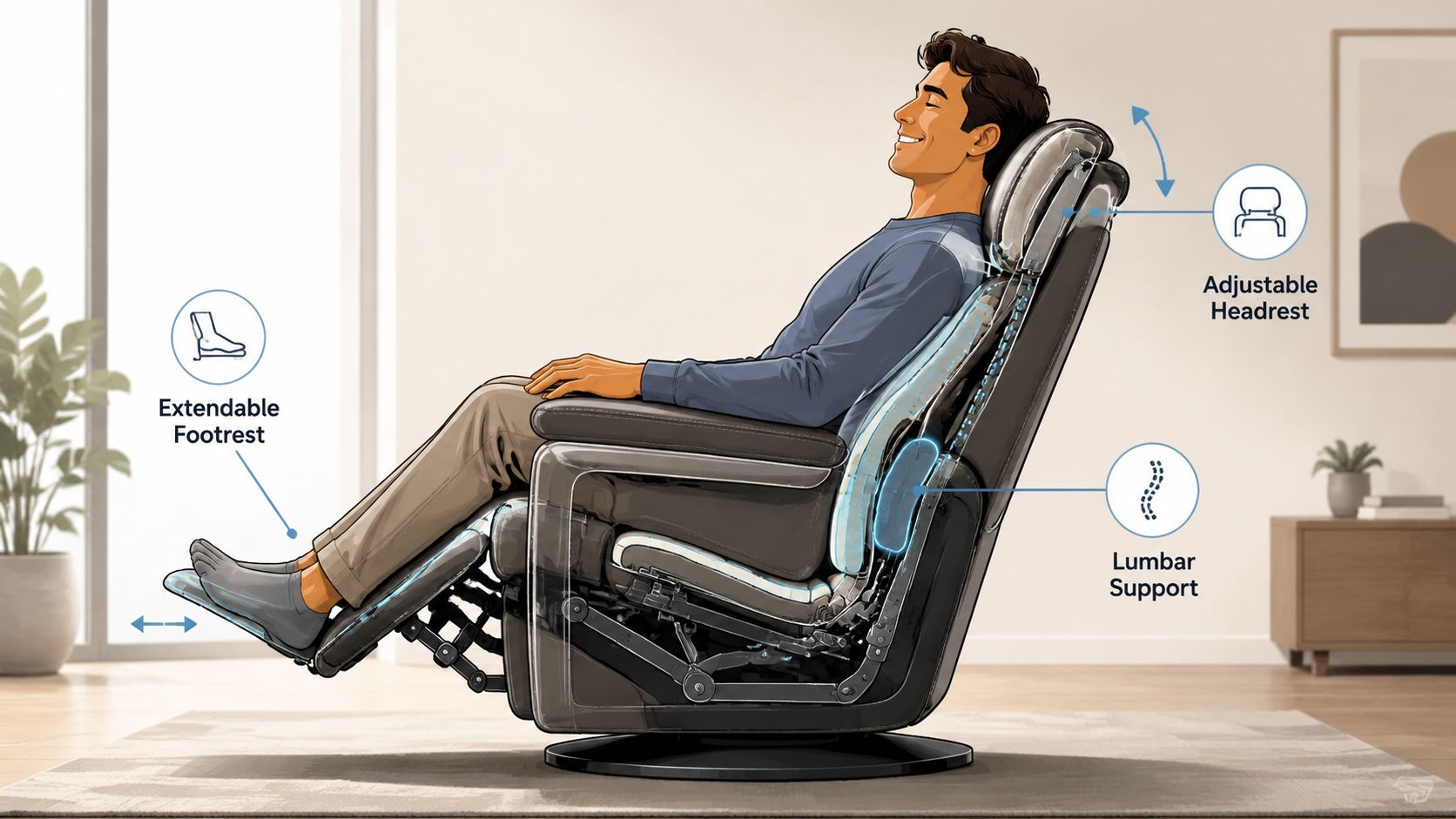
Power options can make a big difference here, especially for tall users who need a more exact position than a simple open-or-closed mechanism can provide. Shoppers comparing mechanisms often benefit from seeing the different types of power reclining seating before they commit.
The headrest matters more than many shoppers expect
Tall-person recliners should pair a high seat back with an adjustable headrest because as the chair reclines, the headrest needs to rise and support the occiput so the cervical spine stays aligned. That's one reason tall lines from La-Z-Boy often include these mechanisms, as noted in this guide to measuring recliners for tall users.
Without that movement, the chair may support the shoulders while letting the head drift. A tall person then has to choose between staring downward, straining the neck, or stuffing in a pillow to patch the problem.
Features that change daily comfort
Some features are worth paying for. Others depend on how the chair will be used.
- Power headrest: Best for people who watch TV or read while reclined. It lets the upper body relax without losing sightline comfort.
- Adjustable lumbar: Helpful when a tall torso needs support in a more precise spot than a fixed cushion can provide.
- Wall-hugger mechanism: Useful when floor space is tight and the chair needs to recline closer to the wall.
- Rocker or swivel function: Nice for lifestyle preference, but these features shouldn't come ahead of fit.
A manual recliner can still work very well if the frame is correctly sized. A power recliner usually gives taller users more control over the exact position, and that often solves the small-but-annoying fit issues that show up after the first few minutes.
The best feature set is the one that fixes a real comfort problem, not the one with the longest list.
That's a useful filter. If a feature helps the head stay supported, the lower back stay aligned, or the legs rest more fully, it's doing real work. If it only sounds impressive on a tag, it probably shouldn't drive the purchase.
How to 'Sit-Test' a Recliner in Our Showroom
Photos can show style. They can't show whether the chair fits a tall body from head to heel. That's why the sit-test matters.
A showroom visit gives shoppers something online buying can't. It gives comparison. In an 88,000+ sq. ft. showroom, it's possible to move from one recliner to the next, feel the difference in seat depth, test multiple back heights, and notice right away which chairs support the whole frame and which ones stop short. Comfort also depends on broader body support and posture, so it helps to understand a bit about ergonomic furniture design before shopping.
A quick in-store test that reveals the truth
A proper sit-test takes more than a quick drop into the cushion.
- Sit all the way back. The lower back should meet the backrest naturally. If the body has to scoot forward to feel right, the fit is off.
- Check the knees and thighs. The seat should support the legs without forcing the knees sharply upward.
- Recline fully. During full recline, many chairs fail tall users. The head, shoulders, and calves should all remain supported together.
- Stay there for a few minutes. A chair that feels fine for ten seconds may become irritating once the pressure points show up.
- Operate every control. Test the recline action, headrest movement, and any lumbar adjustment before making a decision.
What online photos can't tell you
Two recliners with similar proportions can feel completely different once someone sits in them. One may carry the thighs well but lose the head. Another may support the upper body but feel short through the legrest.
That's why the best recliners for tall people should always be tested at full extension, not just upright on the sales floor. A shopper also needs to get out of the chair cleanly. If standing up feels awkward in the showroom, it won't get better at home.
Sit in the chair with the same seriousness used to test a mattress. A recliner is body equipment, not just decor.
The sit-test turns guesswork into a practical decision. For tall shoppers, that's often the step that prevents an expensive mistake.
Find Your Perfect Fit at Stahl Home Center Today
The recliner market has changed. Major brands now offer dedicated tall-person models, and measurement-based buying has become a normal part of the shopping process, as described in this overview of body-specific recliner retailing. That's good news for anyone who's spent years trying to make a standard chair work.
Why local selection changes the process
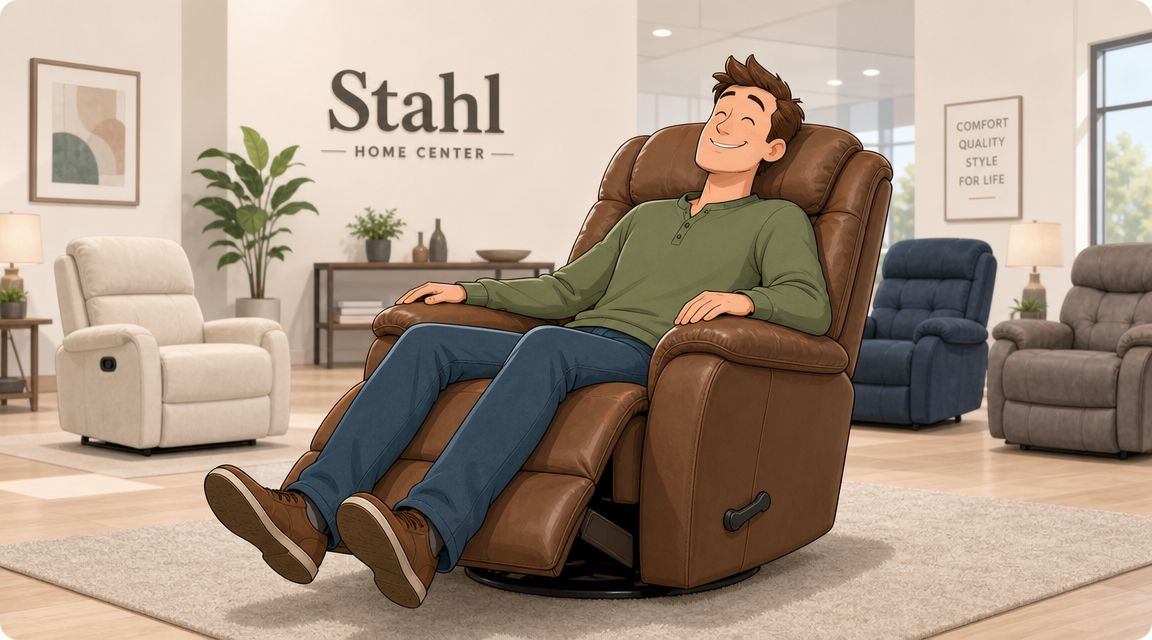
For shoppers in southern Indiana, Stahl Home Center offers a practical advantage: an 88,000+ sq. ft. showroom, thousands of pieces In-Stock Today, and the distinction of being Indiana's Largest La-Z-Boy Dealer. That matters for tall recliner shopping because fit is easier to judge when a shopper can compare multiple body-specific chairs side by side and take home the right one without waiting through a long backorder.
That local scale helps several kinds of shoppers at once:
- New homeowners and relocators: They can furnish a living room this weekend instead of waiting on uncertain timelines.
- Quality-focused buyers: They can compare a good-better-best range and feel the difference in support, tailoring, and mechanism quality.
- Style-first households: They can shop for comfort without giving up fabric choice, leather options, or a cleaner design.
Good fit now or custom fit later
Some shoppers want immediate relief. Others want a specific silhouette, fabric, or room plan. Both paths can work.
La-Z-Boy is often where tall shoppers start because the brand has long offered fit-specific recliner options, including chairs built for taller users. Rowe Furniture enters the conversation when style and customization matter just as much as support, especially for buyers who want to design around performance fabrics or a particular room palette.
For those who aren't in a rush, custom ordering opens up hundreds of fabrics and configurations through a Design Your Way approach. For those who are tired of waiting, in-stock recliners solve the problem much faster. If delivery help is needed after the purchase, shoppers can also review professional furniture assembly and delivery options before planning the trip.
A tall shopper doesn't need a miracle chair. That shopper needs the right dimensions, the right support features, and the chance to test the fit properly. Once those pieces come together, the search gets much simpler.
A tall person shouldn't have to settle for a recliner that leaves the neck unsupported or the legs half-hanging. Visit Stahl Home Center at the Westside Bloomington showroom today to see the massive selection in person, compare recliners in stock, explore La-Z-Boy Indiana favorites and Rowe Furniture custom options, and find a chair that fits well enough to take home the same day.