

Expert Guide: How to Choose Bed Frame in 2026


Choosing a bed frame often starts the same way. Someone finds a style online, likes the photo, checks the mattress size, and assumes the rest will work itself out. Then the frame arrives too tall, too flimsy, awkward for the room, or impossible to get up the stairs.
That's why learning how to choose bed frame options properly has less to do with chasing trends and more to do with making a few smart decisions in the right order. A bed frame is part of the sleep setup, part of the room layout, and part of the daily routine. It has to fit the mattress, suit the space, support the weight, and still feel right years later.
Table of Contents
- Beyond the Look Finding a Bed Frame That Lasts
- Start with the Blueprint Measuring for Perfect Fit
- Decoding the Options Choosing Your Bed Frame Type
- Judging Quality Materials Construction and Support
- Perfecting the Look and Feel Style and Scale
- The Final Step Why Buying Local Makes the Difference
Beyond the Look Finding a Bed Frame That Lasts
A good-looking bed frame can still be the wrong bed frame.
That's the mistake many shoppers make when they buy from a photo alone. The finish looks right, the headboard looks stylish, and the price seems reasonable. What the photo doesn't show is whether the frame shifts when weight is applied, whether the side rails feel rigid, or whether the support underneath is built for real nightly use.
Practical rule: A bed frame should be judged as a support system first and a style piece second.
The strongest buying decisions usually come from treating the frame like a long-term household piece, not a quick decor purchase. That means asking practical questions before style questions.
- How is the weight carried? Look under the mattress area, not just at the headboard.
- What parts take stress every night? Rails, joints, center support, and slats matter more than decorative trim.
- Will the frame still make sense later? A lower bed may look clean today but feel inconvenient with a thicker mattress or changing mobility needs.
In person, the evaluation gets easier. A shopper can press on the side rail, sit on the edge, check for movement at the headboard connection, and look underneath without guessing. That “sit-test” matters for more than comfort. It reveals whether the frame feels planted or shaky.
Materials deserve the same kind of scrutiny. A solid wood frame and a wood-look frame may read similarly online, but they age differently. Anyone comparing species, finishes, and long-term performance can get useful background from this guide to choosing the right hardwood for longevity and style.
Most bed frame regret comes from buying too fast. The smart approach is simpler. Check fit, check support, check construction, then decide whether the look still earns a place in the room.
Start with the Blueprint Measuring for Perfect Fit
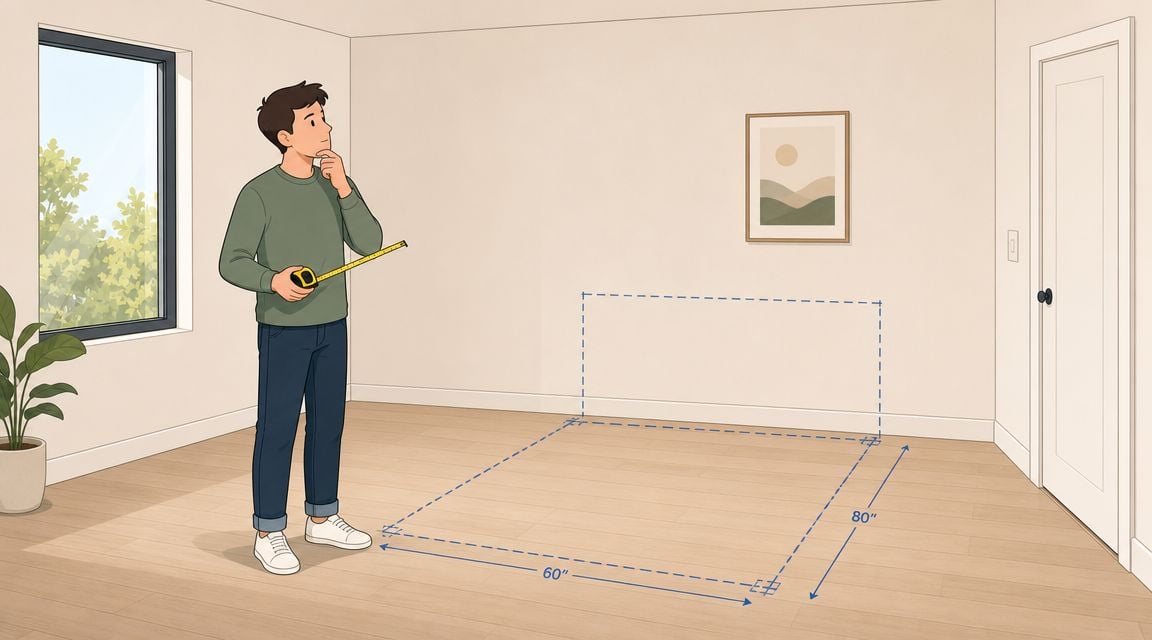
A bed can fit on paper and still become a problem on delivery day. I see that happen with shoppers who measured the mattress but skipped the headboard depth, the stair turn, or the clearance needed to open a drawer once the frame is in place.
Measure the mattress and the frame
Start with the mattress size, then verify the frame's full outside dimensions. The mattress tells you the sleep surface. The frame tells you how much floor space the bed will claim and whether it will fit through the house without surprises.
Check these points before you buy:
- Confirm the mattress size so the frame is built for the right sleeping surface.
- Check the full exterior dimensions including headboard thickness, footboard projection, and side rail width.
- Note any extra overhang from shelves, wings, storage drawers, or bulky posts.
- Measure the assembled height from floor to top of mattress support so you know how the finished bed will sit.
If you are replacing more than the bed, use this guide on how to measure furniture before delivery and placement.
Plan the room around everyday use
A bed should fit the room you live in, not just the room you can sketch on a floor plan. Leave enough space to walk, make the bed, open nearby drawers, and get in and out without turning sideways.
Clearance at the sides and foot matters. So does finished height. A low platform frame can make a room feel less crowded, but it may be less comfortable for someone who prefers a higher sitting position. A taller frame and mattress combination can feel easier to enter, but it can also crowd a smaller room and throw off the scale of nearby nightstands.
Headboards change the feel of the room too. A broad upholstered headboard adds presence, but it can eat into usable space faster than shoppers expect, especially in tighter bedrooms.
A bed needs living space around it, not just floor space under it.
Map the delivery path before purchase
This is the part many online shoppers miss. The bedroom may be large enough, but the frame still has to get past the front door, down the hallway, around the stair landing, and through the bedroom door.
Measure the full path:
- Entry doors
- Hallways
- Stair width
- Ceiling clearance on stairs
- Tight corners and turns
- Bedroom doorway and interior approach
Older homes, apartments, and upper-floor rooms deserve extra care here. If access is tight, choose a frame that breaks down into manageable pieces and ask how the headboard, rails, and support system are packed. On the sales floor, this is also a good time to ask one practical question shoppers often forget. What is the longest single box or assembled component? That answer tells you far more than a product photo ever will.
Decoding the Options Choosing Your Bed Frame Type
Once the measurements are settled, the frame type becomes easier to choose. Most shoppers narrow it down to four broad categories. Each one solves a different problem.
Platform beds
A platform bed has built-in support for the mattress and is often chosen for a cleaner, lower profile. It usually suits shoppers who want a simpler look and fewer components.
Platform frames tend to work well in contemporary spaces and in rooms where visual bulk matters. A broad, heavy platform can still overwhelm a compact room, but a more minimalist version often helps the room feel calmer. For readers comparing this style more closely, this overview of a platform bed base is useful.
Best for: Shoppers who want a modern profile and straightforward support.
Watch for: Slat design, center support, and overall height once the mattress is added.
Panel beds
Panel beds are the traditional choice many people picture first. They usually feature a distinct headboard, side rails, and often a footboard. They can lean classic, transitional, or more decorative depending on the silhouette.
They make sense for shoppers who want the bed to read like a full furniture piece rather than just a base under the mattress.
Best for: Bedrooms where the bed is meant to be a visual anchor.
Watch for: Whether the support setup requires an added foundation.
Adjustable bases
An adjustable base changes the way the bed functions, not just how it looks. It's often a strong option for readers, TV watchers, people who like customized positioning, or households thinking about comfort support in a more personal way.
The practical question isn't whether the feature sounds appealing. It's whether the mattress is compatible and whether the bedroom style allows the adjustable base to work visually with the rest of the furniture.
If a bed needs to do more than hold a mattress, an adjustable base deserves a serious look.
Best for: Sleepers who value position flexibility more than a traditional furniture look.
Watch for: Mattress compatibility and whether the surrounding bed design allows for movement.
Storage beds
Storage beds solve one problem extremely well. They add useful space without adding another piece of furniture to the room. In smaller bedrooms, guest rooms, and homes where closet space is tight, that can be a smart trade.
The compromise is access and weight. Storage frames can be heavier, bulkier, and more complicated to move.
Best for: Rooms where extra storage matters as much as sleeping space.
Watch for: Drawer clearance, room layout, and ease of transport into the home.
Bed Frame Type Comparison
| Frame Type | Needs Box Spring? | Best For | Key Benefit |
|---|---|---|---|
| Platform | Usually no | Modern rooms, simple setups | Built-in mattress support |
| Panel | Sometimes | Traditional or statement bedrooms | Strong furniture presence |
| Adjustable base | Depends on setup | Customized comfort | Position flexibility |
| Storage bed | Depends on design | Smaller rooms or limited storage | Space-saving function |
The right type usually reveals itself once the buyer decides what matters most. Lower profile. Traditional look. Flexibility. Extra storage. When those priorities are clear, the list gets much shorter.
Judging Quality Materials Construction and Support
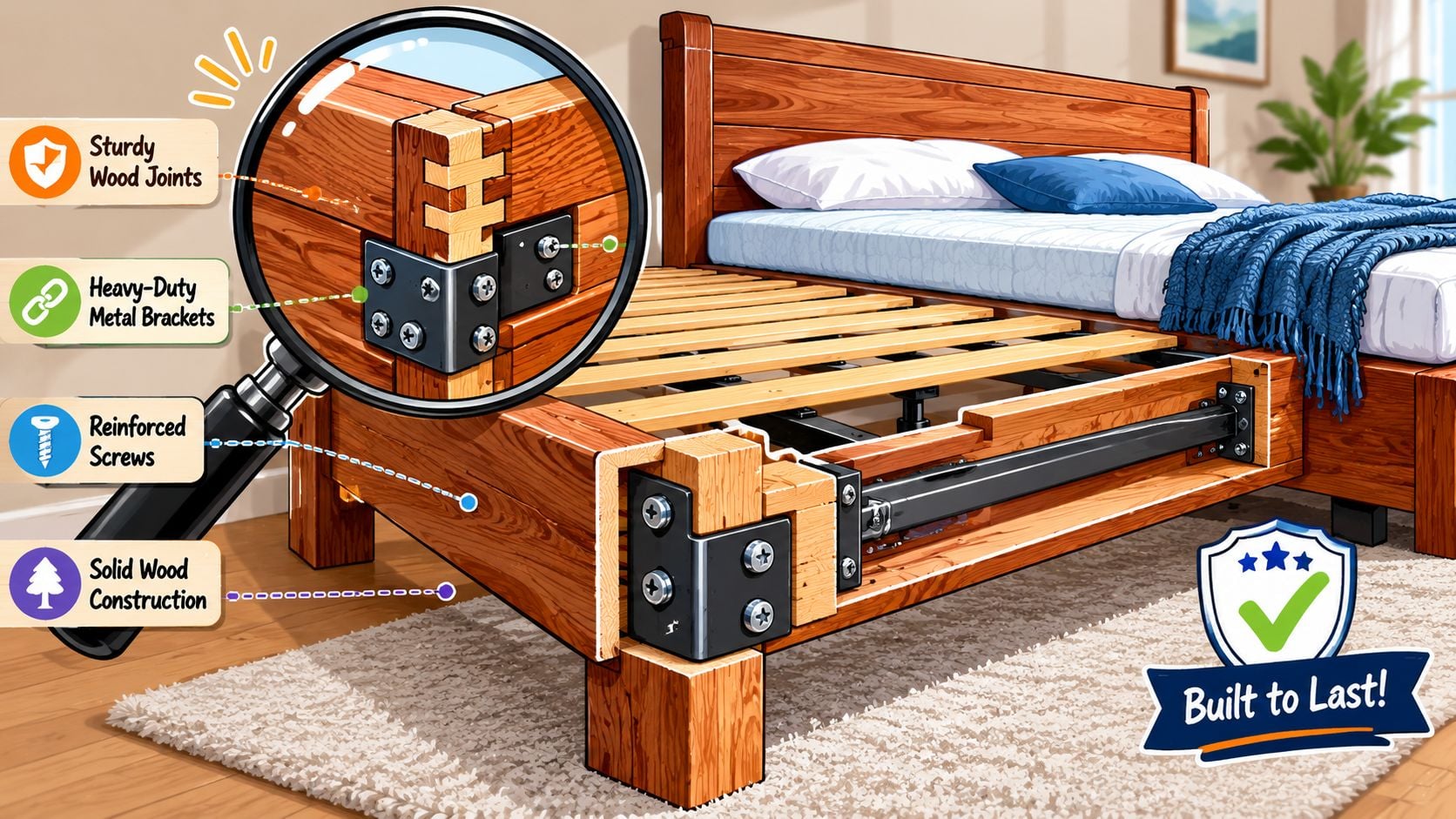
A bed frame earns its keep after the first week, not on the showroom floor. The frames that hold up for years usually have the same traits underneath. Good support, tight joinery, and materials that fit the job.
What the material tells you
Material affects lifespan, upkeep, weight, and how the frame feels in the room. Solid wood has a furniture-grade look and can often be repaired or refinished if it picks up wear over time. Metal usually gives a lighter visual profile and can be a smart choice for buyers who want strength without as much bulk. Upholstered frames soften the look and make sitting up in bed more comfortable, but the fabric is only the outer layer. The hidden structure still decides how well the frame performs.
I tell shoppers to judge material in terms of ownership, not just appearance. A heavy hardwood bed may feel like the right long-term purchase, but it also takes more effort to deliver, move upstairs, or reposition during a room change. A metal frame may be easier to handle and keep clean, but some lighter models cut corners at the joints or slat system.
What keeps a bed stable
The support system matters more than the finish. A frame can look substantial from the footboard and still fail where the load is concentrated every night.
Check these points closely:
- Center support: Queen, king, and California king sizes need reliable support through the middle of the frame.
- Slat strength and spacing: Slats should feel thick enough to resist flexing and spaced closely enough for the mattress being used.
- Joints and corner connections: Fasteners should sit tight, and connection points should feel reinforced rather than thin or shallow.
- Leg placement: Center legs and support feet should contact the floor evenly, without wobble.
- Weight capacity: The frame should handle the combined weight of the mattress, sleepers, and any added load like kids or pets climbing in.
A quick sit-test can reveal a lot. Sit on the side rail, shift your weight, then sit near the headboard and footboard corners. Listen for movement. Feel for sway. If a frame flexes on the sales floor with one adult sitting on it, it will not improve at home.
Kneel down and inspect the working parts. That is where quality shows up.
Mattress support also needs to match the frame. Some beds are built for slats alone. Others perform better with a foundation. If you are unsure, this guide on why a box spring may still matter for some bed setups can help sort out what your mattress and frame need.
For shoppers comparing frames in person, Stahl Home Center gives buyers a chance to check construction details, test for movement, and talk through mattress pairing before making a decision.
Perfecting the Look and Feel Style and Scale
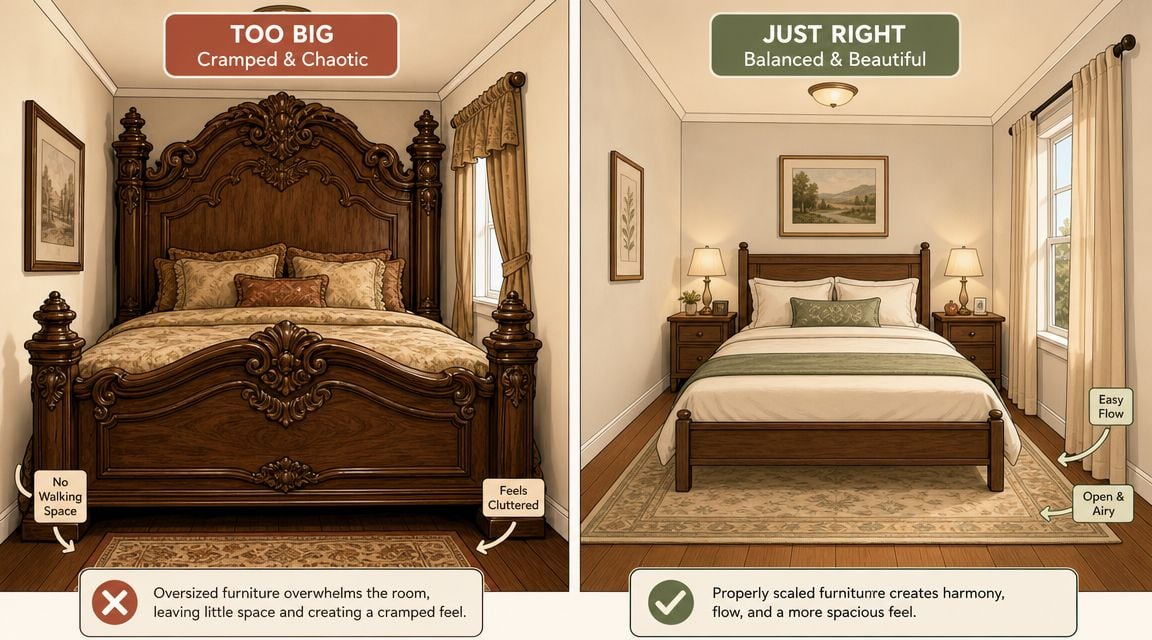
A bed can be the right size on paper and still look wrong once it is in the room. I see that happen with tall headboards in low-ceiling bedrooms and bulky storage bases in spaces that already have full-size case pieces. Good styling starts with proportion.
Match visual weight to room size
Visual weight matters as much as footprint. A tall winged headboard, thick side rails, or a deep storage base draws the eye and makes the bed feel larger than its measurements suggest. In a smaller bedroom, a simpler frame often keeps the room calmer and preserves open space around the bed. In a larger primary bedroom, more height and shape at the headboard can help the bed hold its place instead of looking undersized.
Ceiling height changes the equation too. A headboard that looks balanced in a showroom with generous ceiling clearance can feel top-heavy at home. Before buying, step back and picture the frame with your actual nightstands, lamps, dresser, and window placement.
Delivery day should factor into style choices. One-piece headboards, wide side rails, and storage beds can be harder to get through older stairwells, tight turns, and apartment entries. Shoppers who want fewer surprises on purchase day often benefit from the kind of hands-on guidance described in this look at why family-owned furniture stores help with real-world buying decisions.
Choose comfort details on purpose
Headboards affect daily use, not just appearance. Upholstered headboards are usually the better pick for anyone who reads or watches TV in bed because they feel softer against the back and shoulders. Wood and metal headboards give a cleaner line and can suit rooms that need a lighter, less cushioned look.
Footboards deserve the same scrutiny. They can make the bed look finished, but they also add length and visual bulk. For taller sleepers, a high footboard can become an annoyance fast.
Mattress height changes the final look more than many shoppers expect. A thicker mattress can make a low-profile frame look balanced, while the same frame with a thinner mattress may look flat or squat. In the showroom, look at the bed from the doorway, from the side, and while seated on the edge. That gives a more honest read on scale than a straight-on photo ever will.
The Final Step Why Buying Local Makes the Difference
Research helps narrow the field. In-person shopping usually settles the decision.
That matters most with a bed frame because so much of the purchase depends on things a screen can't communicate well. A shopper needs to see whether the finish reads warm or flat in real light, whether the upholstery texture feels right, and whether the frame moves when someone sits on the side rail. The sit-test isn't just about softness. It's about stability, height, and confidence in the construction.
A local showroom also makes the practical side easier to manage. Shoppers can compare styles at full scale, ask about support systems, and sort through in-stock versus custom-order choices without guessing. For anyone balancing timing and selection, a family-owned store with broad inventory can be useful, especially when that background and service model are explained clearly in this overview of family-owned furniture stores.
For Bloomington-area shoppers, the local advantage is straightforward. Stahl Home Center has been family-owned since 1967, operates an 88,000+ sq. ft. showroom, carries thousands of items In-Stock Today, and is Indiana's Largest La-Z-Boy Dealer. For shoppers who want custom style instead of immediate pickup, Rowe adds hundreds of fabric and configuration options. That mix works well for new homeowners trying to furnish a whole home this weekend, as well as buyers who want a more personalized bedroom look with scheduled professional delivery.
The biggest benefit is clarity. A buyer can walk in with measurements, compare frame types in person, test construction with a careful eye, and leave with a choice that fits both the room and the long term.
Visit Stahl Home Center today to see the massive Westside Bloomington showroom in person. Shoppers can compare bedroom sets, mattresses, and bed frames side by side, explore La-Z-Boy Indiana favorites, review custom options from Rowe Furniture, and choose from thousands of pieces that are ready to take home today or schedule for professional delivery.