

In Stock Leather Recliners Bloomington: What to Know


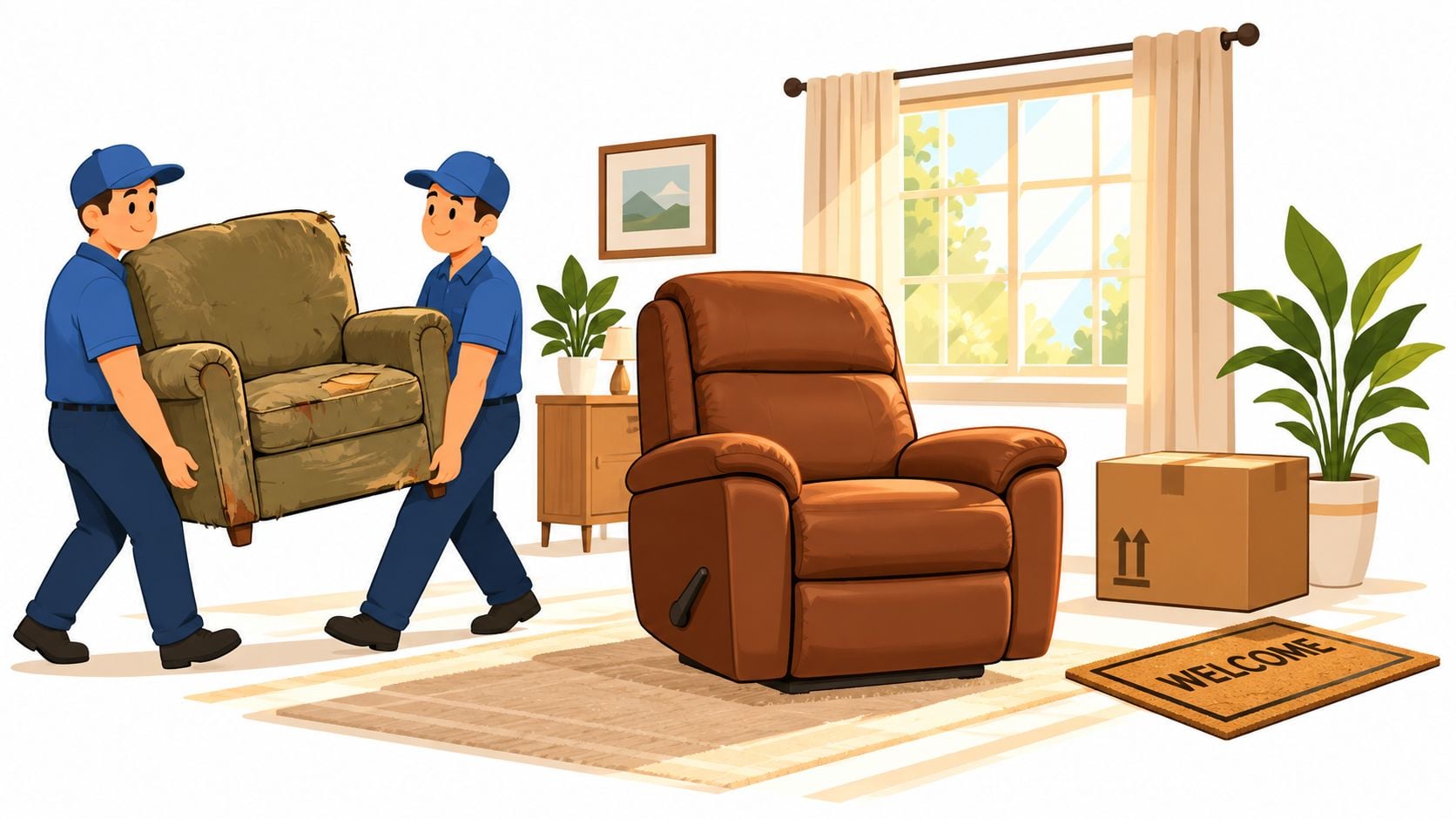
A move-in date is approaching, the old recliner has finally worn out, or family is coming and the living room needs a refresh. In each case, the priority is the same: find a chair that fits, feels right, and doesn't leave the household waiting weeks to sit down. Shopping for in stock leather recliners is about solving that problem with a chair that can be available now.
At Stahl's 88,000-square-foot Westside Bloomington showroom, shoppers can compare recliners in person and make three practical decisions: which upholstery material suits the household, whether the chair fits the person who'll use it, and whether to choose showroom inventory or a custom order. Stahl Home Center has served Bloomington since 1967, combining a substantial selection with local service. (Stahl Home Center's showroom and history)
Why an In Stock Leather Recliner Changes the Furniture Hunt
A recliner is a daily-use chair, not just a finishing touch for a room. When the one that used to handle reading, television, and an afternoon nap gives out, a long wait can disrupt the routine. The same goes for a new homeowner furnishing a place or a relocating professional who wants to settle in without living around empty rooms.
That's where showroom inventory changes the decision. Thousands of pieces are in stock and ready to take home today, according to Stahl's description of its available furniture. Instead of choosing from a picture and waiting for a made-to-order piece, shoppers can sit in available recliners, compare materials and cushioning, and check how each chair works before choosing.
There's a reason recliners have earned a place in everyday homes. A 1975 industry account reported that U.S. recliner sales rose 3% in 1974, even as the overall dollar value of furniture sales fell 10%; by 1973, about 3.8 million recliners had been sold in the United States. (The New York Times' account of the recliner market) The appeal is practical: a chair that supports lounging and relaxation can become a regular part of a household's day.
For a shopper, the useful approach is straightforward:
- Start with the upholstery. Find out what material covers the seating surfaces, arms, and sides.
- Check the fit in person. Try the chair upright and reclined, not just for a quick sit.
- Choose by timeline. Pick available floor inventory for immediate pickup, or explore custom options if a particular fabric or configuration matters more than speed.
The Sit-Test is a major advantage of visiting a showroom. Online images can't show how firm a cushion feels, whether a footrest supports the legs properly, or how a leather finish looks in the room's light. For shoppers searching for a furniture store in Bloomington, IN, the sensible next move is to compare actual chairs and ask specific questions before deciding.
Understanding Leather Grades and What You Are Sitting On
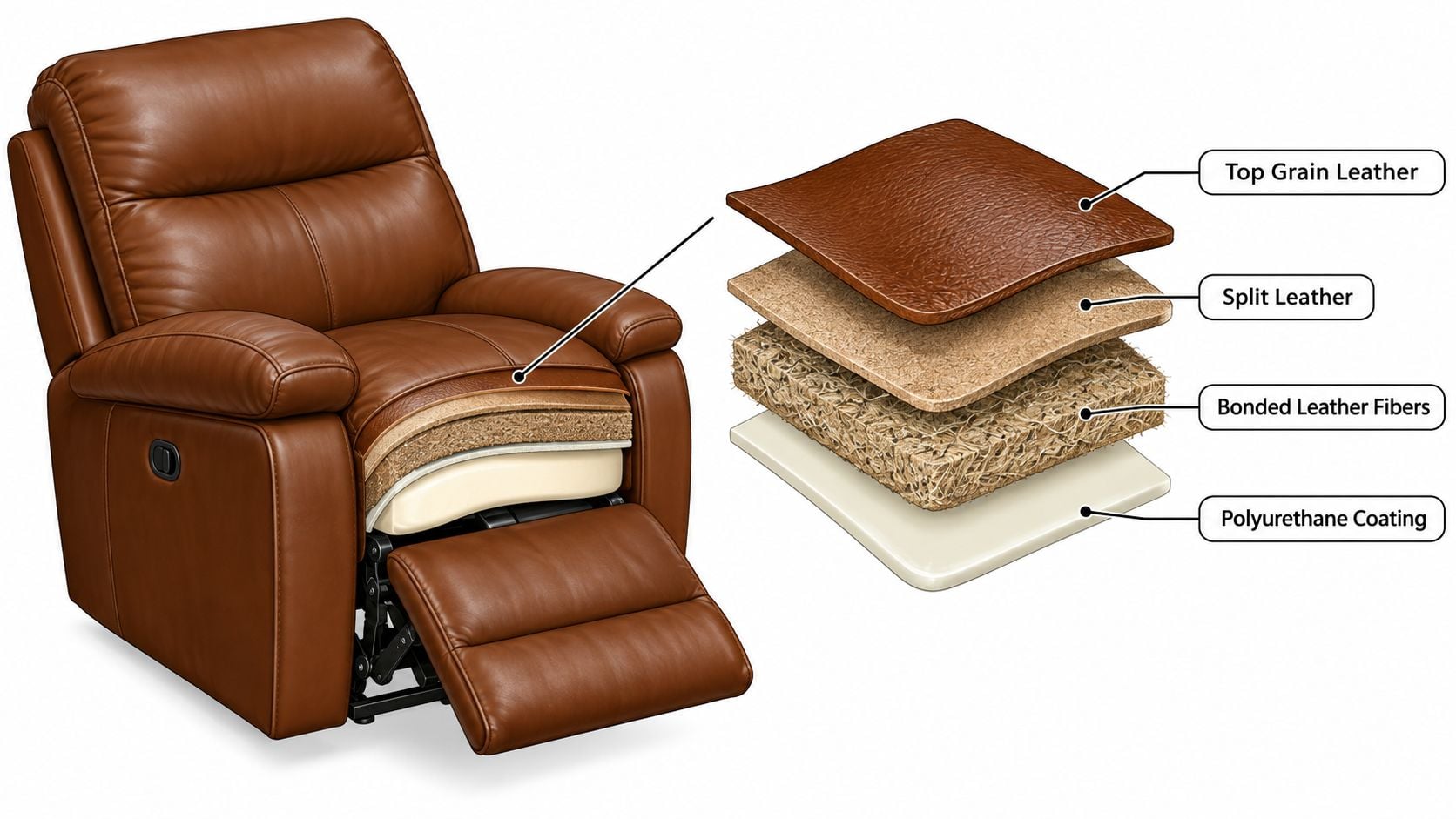
Before taking home an in-stock recliner, ask for its upholstery description in writing. A chair labeled “leather” may use genuine leather on the seat and other high-contact areas, with synthetic material on the sides or back. Floor inventory gives you the chance to inspect those differences before buying. Use that advantage rather than judging the cover by its color or shine.
Bonded leather, polyurethane (PU), and other synthetic covers have different care needs and aging patterns from natural leather. Ask which material you're buying, where it appears on the chair, and how to clean it.
Natural leather can develop a patina over time and may be repairable, depending on the hide and damage. Faux-leather upholstery can be easy to wipe clean initially, but some covers peel after prolonged use and flexing. Synthetic covers typically cost less than premium natural leather. Choose them for their price and care requirements, with a clear understanding that they won't age the same way.
Leather has historically occupied a higher price tier than fabric in the recliner category: reported median best-selling prices were $625 for a leather recliner and $399 for a fabric-covered recliner, according to Furniture Today's recliner market figures. Treat those figures as historical context, not current showroom prices. Compare the upholstery coverage and construction before deciding whether a higher price buys something you value.
Ask what the upholstery covers
Have the salesperson identify the material on the seat, backrest, arms, sides, and footrest. Then inspect the grain, seams, piping, and transitions between materials. Look for secure stitching and a consistent finish, especially at the seat front, arm caps, and footrest, where contact and movement put the cover to work.
“Durable” alone isn't enough information.
For heavy daily use, request a documented abrasion-test result for the specific upholstery. Leather testing may define failure as cracking or surface breakdown rather than a hole; compare results only when methods and conditions match. (Guidance on leather abrasion testing)
Keep your showroom check focused:
- Identify the materials. Confirm which surfaces are genuine leather, synthetic, or bonded.
- Inspect the construction. Examine grain, seams, piping, and upholstery transitions.
- Request test details. Ask for the standard, reported cycles, and material tested.
- Match the cover to the household. Account for pets, children, cleaning preferences, daily use, and leather maintenance.
Stahl's guide to leather versus fabric upholstery offers a closer comparison of care and wear. Choose available inventory when its cover meets your needs. If the material you want isn't in stock, ask about Design Your Way custom options rather than accepting the wrong upholstery for a faster pickup.
Testing Fit the Way Ergonomics Recommends
A recliner can look impressive and still fit poorly. Comfort depends on how the seat, backrest, headrest, and footrest work together with the person sitting in it. Cornell ergonomics material identifies a supported recline of about 110°–130° as a useful range for reducing spinal loading, with lumbar support helping maintain the spine's natural curve. (Cornell's ergonomics guidance on chair design)
Run the sit-test in the showroom
Take time to test the chair as it will be used. Keep shoes on, sit back, and open the footrest fully. Don't judge comfort only by the upright position or by how soft the cushion feels at first.
Check these points:
- Lower-back support. The lumbar area should stay supported as the chair reclines. If the back slumps away from the cushion, the chair may not suit the user's shape.
- Head and neck position. The headrest should cradle the neck without pushing the chin forward.
- Seat depth. The back should reach the backrest while the feet meet the extended footrest naturally. A seat that's too deep can leave the lower back unsupported; one that's too short can put pressure behind the knees.
- Recline angle. Find a position where the body feels supported, not stretched or forced into the mechanism. The Cornell guidance places supported recline in the 110°–130° range.
- Ease of use. Operate the recliner more than once. Notice whether it opens smoothly and whether the user has to twist, brace with the shoulders, or strain to reach the controls.
A recliner's geometry matters even more in a multigenerational household or for someone right-sizing to a smaller home. Seat height, arm height, and the effort needed to sit down or stand up can matter as much as cushion feel. For more on how comfort and support relate to furniture design, see Stahl's information on ergonomic furniture design.
Fit before features: A power mechanism can change the chair's position, but it can't correct a seat that's too deep or a backrest that doesn't support the user.
Matching Recliner Features to How You Actually Live
Recliner features should solve a real daily need, not just look appealing during a quick demonstration. A manual recliner uses a lever or pull handle, while a power model moves at the touch of a button. Depending on the chair, power controls may adjust the footrest, headrest, or lumbar support separately.
A relocated professional furnishing an apartment may value the easy adjustments of a power recliner, especially when the chair will serve as a frequent spot for reading or relaxing. Someone who prefers a simpler mechanism may be perfectly comfortable with a manual model. The better choice depends on who'll operate it, how often, and whether extra adjustment is useful rather than merely available.
Lift chairs are a separate category, designed to help a user move from sitting toward standing with less strain on the joints. They may be worth considering for an older adult or someone recovering from surgery, but the chair still needs to fit the user and the room. The user should be able to reach the controls, sit with their back supported, and rise without feeling that the chair tips or moves unpredictably.
The same principle applies to households with different users. A caregiver supporting a parent, for example, should consider whether the chair accommodates the primary user's dimensions and daily movements, not whether it suits the person who visits the showroom. Even a nursery has a different kind of seating need, and a saucer chair for nurseries offers a compact, casual option for spaces where a full recliner isn't the right fit.
Before shopping, write down the features that matter in daily life: easy controls, independent headrest adjustment, help standing, or a straightforward manual lever. Stahl's overview of how power recliners work can help shoppers understand the mechanism before they compare chairs. The best feature list is based on the user's routine, not on the showroom demonstration alone.
Take It Home Today Versus Scheduled Professional Delivery
Once you've chosen a chair on the floor, decide how it gets home. In-stock shopping removes the wait for a custom build, but pickup and scheduled delivery require different arrangements. Check Details on Stahl's in-stock selection, then confirm that the specific recliner you want is available for pickup before arranging transport.
Choose pickup when your vehicle can accommodate the chair and you have enough help to move it safely. Leather recliners can be heavy and awkward to handle, especially through narrow openings. Check the chair's dimensions against the vehicle's loading opening and usable cargo space. Protect the upholstery during loading and transport.
If lifting or access is a problem, schedule Stahl's professional delivery service and discuss the route into your home before setting the appointment.
Measure the route, not just the room
Start at the entrance and follow the entire path to the chair's destination. Measure doorways, hallways, stair turns, and tight passages. A roomy living room won't solve a narrow landing.
Bring those measurements to the showroom, along with a tape measure. Ask for the dimensions of the exact recliner you're buying and check how much clearance its mechanism needs behind and around the chair. Allow room for the footrest to extend without blocking the space you use to walk through the room.
Practical rule: Measure twice before pickup or delivery. A chair that fits the floor plan but can't get through the doorway isn't the right choice.
Make the transport decision before paying. Confirm pickup readiness or the delivery schedule, explain any stairs or tight corners, and settle who will handle the move. The advantage of floor inventory is getting comfortable sooner, with a chair that reaches its intended spot safely.
How Good Better Best Helps You Choose Value
Good-Better-Best is a useful way to shop because it turns a vague budget question into a comparison of what the chair needs to do. Stahl's range gives shoppers a chance to weigh price, construction, upholstery, and features rather than assuming every recliner should have the same specification. As Indiana's Largest La-Z-Boy Dealer, Stahl offers shoppers access to a broad selection of La-Z-Boy recliners and sofas.
Good can be the right fit for a first apartment, guest room, or occasional-use space. The priority is a comfortable, well-fitting chair that meets the room's needs without paying for features the household won't use.
Better suits the recliner that will do the daily work: movie nights, reading, and weekend naps. Here, it makes sense to pay close attention to the frame and mechanism, upholstery construction, and how the chair feels after several minutes of sitting.
Best is for shoppers who know which upgrades matter to them. That may mean a premium upholstery choice, enhanced cushioning, or a power configuration with adjustments the user will rely on. Rowe adds another route for buyers looking for custom style and performance.
The labels aren't a ranking of who should spend what. They're a way to make trade-offs visible. A guest-room chair doesn't need to carry the same workload as a recliner used every day by more than one person.
When comparing La-Z-Boy in Indiana options and Rowe Furniture, ask what changes from one model or configuration to another. Get specific about the cover, support, controls, and expected use. A strong value is a chair that fits the household's routine and budget without leaving an important need unmet.
When In Stock Is Not Enough and Design Your Way Makes Sense
Sometimes the right chair is already on the floor. A shopper who wants immediate comfort, likes the available upholstery, and finds a good fit can choose from in-stock recliners and take the next step toward bringing one home. The point of choosing from floor inventory is speed, not settling for a chair that doesn't work.
Other shoppers have a clear specification in mind. They may want a particular fabric, a specific color, or a layout that suits an unusual room. Stahl's Design Your Way service lets customers choose from hundreds of fabrics and configurations for La-Z-Boy and Rowe Furniture. (Stahl's Design Your Way custom service)
Custom orders take longer because the furniture is built to the selected specifications. In return, the buyer gets more say over the cover, look, configuration, and other choices available for that product. Rowe is positioned for shoppers seeking custom style and performance, while La-Z-Boy offers another path to personalize a recliner, sofa, or other living-room piece.
A simple decision rule keeps the choice clear:
- Choose in stock when timing matters most and an available chair passes the material and fit checks.
- Choose Design Your Way when a particular look, fabric, or configuration matters enough to accept a longer wait.
- Compare both when the room needs more than a recliner, or when a specific upholstery choice could change the feel of the whole space.
Stahl has served Bloomington since 1967, and its showroom gives shoppers room to compare living-room furniture and other home furnishings in person. For new homeowners and relocators, that can make it easier to plan a room while distinguishing the pieces that can come home right away from the pieces worth customizing.

For shoppers searching for living room furniture in Bloomington, the next step is to sit in several chairs and compare them against the room, the user, and the desired timeline. That's the quickest way to tell whether an in-stock leather recliner is the right answer or whether a custom order is worth the wait.
Stahl Home Center offers an 88,000-square-foot showroom, thousands of in-stock pieces ready to take home today, and Design Your Way options for shoppers who want a specific look. Visit Stahl Home Center at the Westside Bloomington showroom to try leather recliners in person, check the fit, and discuss custom fabrics and configurations.