
Platform Bed Base A Buyer’s Guide to Style & Support


You're probably looking at a bedroom that needs to come together fast. Maybe you just moved, maybe you're finally replacing an older setup, or maybe you're tired of a tall, bulky bed that makes the whole room feel crowded. You start shopping online, and suddenly every frame looks the same until you get into the details that matter, like support, height, material, and whether your mattress will even sit correctly on it.
That's where a platform bed base starts to make sense. It's clean-looking, simpler than the old frame-plus-box-spring setup, and easier to fit into the way people live now. It can also be a smart choice for storage, room flow, and mattress support, if you buy the right one.
A lot of shoppers get stuck in the same gap. They can find endless product photos, but not much practical help on what feels sturdy in person, what slat systems hold up, and what details separate a good-looking bed from one that causes problems six months later. If you're building a room from scratch, it also helps to think about the bed as part of the whole space, not as a standalone item. For ideas on pulling that room together, accessorizing the bed of your dreams is a good companion read.
Table of Contents
- Your Guide to Modern Bedroom Foundations
- What Exactly Is a Platform Bed Base
- Platform Beds vs Traditional Bed Frames
- Exploring Platform Bed Materials and Styles
- Ensuring Mattress Compatibility and Longevity
- Planning Your Space Measurements and Layout
- Your Buying Checklist and the Stahl Advantage
Your Guide to Modern Bedroom Foundations
You notice the problem the first night after a bedroom refresh. The paint is right, the rug fits, the nightstands work, but the bed still feels bulky and overbuilt. A tall frame with a box spring can dominate the room, even when the square footage is decent.
That is usually when shoppers start asking about platform beds.
A platform bed base appeals to people who want the bedroom to feel cleaner, lower, and easier to live with. It removes one layer from the setup and often gives the room a more current profile without making the space feel stripped down. For many homes, that change is practical as much as visual.
I see this most often with first-home buyers, condo owners, guest room updates, and customers who are tired of replacing mismatched frame and box spring combinations. They want fewer parts, less guesswork, and a bed that looks intentional. Platform beds meet that need well, but the right choice depends on details you cannot judge from a thumbnail image online.
That matters more than shoppers expect. A bed can photograph beautifully and still have weak slats, too much flex, or a finish that looks very different in person. Seeing the materials up close, pressing on the rails, and checking how stable the base feels tells you far more than a product listing can. In-store, you also get a clear answer on availability instead of waiting through vague shipping windows.
Why buyers keep choosing them
- Cleaner proportions: A platform bed base usually sits lower and reads lighter in the room, which helps bedrooms feel less crowded.
- Fewer components: Many designs support the mattress directly, so you are not paying for a separate box spring just to complete the setup.
- Practical storage options: Some platform beds leave usable clearance underneath, while others build storage into the frame itself.
- Easier comparison shopping: Once you check support style, slat spacing, and material quality, it becomes much simpler to separate a good value from a short-term fix.
If you are planning the full bed setup, our guide to accessorizing the bed of your dreams helps tie the foundation, mattress, and finishing layers together.
The decision is not just about style. It is how the bed will support your mattress, fit your room, and hold up after years of everyday use. That is where a showroom visit earns its keep, and it is one reason customers come to Stahl when they want to compare options with confidence.
What Exactly Is a Platform Bed Base
A platform bed base is an all-in-one mattress foundation. Instead of using a basic bed frame and then adding a box spring on top, the platform itself supports the mattress directly. That support usually comes from either a solid surface or a slatted surface built into the frame.
An all-in-one computer is similar to this setup when compared to a tower and separate monitor. A traditional setup uses multiple parts to create the finished sleeping surface. A platform bed base combines those jobs into one unit.

Two main support styles
Some platform beds use a solid deck. Others use slats that run across the frame. Both can work well, but they don't behave the same way.
| Support type | How it works | Best fit |
|---|---|---|
| Solid platform | Mattress rests on a continuous surface | Buyers who want a very even feel |
| Slatted platform | Mattress rests across evenly spaced slats | Buyers who want support with airflow |
Solid platforms feel more uniform underneath the mattress. Slatted platforms allow more air movement and are common across wood, metal, and upholstered designs. Neither is automatically better in every case. The details decide that, especially with slat construction and spacing, which matters later when mattress compatibility enters the picture.
Why platform beds became mainstream
Platform beds aren't new, but they moved into the mainstream as bedroom design shifted toward cleaner lines and less bulk. As Casper's overview of platform beds versus box springs notes, the design gained mainstream traction in the mid-20th century, replacing bulky box springs with integrated support. That same source says platform beds represent a key segment of the bed frame market valued at over $24 billion globally in 2026.
Practical rule: If a frame needs a box spring to become functional, it isn't really doing the same job as a true platform bed base.
In the store, the difference is obvious once you stand next to both setups. A traditional frame often feels like a structure waiting for more parts. A platform bed base feels complete on its own. That's the core definition, and it's the reason so many buyers prefer it.
Platform Beds vs Traditional Bed Frames
This decision usually comes down to three things. The look you want, the height you prefer, and whether you want the frame itself to provide mattress support.

A platform bed base gives you a modern, integrated foundation. A traditional bed frame usually relies on a box spring or foundation to create the final sleeping surface. If you've been trying to sort out whether you still need one, why you really do need a box spring for your bed helps explain where that older system still applies.
Where platform beds win
Platform beds are a strong fit for buyers who want less bulk and fewer moving parts. They also tend to make the room feel more visually open.
Common strengths include:
- Lower profile: The whole setup often looks more current and less imposing.
- No separate box spring: That usually simplifies both the cost and the shopping process.
- Cleaner styling: Platform beds fit especially well with modern, transitional, and pared-back bedroom furniture.
- Better use of space: Depending on the design, the area under the bed may stay open for storage or cleaning access.
There's also a practical advantage many people don't think about until later. A simpler setup means fewer pieces that can shift, squeak, or wear unevenly.
Where traditional frames still make sense
Traditional bed frames aren't outdated. They still work well for shoppers who want a taller bed, a classic silhouette, or a sleep setup built around an existing box spring.
A traditional system can be a better fit when:
- You prefer more bed height: Some sleepers like getting in and out of a taller bed.
- Your room leans classic: A traditional headboard and rail structure can suit a more formal bedroom.
- You already own a compatible foundation: Keeping a quality existing box spring may be sensible if it still matches your mattress needs.
The trade-offs that matter most
The biggest mistake is assuming one system is universally better. It isn't. A platform bed base can feel too low for some people. A traditional frame can feel bulky in a smaller room. The right answer depends on how you use the room and what feel you want when you sit down or get up.
The best bed setup isn't the one that photographs best. It's the one that supports your mattress correctly and feels right in your room every day.
Here's the honest short version:
- Choose platform if you want integrated support, a cleaner silhouette, and fewer components.
- Choose traditional if you want extra height, a more familiar setup, or you're working around a foundation you already own.
For many shoppers today, platform beds feel easier to live with. For others, the older frame-and-box-spring approach still fits the room and the sleeper better. Good buying starts when you stop treating this like a style-only choice.
Exploring Platform Bed Materials and Styles
Material changes everything with a platform bed base. It changes the look, the weight, the feel when you push against the side rail, and how much confidence you have in the frame over time. A lot of online shopping falls short here, because two beds can look nearly identical in a photo and behave very differently in a bedroom.
Wood, metal, and upholstered options
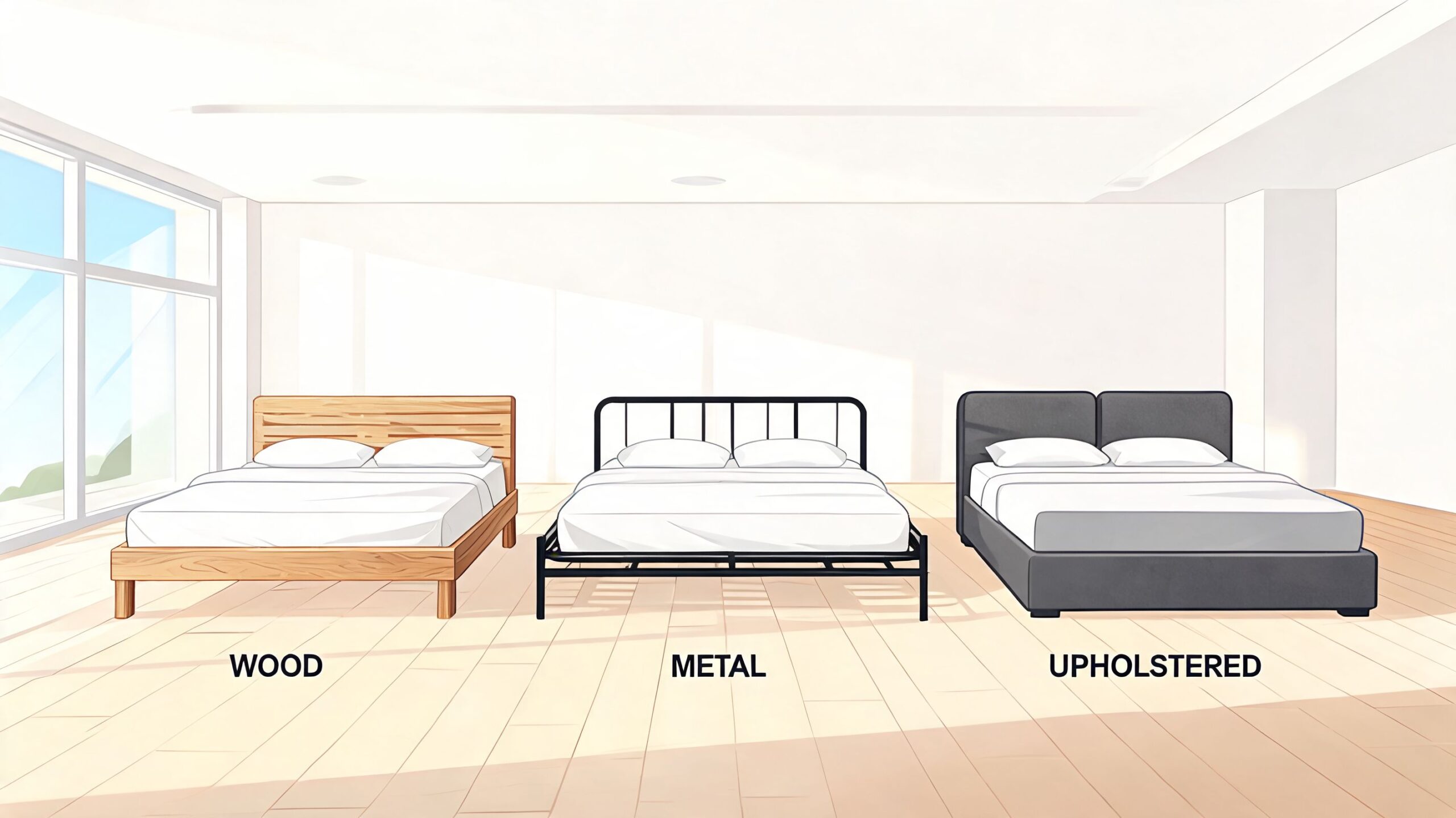
Wood platform beds bring warmth. They're often the first choice for buyers who want the bedroom to feel grounded rather than stark. Wood also works across a wide range of styles, from clean Scandinavian lines to more substantial farmhouse and transitional designs. If you're comparing wood species and durability, choosing the right hardwood for longevity and style is worth reading.
Metal platform beds usually look lighter visually, even when they're structurally stronger. They fit industrial, contemporary, and utility-focused rooms well. They can also be a smart choice when strength is the top priority.
Upholstered platform beds soften the whole room. They add texture, color, and a more padded, comfortable feel at the headboard and rails. They're especially popular with shoppers who read in bed or want the bed to feel less rigid and architectural.
Weight capacity is not a small detail
Material and design directly affect how much a frame can handle. According to Chairish's platform bed guide, wood frames are typically rated for 400 to 600 lbs excluding the mattress, metal frames for 800 to 1,200 lbs, and heavy-duty models exceed 3,500 lbs.
That range tells you something important. “Platform bed” is not one thing. A slim decorative frame and a reinforced heavy-duty model may share the same label, but they're built for completely different households.
A practical Good, Better, Best mindset
A simple way to shop is to think in tiers:
- Good: Basic metal or simple wood platform beds that deliver the clean look and everyday function many rooms need.
- Better: More substantial wood or mixed-material frames with sturdier side rails, stronger support systems, and more refined finishes.
- Best: Premium hardwood, reinforced metal, or well-built upholstered designs where the structure feels solid and the styling becomes part of the room's long-term design.
What works and what disappoints
What works is a bed where the material matches its intended use. Metal often wins in high-demand households. Wood often wins when buyers want warmth and furniture presence. Upholstered beds win when softness and finish are just as important as support.
What disappoints is buying by surface appearance alone. Thin side rails, weak center support, and lightweight slat systems can hide behind attractive fabric or stain color.
If the frame shifts when you press on it in the showroom, it won't improve once it gets home.
The strongest choice is usually the one that balances style with honest structure. A platform bed base should look good, but it should feel settled, stable, and purpose-built.
Ensuring Mattress Compatibility and Longevity
This is the detail that saves people from expensive mistakes. A platform bed base can look perfect, fit the room, and still be the wrong support system for the mattress if the slats aren't built properly.
The key issue is slat spacing. For a platform bed base to support a mattress correctly and help maintain warranty compliance, slats should be made from real wood and spaced no more than 3 to 4 inches apart, according to European Sleep Works' platform bed frame guide. Wider gaps allow the mattress to flex downward, which can lead to faster wear and sagging.
Why spacing matters so much
Foam and hybrid mattresses need consistent support. When the gaps between slats are too wide, the mattress doesn't stay evenly supported across the sleeping surface. Instead, sections of the mattress dip into open spaces under body weight.
That problem may not show up on day one. It tends to show up later as uneven feel, soft spots, or visible sagging that owners first blame on the mattress itself.
Wider slat gaps don't just affect comfort. They can shorten the useful life of the mattress sitting on top of them.
If you're pairing a new frame with a new mattress, it helps to review both together instead of buying them separately and hoping they match. This mattress buying guide is a useful reference for that process.
Slatted versus solid support
There isn't one universal winner here. The better choice depends on the mattress and the kind of support you want.
- Slatted platforms: Often a great fit when the slats are sturdy, properly spaced, and well secured.
- Solid platforms: Can provide a very even base, which some buyers prefer for consistency.
- Weak flexible systems: These are where trouble often starts, especially when the support surface gives more than the mattress manufacturer expects.
What to inspect in person
A quick visual check isn't enough. Look closely at the support structure.
Check for:
- Real wood slats: These tend to provide better rigidity than flimsy alternatives.
- Tight spacing: Keep the gaps within the manufacturer-friendly range noted above.
- Center support: On larger beds, the middle of the frame needs proper reinforcement.
- Secure fit: Slats should sit firmly in place, not rattle or bow easily by hand.
Some shoppers focus almost entirely on the headboard because that's the part they see first. That's understandable, but the support deck is the part that protects the mattress investment. If the foundation is wrong, the rest of the bed doesn't matter much.
Planning Your Space Measurements and Layout
A platform bed can make a bedroom feel calm and open, or make it feel cramped the minute you try to walk around it. I see this in the showroom all the time. Someone knows they want a queen or king, but the fundamental issue is how that bed will sit with nightstands, windows, dresser clearance, and the path from the door to the closet.
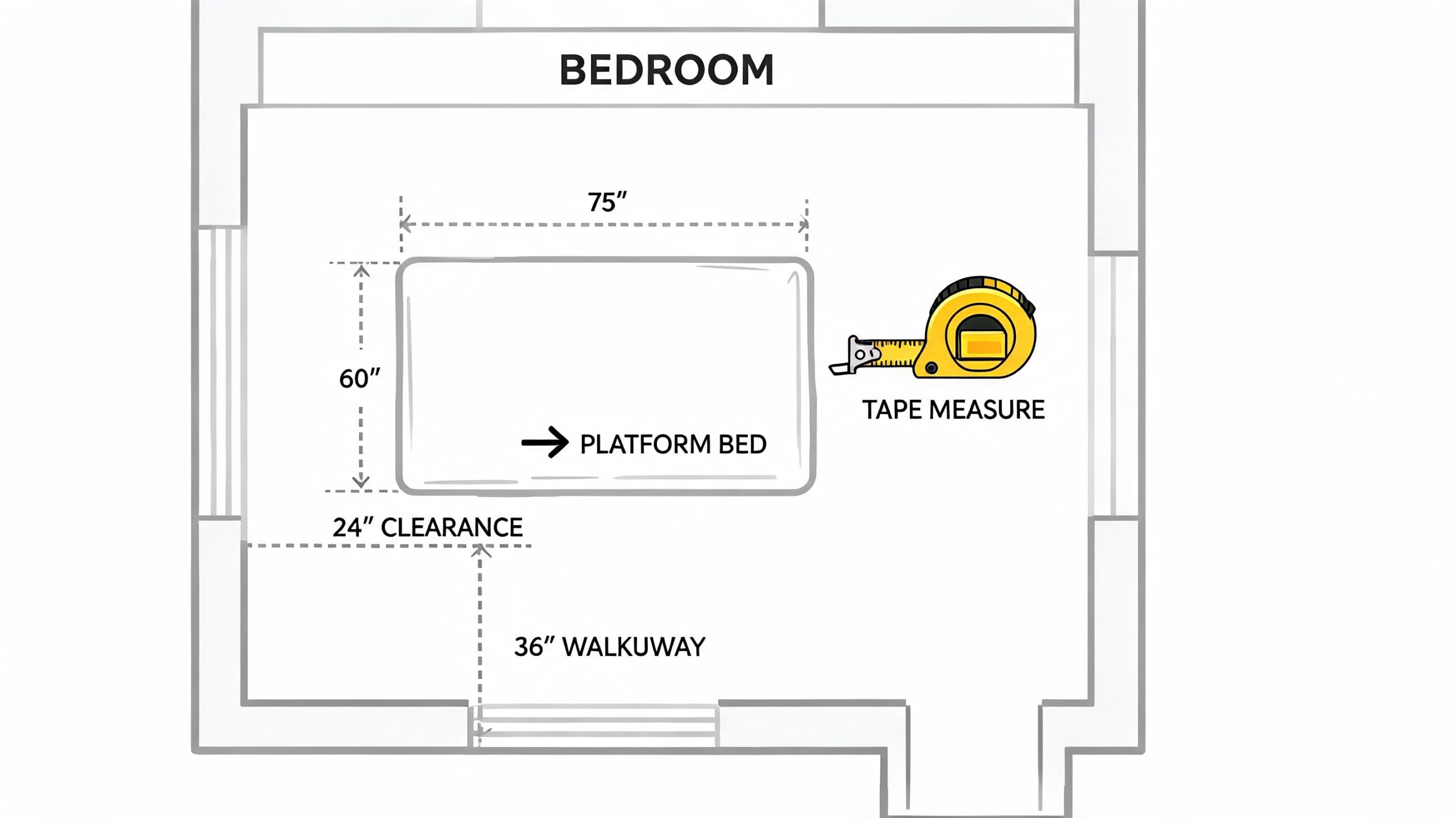
Height matters just as much as width. Platform beds come in low, mid, and taller profiles, and the same mattress can feel very different depending on where it sits. A lower frame often keeps the room looking more open. A taller one can give you usable storage underneath and make it easier to get in and out of bed every day.
Start with the full room, not just the wall where the bed will go.
Before you choose a frame, measure these three areas:
The room footprint
Note the overall length and width, then mark windows, baseboard heaters, floor vents, outlets, and door swing. Those details affect placement more than shoppers expect.The bed's outer dimensions
A platform bed often extends beyond the mattress size, especially at the headboard and side rails. A king mattress size does not always mean a king-size footprint.The delivery path Entry doors, stair turns, hallway width, and low ceilings can decide what gets into the room. For a practical walkthrough, see how to measure furniture before delivery.
This is one of the biggest gaps between online research and in-store shopping. Product listings may give basic dimensions, but they do not show how thick the side rails feel in person or how much visual weight a headboard adds to a smaller room. On the floor, you can step around the bed, compare heights beside a nightstand, and get a much better read on whether the layout will work.
A quick test helps. Leave enough space to open drawers, make the bed without squeezing sideways, and move comfortably at night. If the room only works on paper, it usually does not work well in daily use.
Use bed height with intention
Low platform beds suit rooms where you want a lighter, more modern look. They also work well under lower windows or in spaces where a tall headboard would feel heavy.
Taller platform beds solve different problems. They can create real under-bed storage, make vacuuming easier, and feel more comfortable for shoppers who do not want to sit close to the floor. The trade-off is visual bulk. In a smaller bedroom, extra height can make the bed feel more dominant.
A quick layout check before you buy
Ask these questions:
- Will your nightstands still feel proportional beside the bed?
- Will the headboard cover part of a window, trim, or wall feature?
- Can you use the under-bed space, or will frame design make access awkward?
- Will you have enough clearance to walk past the foot of the bed without turning sideways?
Good layout planning is practical. A few careful measurements, plus the chance to see the bed in person and confirm what is in stock, can save you from buying a frame that fits the mattress but never quite fits the room.
Your Buying Checklist and the Stahl Advantage
A good platform bed base should do four jobs well. It should support the mattress correctly, fit the room, match the style of the space, and feel solid when you interact with it. If one of those pieces is off, the bed may still look good on day one, but it won't feel like a smart purchase over time.
Your platform bed base checklist
- Support system: Check whether the bed uses a solid platform or slats, and inspect how sturdy that support feels.
- Slat construction: Look for real wood slats with proper spacing so the mattress stays evenly supported.
- Material choice: Match wood, metal, or upholstery to both your style and the demands of your household.
- Height: Decide whether you want low-profile design, easier access, extra storage space, or a balance of all three.
- Frame stability: Push on the rails, check the center support, and notice whether the bed shifts or creaks.
- Room fit: Confirm the outer dimensions, not just the mattress size it holds.
- Lifestyle fit: Consider whether this is for a primary bedroom, guest room, new home, downsizing move, or a quick whole-room refresh.
Why in-person shopping still matters
This category is a perfect example of what online research can't fully solve. You can read product specs all night and still miss the feel of the materials, the firmness of the slat system, or the way one bed sits in relation to nightstands and dressers.
The in-person advantage is simple:
- You can see the finish: Wood tone, fabric texture, and scale are easier to judge in person than on a screen.
- You can test stability: A quick hands-on check often reveals whether a frame feels planted or flimsy.
- You can compare quickly: Side-by-side shopping makes differences in build quality much more obvious.
- You can make a confident decision faster: That matters when you're furnishing a room on an actual timeline, not a theoretical one.
For buyers who want variety and speed, that local showroom experience matters even more. Stahl Home Center has an 88,000+ sq. ft. showroom, is family-owned since 1967, and offers the scale many shoppers expect from a larger chain with the service of a neighborhood store. If you're furnishing beyond the bedroom, that matters. New homeowners and relocators often need to pull together more than one room at once.
There's also a practical split in how people shop. Some want In-Stock Today options they can take home now or arrange for scheduled professional delivery. Others want to customize. For that second group, Design Your Way opens the door to hundreds of fabrics and configurations, especially through trusted names like La-Z-Boy and Rowe Furniture. Stahl is also Indiana's Largest La-Z-Boy Dealer, which gives shoppers unusual depth if they're finishing a whole home instead of stopping at a bed.
If you value a Good-Better-Best approach, immediate availability, and being able to judge quality with your own eyes, a big local showroom closes the gap that online research leaves open.
If you're shopping for a platform bed base, a full bedroom set, mattresses, or you're furnishing your whole home this weekend, visit Stahl Home Center and see the difference in person. Explore the 88,000+ sq. ft. Westside Bloomington showroom, compare materials side by side, and choose from In-Stock Today furniture ready for pickup or scheduled professional delivery. If you want something more personal, ask about Design Your Way custom options from La-Z-Boy and Rowe Furniture. Visit our Westside Bloomington showroom today to see our massive selection in person.