
Shop Home Office Furniture the Right Way: A Practical Guide


The spare bedroom looked fine on move-in day. Then work took over. A laptop landed on a small table, paperwork stacked up in the corner, and a dining chair became the “office chair” for far too long. By week two, the back started complaining. By month two, the room felt like a storage zone with a charger.
That's where a lot of people are right now when they shop home office furniture. They've saved inspiration photos, compared finishes online, and read plenty of generic advice. What they still need is a practical plan for building a workspace that supports real work, fits the room, and doesn't require waiting around for a vague future delivery.
The good news is that a better setup doesn't have to be complicated. A smart home office starts with the basics: enough room, the right desk, a chair that supports the body properly, storage that cuts clutter, and materials that hold up. It also helps to buy in a way that removes guesswork. Color looks different on a screen. Cushioning feels different in person. Seat depth, arm height, and desk scale are decisions that shouldn't be made blind.
People who need to furnish quickly, especially new homeowners and relocators, usually care about one thing first. They want to get the room done this weekend and move on with life. Quality seekers have a different priority. They want something that won't feel worn out after a short stretch of daily use. Style-focused shoppers want both comfort and a finished look that belongs in the home.
All three groups need the same thing in the end. They need a workspace that feels intentional, not temporary.
From Temporary Fix to Permanent Workspace
A temporary home office has a recognizable look. The chair doesn't adjust properly. The desk is either too shallow or too crowded. Cords spill across the floor. Video calls happen with bad lighting and a background nobody meant to show. The room works just well enough to keep the day moving, which is exactly why people leave it that way too long.
That shortcut gets expensive in comfort. It also hurts focus. When someone shifts around all day trying to get comfortable, reaches over piles of paperwork, or squints at a screen because the room lighting is wrong, the workspace is fighting the job.
The broader category keeps growing because people aren't treating home offices as temporary anymore. The home office spending market is projected to grow from USD 32,288.11 million in 2025 to USD 144,263.65 million by 2035, with a 14.3% CAGR, according to Future Market Insights on home office spending projections. That kind of long-range investment tells the story clearly. Households are building workspaces as permanent parts of the home.
A real upgrade starts with one decision
The right shift isn't buying random pieces one by one. The right shift is deciding that the room has a job to do.
A serious workspace should support:
- Daily comfort so the chair and desk work for long sessions
- Clear organization so clutter doesn't steal attention
- Visual calm so the room feels like part of the home
- Immediate function so work can happen now, not months from now
Stop shopping for “office furniture” as separate objects. Shop for a work system that fits the room and the routine.
That's also where in-person shopping still matters. Online inspiration can help narrow a style. It can't tell someone whether the chair seat is too firm, whether the wood tone clashes with the floor, or whether the desk depth leaves enough room for a proper monitor setup. The practical reality of a good home office starts with fit, feel, and scale.
Assess Your Space and Needs Before You Shop
Most home office mistakes happen before anyone enters a store. They happen with bad measurements, vague assumptions, and buying a desk because it looks good in a photo.
A usable office needs breathing room. An optimal home office requires a minimum dedicated area of approximately 100 square feet to fit a standard desk, ergonomic chair, and essential storage without creating the congestion that hurts productivity, according to BenQ's home office setup guidance.

Start with the room, not the furniture
Before anyone shops home office pieces, the room needs a basic audit.
Measure wall-to-wall space
Include window placement, door swing, outlets, vents, and any trim that changes usable depth.Mark the working zone
Not every inch of the room belongs to the desk. Leave room for the chair to move, storage to open, and traffic to flow.Check the light source
Natural light helps, but the desk shouldn't face glare. Side light usually works better than direct reflection on a screen.
For shoppers who need a clean process, this room measuring guide from Stahl is a useful place to start.
Ask better questions
A home office that works for one person can fail completely for another. A laptop-only setup needs one kind of footprint. A workspace with files, dual screens, and frequent calls needs another.
A smarter checklist looks like this:
Screen setup
One monitor or more than one changes desk width and depth fast.Paper workflow
People who handle printed documents need drawer space, shelving, or a file cabinet nearby.Call frequency
Regular video meetings make lighting, background, and camera height more important.Tech needs
Printers, chargers, docking stations, and speakers all need a place to live.Room sharing
A guest room office or bedroom office needs furniture with a smaller visual footprint.
Practical rule: If the room can't handle the desk, chair, and storage comfortably together, the answer isn't squeezing harder. The answer is choosing pieces with the right scale.
Match the office to the workday
A relocator furnishing a whole house quickly usually needs a setup that's efficient, simple, and ready to function immediately. A quality seeker may accept a larger footprint if the desk and chair are built for long-term daily use. A decorator may prioritize a cleaner silhouette because the office sits in a visible part of the home.
Those are different styles, but they all come back to one rule. The room should support the work first. Style should sharpen the result, not hide a bad layout.
Choosing the Right Desk as Your Command Center
The desk does more than hold a laptop. It sets the posture, controls the layout, and decides whether the room feels calm or crowded. People often overbuy or underbuy here. They choose a desk with a dramatic look and no working surface, or they buy a basic rectangle that doesn't support how they work.
Three desk types and who they fit
A useful way to shop home office desks is to compare them by work style.
| Desk type | Best for | Watch for |
|---|---|---|
| Writing desk | Smaller rooms, laptop users, cleaner look | Limited storage and sometimes less depth |
| Executive desk | Paper-heavy work, larger rooms, stronger presence | Can overpower the room if scale is wrong |
| Sit-stand desk | People who want movement during the day | Needs stable construction and enough top space |
A writing desk works well for a spare bedroom or a corner office setup where visual lightness matters. It's often the right answer for style-focused decorators who want the office to blend with the rest of the home instead of looking corporate.
An executive desk makes more sense for people who spread out documents, keep supplies close, or want built-in storage without adding multiple extra pieces. This is often a strong fit for quality seekers who want the desk to feel substantial and grounded.
A sit-stand desk serves a different shopper. It's for someone who wants flexibility through the day and values adjustability over furniture presence.
Depth matters more than most people think
Shoppers fixate on width first. Depth often decides whether the desk really works.
A shallow desk can create bad screen placement and cramped keyboard positioning. A deeper work surface usually gives better distance from the monitor and leaves room for task lighting, notebooks, or a charging setup without turning the whole top into clutter.
For technical setups, the rest of the equipment matters too. Indeed's home office essentials guide notes that high-speed internet supported by a quality WiFi modem and router is central to remote work performance, and that monitors in the 25 to 27 inch range are commonly recommended for ergonomic viewing. That affects desk planning immediately. A monitor of that scale needs proper placement, not a squeezed edge-of-desk compromise.
Features worth paying for
The right desk earns its keep when the workday gets busy.
Look for these details:
- Cable control so wires don't take over the surface
- Drawer placement that doesn't interfere with leg room
- A finished back if the desk won't sit against a wall
- A durable top that can handle daily use without looking tired fast
Custom dimensions or finishes can solve awkward spaces, especially in mixed-use rooms. Shoppers looking at custom options can review custom furniture ideas made simple for a more flexible approach.
A desk should feel like a command center, not a compromise. If the desk doesn't support the equipment, posture, and pace of the workday, the room won't function no matter how good the styling looks.
Your Ergonomic Chair Is Your Most Important Investment
The chair is where too many shoppers try to save money. That's backwards. The desk can be beautiful and the storage can be clever, but if the chair fails, the whole office fails with it.
A proper office chair isn't just a seat. It's a piece of equipment. It should support the back, allow the arms to rest naturally, and keep the body from fighting the furniture for hours at a time.

What ergonomic really means
A chair deserves the label only if it adjusts to the person using it. That includes:
- Lumbar support that meets the lower back where support is needed
- Arm adjustments so shoulders don't creep upward all day
- Seat depth that supports the legs without pressing awkwardly behind the knees
- Tilt and recline control so posture can shift without collapsing
Much online advice misses the mark. The underlying issue isn't solely office function or home style by itself. It's the combination. SourceReady's market report summary notes that existing content often misses the gap between commercial-grade ergonomics and residential aesthetics, even as that tension is tied to a projected $6.94 billion U.S. market value.
The Sit-Test isn't optional
No serious buyer should purchase a work chair blind if there's any way to test it in person.
Two chairs can look nearly identical online and feel completely different after ten minutes of sitting. One may push the shoulders forward. Another may have a seat edge that cuts comfort short. A third may fit the body properly. That's why the Sit-Test matters. It replaces guesswork with an actual answer.
The right chair should feel supportive before the workday starts. If it only feels “fine for now,” it usually won't stay fine.
That in-person test matters just as much for shoppers looking at power recliners, lift chairs, or lounge seating that may double as reading or call-taking furniture in a home office. Comfort is physical. Screens can't measure it.
Why quality seekers should slow down here
People who follow a Good-Better-Best mindset should put the chair in the “better” or “best” category before they upgrade decorative extras. Here, long-term value is realized. Better materials, better mechanics, and better support pay off in daily use.
For buyers comparing home-friendly ergonomic options, this guide to ergonomic furniture design is a useful reference point. And for shoppers exploring recognizable comfort brands, La-Z-Boy Indiana remains an important category to consider because a strong comfort heritage translates well when daily support matters more than trend alone.
Organize Your Workflow With Smart Storage and Lighting
A cluttered office doesn't just look messy. It slows decisions. It hides what needs attention and leaves too much visual noise in the room. Good storage fixes that. Good lighting keeps the room usable for a full workday.
Storage should remove friction
It's not more storage that's needed. It's the right kind of storage.
A home office usually works better when storage is divided by function:
- Daily-use storage for chargers, notebooks, pens, and active work items
- Reference storage for files, binders, and materials that need to stay accessible
- Closed storage for everything that would otherwise make the room feel busy
A file cabinet can still earn its place, especially for paper-heavy work. So can a credenza, bookshelf, or cabinet with doors. The point is simple. Every item should have a home, and the desk surface shouldn't become the backup plan for poor storage.
Light the room in layers
Natural light helps when the desk is positioned carefully. BenQ's setup guidance also notes that placing the desk near natural light can improve visual comfort when the screen angle avoids direct reflection, as covered earlier.
That still isn't enough by itself. A strong office needs layered lighting:
- Ambient lighting to brighten the room evenly
- Task lighting focused on the desktop
- Accent lighting to soften the room and make it feel finished
A task lamp should light the work area without bouncing glare back onto the screen. Overhead light alone rarely solves that well. It often creates contrast problems and eye strain.
A home office should feel bright where work happens and calm everywhere else.
Shoppers refining the decorative side of the room can browse statement lighting ideas for home interiors for options that add polish without sacrificing function.
Keep the workflow visible and the clutter hidden
A clean office doesn't mean empty shelves and no personality. It means the room supports the day instead of interrupting it.
That's especially important in shared spaces. If the office sits off the living room, inside a guest room, or along a bedroom wall, organized storage and thoughtful lighting help it blend into the home. The space feels intentional. That changes how people work in it.
Find Your Style With Quality Materials and Custom Options
A home office shouldn't look like leftover furniture got pushed into one room. It should belong to the home. That's why materials matter as much as dimensions.
The U.S. home office furniture market is projected to reach USD 6.94 billion in 2026, up from USD 6.5 billion in 2025, and the mid-range price segment held 51.25% of the market in 2025, according to Mordor Intelligence on the U.S. home office furniture market. That fits what smart shoppers already know. They seek accessible quality, not throwaway furniture and not an overbuilt statement piece that ignores value.
Good-Better-Best is the right way to buy
A practical home office budget shouldn't be flat across every item. It should be prioritized.
A sensible Good-Better-Best approach looks like this:
- Best for seating because comfort affects every workday
- Better or best for the desk because surface durability and structure matter
- Good or better for secondary storage depending on how heavily it will be used
- Style upgrades where they count through finish, texture, and fabric
That gives new homeowners and relocators a realistic path. They can furnish the room without making a short-term choice that feels worn out too quickly.
Materials should match the household
Solid wood has presence and durability. Veneers can deliver a refined look with better value in the right application. Metal adds a cleaner edge. Modern laminates can make sense where low maintenance matters.
For shoppers comparing construction types, this breakdown of veneer vs. solid wood helps clarify where each material fits.
Style-focused decorators often need something more specific than an off-the-floor finish. That's where fabric and configuration matter, especially in multi-use rooms where seating may need to support reading, calls, or occasional guests.

Custom style without guesswork
Rowe Furniture stands out for shoppers who care about refined style and performance-focused upholstery. That matters in a home office because fabric isn't just decorative. It needs to live well with daily use.
Stahl Home Center offers a Design Your Way service with hundreds of fabrics and configurations for brands including La-Z-Boy and Rowe, according to the Stoneland Reclining Sofa page. That gives buyers two paths. They can choose something practical and immediate, or they can build a more personalized look when the room calls for it.
For style seekers, that's the sweet spot. The office can work hard and still look like it belongs in the house.
The Stahl Advantage Why Shopping In-Person Is Smarter
Online browsing is good for ideas. It's weak for decisions. Home office furniture has too many variables that need to be checked in person. Seat comfort, desk scale, fabric texture, wood tone, drawer feel, and overall fit all become clearer the second someone stands in front of the piece instead of scrolling past it.
That's where the in-person model wins. The Sit-Test answers the biggest chair question immediately. A walk around the desk answers the scale question. Seeing finishes under real lighting answers the color question.
Why local scale matters
A serious furniture destination should offer both selection and speed. According to the Stahl Home Center website, the store operates an 88,000+ sq. ft. showroom in Bloomington, Indiana, with thousands of in-stock pieces ready for immediate pickup. For shoppers trying to furnish a workspace fast, that matters more than polished product photos ever will.
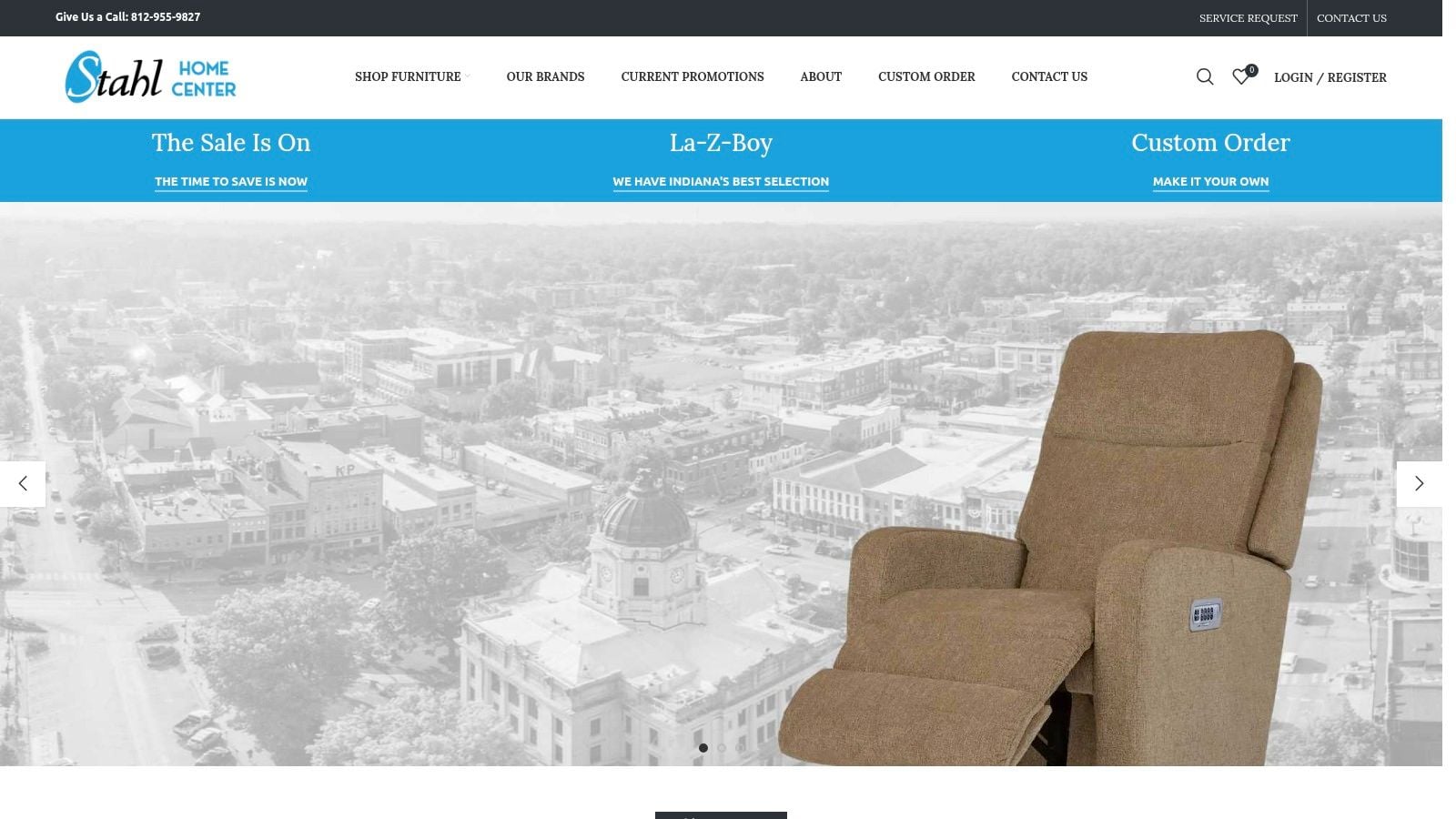
A few details make that model especially useful:
- In-Stock Today means shoppers can take home what fits instead of waiting on a backorder.
- Indiana's Largest La-Z-Boy Dealer gives comfort-focused buyers a strong category to compare in person.
- Rowe Furniture offers style-driven shoppers a path toward custom sofas and personalized seating.
- Family-Owned since 1967 adds the neighbor-to-neighbor service many chain shoppers don't get.
Better shopping for different buyers
New homeowners and relocators often need more than one room handled at once. They aren't only looking for a desk. They may also need living room furniture Bloomington shoppers ask for, plus bedroom sets, mattresses, and accent pieces that help the whole house come together quickly.
Quality seekers usually benefit from seeing a Good-Better-Best range in person. The differences in construction, support, and finish are easier to judge that way. Style-focused decorators get the same benefit. Real fabrics and true color beat digital approximation every time.
If you're looking for Furniture store Bloomington IN, La-Z-Boy Indiana, recliners in stock, custom sofas, power recliners, lift chairs, or immediate delivery furniture, the smartest move is still the same. Shop where the room can be planned with real scale, real materials, and real comfort testing.
Visit Stahl Home Center and see the difference an in-person furniture search makes. The Westside Bloomington showroom offers an 88,000+ sq. ft. selection, thousands of in-stock pieces, and practical options for home offices, Rowe Furniture, La-Z-Boy Indiana, bedroom sets, mattresses, and more. Visit our Westside Bloomington showroom today to see our massive selection in person.