
Velvet Sectional Sofa: A Guide to Lasting Style


If the living room already feels too small for the family that lives in it, a velvet sectional sofa can still be the right move. The mistake is assuming velvet is only for polished rooms and careful adults. Modern velvet sectionals are being chosen for real households because the category now sits at the intersection of luxury appeal and serious everyday use, and sectionals are the largest revenue-generating sofa type in the U.S. market in 2025, with sectionals holding 27.3% of global sofa category value in 2025 according to Grand View Research, as cited in the reference material for velvet sectional sofas reference.
That matters for families, remodelers, and anyone furnishing fast. A sectional gives you more seats, a more flexible layout, and a bigger visual anchor than a standard sofa, while velvet adds the rich finish that makes a room feel finished instead of temporary. For shoppers who want living room furniture Bloomington families can live with, the question isn't whether velvet looks good. It's whether the construction, layout, and availability line up with how the home is used every day.
Why Velvet Sectionals Are Dominating Modern Living Rooms
A family gets home after soccer practice, the dog jumps up first, someone spills a drink cushion-side, and the whole room still needs to look pulled together by Saturday night. That is why velvet sectionals keep winning. They give a living room the rich, finished look people want, while many newer models are built for the kind of daily traffic that used to rule velvet out.
The old view of velvet came from formal furniture. Current velvet sectionals are aimed at the main room of the house, where people lounge, snack, pile in, and stay awhile. Shoppers are not choosing them just for color or sheen. They are choosing them because one piece can anchor the room, seat more people, and look more expensive than many flat-weave fabrics without giving up everyday function.
Velvet stopped being a special-occasion fabric
The change is performance. Many velvet sectionals are now listed with the same practical specs buyers expect from family-use upholstery, including higher weight capacity and stronger abrasion testing, with some models marketed at well above the common 20,000 double-rub benchmark reference.
That matters.
A velvet sectional belongs in an active household when the seller gives clear wear information instead of relying on pretty photos and vague comfort claims. If the listing shows fabric testing, seat support, and construction details, you are looking at a sofa built for actual use, not a showpiece that falls apart under weekend traffic.
The look is upscale. The job is heavy-duty.
Velvet does something many durable fabrics do not. It softens a large sectional so it does not feel bulky, and it adds depth that makes the whole room look finished faster. That is a big reason it has moved into modern living rooms. Families want furniture that can take abuse without making the house feel purely practical.
Sectionals also solve a layout problem in one purchase. They gather the household into one seating zone, reduce the need for extra chairs, and give the room a stronger center. Common configurations include L-shaped, U-shaped, and modular builds reference, so buyers can match the sofa to how the room works instead of forcing the room to work around a smaller couch.
For homeowners shopping local options with immediate availability, the smart move is simple. Stop treating velvet like fragile fabric. Judge it like any hard-working piece of furniture. Check the upholstery grade, check the build, and make sure the size fits the room. When those three pieces line up, a velvet sectional gives you luxury looks and family-grade performance in the same seat.
Performance Velvet vs Traditional Upholstery
A family room with kids, pets, and daily traffic asks more from a sofa than a display room ever will. That is where performance velvet earns its place. Traditional velvet can look rich and polished, but the upholstery has to hold up to crumbs, paw traffic, and repeated sitting without turning shiny in the wrong spots or looking tired before the frame does.
Read the fabric label like a buyer, not a browser
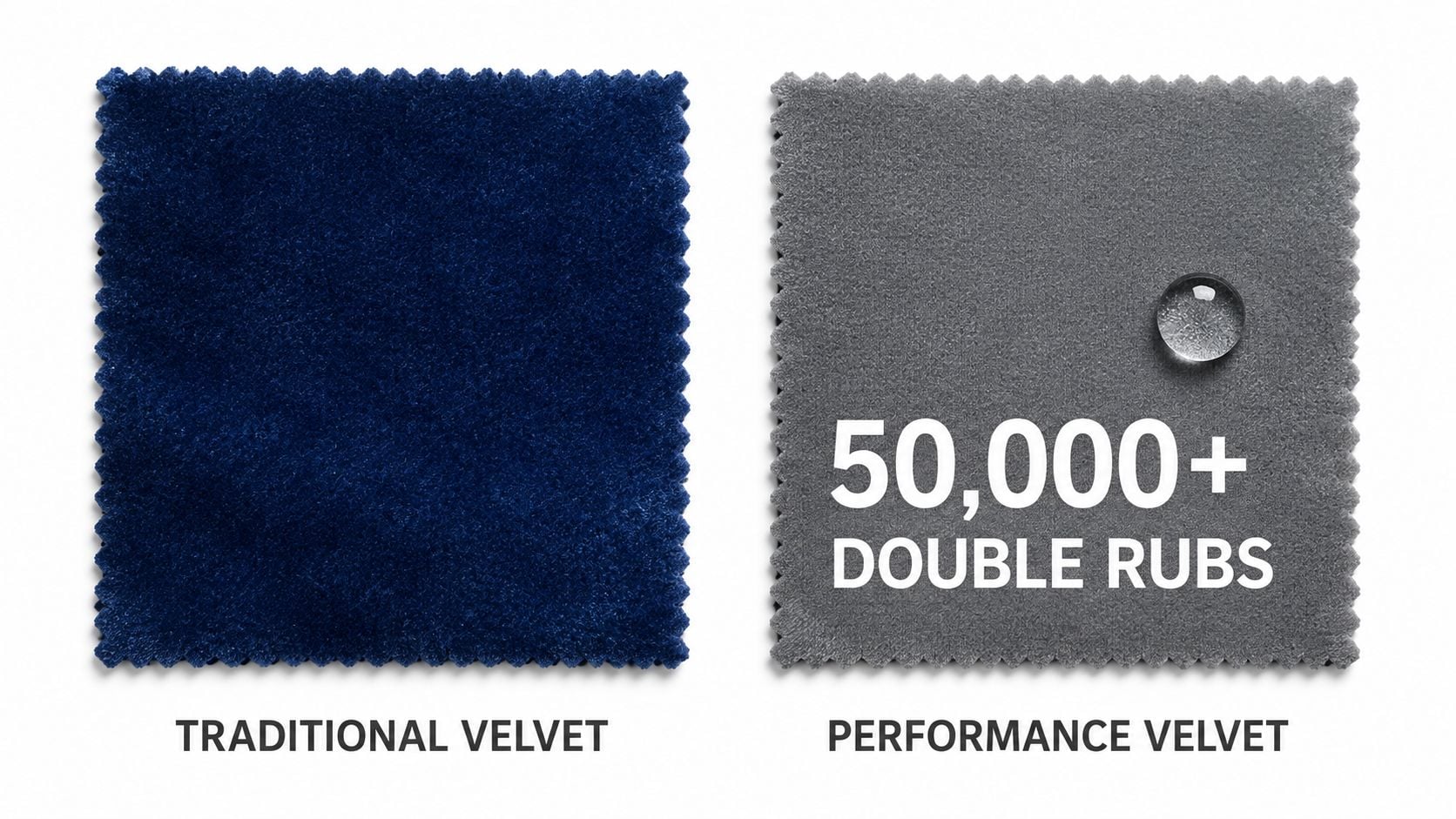
Check whether the listing says performance velvet or velvet. Performance versions usually fit family use better because they are built around stain resistance, easier cleaning, and stronger wear testing. Fabric guidance also points out that velvet can fade in direct sunlight, especially cotton velvet, while synthetic velvet is often the safer call for households with kids or pets because it is easier to care for reference.
That difference matters the moment a sofa enters a real home. A piece can look perfect on arrival and still be a poor buy if it cannot handle everyday life. If the product page gives abrasion data, frame details, or cleaning notes, the seller is giving you useful information. If it only says “soft velvet,” you still do not know enough.
Spills matter less than people think, but only if the fabric gives the liquid time to sit on top long enough to be blotted away.
What rub counts and stain claims mean in practice
Some velvet sectionals are advertised at 30,000+ double rubs or 50,000 rubs, compared with a 20,000-rub industry benchmark. That kind of information signals that the upholstery was chosen for real use, not just a decorative room. It does not make the fabric damage-proof, but it does tell you the piece was built to take repeated contact.
For shoppers comparing options, a practical screen is simple. Look at the wear claims, the cleaning guidance, and the construction details together. If you want a velvet sectional that leans more heavily into daily durability, a performance fabric sectional is the cleaner place to start. If the listing skips those details and only talks about appearance, keep looking.
A solid velvet sectional can still feel luxurious. The difference is whether the upholstery matches the household that will use it. Style is easy. Fabric that keeps its look after family life is the part that deserves your attention.
Finding the Right Configuration for Your Floor Plan
A velvet sectional has to fit the room first. Buyers often focus on the size of the sofa and ignore the obstacles, like walking paths, door clearance, and how a family uses the seating area. Modular pieces, chaise ends, and curved options solve those problems when the layout is awkward or the room needs a softer footprint.
Match the shape to the room, not the other way around
A standard L-shape works well in many homes because it tucks into a corner and creates a clear seating zone. A U-shape suits larger families or homes that host often, since the wraparound form gives more people a place to sit and keeps conversation facing inward. Modular sectionals are the most flexible choice because they can be arranged around the room instead of forcing the room to fit the sofa.
Curved or angled sectionals deserve more attention than they usually get. Furniture guidance notes that curved or angled sectionals work especially well in homes with awkward angles or more than four walls reference. That matters in older homes, bonus rooms, and remodeled spaces where a straight right-angle sectional can look forced. For a strange floor plan, start with the room and then choose the shape that softens it.
Measure for walkways and module seams
The usable length of the sofa matters, but the way the modules connect matters too. Velvet shows visual issues that flatter fabrics hide more easily, because the pile direction can shift the look from one panel to the next, and seams can turn into catch-points where crushed pile and shading show up over time reference. Tight module connections and matching pile direction in product photos matter more on velvet than on many other upholstery types.
Measure the room, then measure the path in. A sectional that fits the wall but not the hallway is the wrong sectional.
For shoppers who want a custom fit, the practical move is to choose a sectional that can be built around the room. A design-your-own sectional setup gives buyers a clean way to plan layout before they commit. The right configuration adds seating without boxing the room in. If it blocks circulation, it is too much sofa.
Internal Construction and Longevity Standards
Velvet gets blamed for wear when the problem is usually inside the frame. A sectional sees daily use, so the structure has to carry the load. If the frame flexes, the joints loosen, or the seat build gives out early, the upholstery takes the blame for a failure it did not cause.
A good velvet sectional starts with a strong foundation. A high-quality sectional couch should be built with corner-blocked or corner-block-reinforced wood frames, along with high-density foam and, in many cases, pocket springs or sinuous springs in the seat build reference. That mix matters because it spreads weight better, cuts down on long-term sagging, and keeps the seat from feeling worn out too soon. In sectional seating, that is not a decorative detail. It separates a sofa that holds its shape from one that starts sinking in the middle.
Buyers should also check whether the listing names the wood type, the spring system, and the foam grade. Clear details make durability easier to judge. Listings that hide behind vague phrases like “quality construction” leave too much to guesswork.
Look for the frame first. Velvet is the finish, not the foundation.
The practical durability checklist
A solid velvet sectional should answer these questions before the sale is complete:
- Is the frame solid or kiln-dried wood? If the answer is clear, that is a good sign.
- Is there a defined spring system? Pocket springs or sinuous springs usually tell the buyer more than foam-only language.
- Does the seat build list a foam density or grade? Specifics make it easier to compare one piece against another.
A good local showroom should also be able to explain how the frame is built, how the seat cores are layered, and how the corners are reinforced. That matters more than polished sales talk. The right place will let you inspect the support system, not just admire the fabric.
One practical example is Stahl Home Center, because it pairs a large showroom with stocked seating and custom ordering paths. That makes it easier to compare build quality in person and choose a sectional that fits both the room and the way your family uses it.
For families who want furniture that lasts, the advice stays simple. Trust the internal build more than the upholstery description. Velvet can be the right choice, but only if the frame and seat construction can keep up with daily use.
Styling Velvet for Different Home Personas
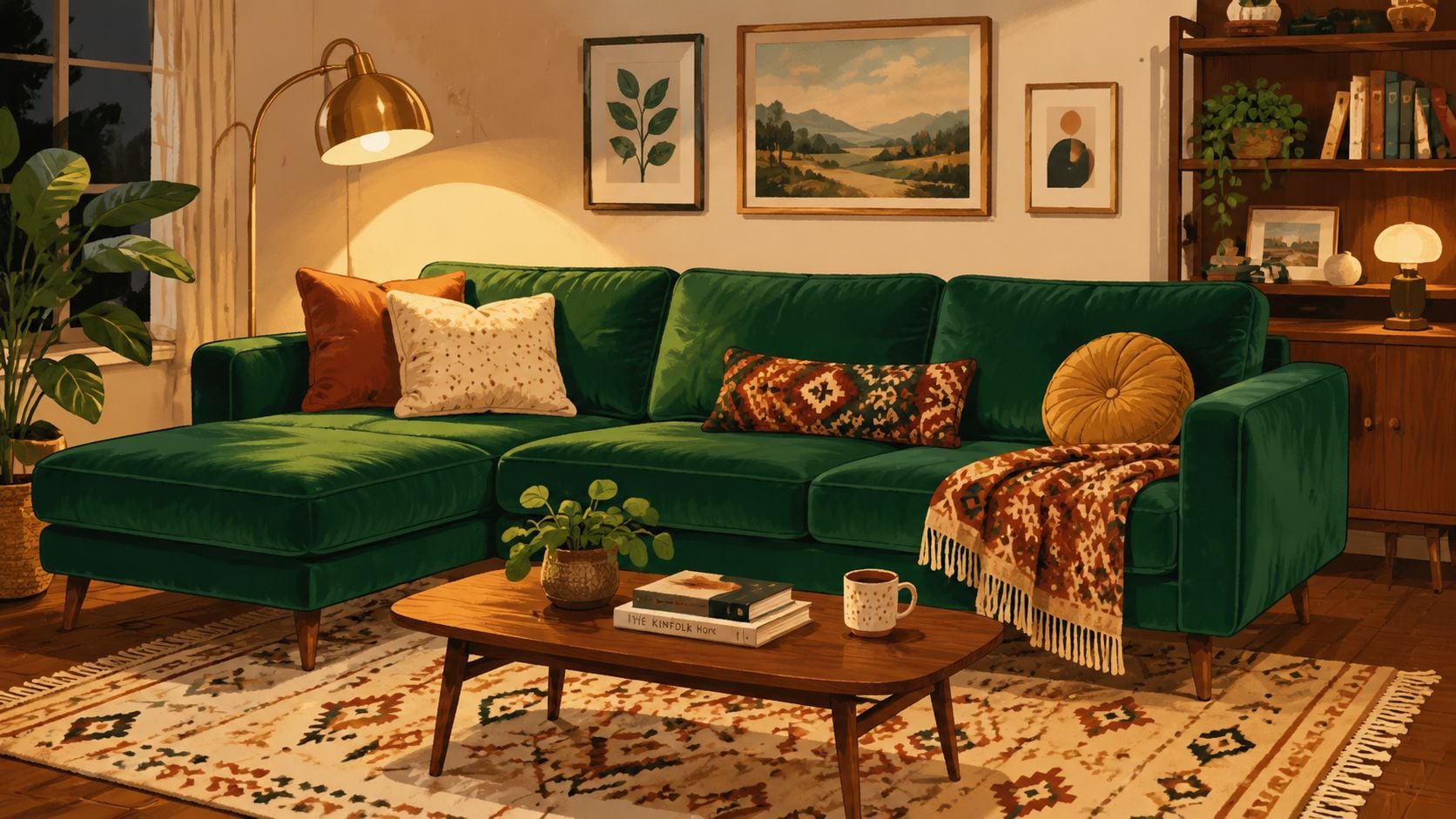
Velvet doesn't force a room into one style. It changes the room around it. A sectional in velvet can read modern, traditional, relaxed, or formal depending on the color, the light, and what's placed beside it. That flexibility is why the fabric works so well as an anchor piece instead of just an accent.
Build the room around texture, not just color
Velvet already brings depth, so the surrounding pieces should support it instead of competing with it. A matte wood coffee table, a low-shine lamp base, or a nubby rug usually works better than piling on more glossy finishes. The point is to let the sofa do the heavy visual lifting.
A dark jewel tone reads richer in lower light, while lighter velvet colors can show more of the fabric's pile movement and shading. That's not a flaw, it's part of the material's character. Buyers who want a softer, lived-in look should use that shading to their advantage instead of trying to hide it.
Match the sofa to the home's personality
A mid-century room benefits from cleaner lines and fewer competing textures. A cozy traditional room can take more pattern and softer layers around the sectional. A more casual, family-first space often looks best when the velvet is paired with performance fabrics, woven pillows, and durable surfaces that don't demand constant maintenance.
The furniture style guide is useful here because it helps shoppers think about the room as a whole, not a single purchase. That mindset matters with velvet, since the sofa tends to become the visual center of the living room almost immediately. If the color feels too loud, the rest of the room should get quieter. If the room feels flat, velvet can fix that fast.
Design rule: velvet should be the anchor, not the only idea in the room.
For style-focused decorators, the best move is to keep the rest of the room practical. That way the sofa brings the polish, but the household still feels livable. Velvet sectionals work because they balance those two goals without needing a showroom-perfect house.
Maintenance and Care for Busy Households
Velvet works better in active homes than many buyers expect, as long as the care routine is simple and consistent. The fabric does not ask for constant attention. It does need regular upkeep, especially on a sectional that gets used every day by kids, pets, and guests.
The weekly habits that keep velvet looking right
Use a light brush or a quick hand pass over the pile to keep the surface from looking crushed in the same spots. That keeps the nap even on the seat cushions and the arms, which take the most contact. If the sectional is modular, check the seams and make sure the sections are still joined tightly, because velvet pile can show shading where the pieces meet reference.
Turn and flip loose cushions whenever the design allows it. That spreads wear across the whole sectional and slows the uneven flattening that shows up first in busy households. If a spill happens, blot it right away instead of rubbing it deeper into the fibers. Performance velvet makes that easier to handle, which is why it fits families who need a sofa that looks refined and still takes real life in stride.
A simple routine beats heavy cleaning later.
What not to do
Keep the sofa out of harsh direct sun if possible, because velvet can fade over time, especially cotton velvet reference. Handle stains fast, because even durable upholstery does better when spills are addressed right away. And do not assume the fabric alone will make up for weak construction. A sectional still needs a strong frame and a seat build that holds up under daily use.
For households that need furniture to work right away, the takeaway is straightforward. Velvet is not hard to maintain if the buyer starts with the right fabric and keeps up with basic care. That matters most in homes with pets and kids, where texture, cleaning speed, and stain resistance matter more than a perfect showroom look.
The Value of In-Person Testing and Immediate Availability
Buying a velvet sectional online can look efficient right up until the color lands wrong, the seat feels too deep, or the sheen reads differently under real household lighting. The Sit-Test fixes that problem. It lets the buyer feel the seat support, see the true color, and judge whether the velvet looks rich or overly shiny in the actual room. For a large purchase, that is straightforward common sense.
A showroom visit also exposes the comfort level fast. You can sit down, check the back angle, and see whether the sectional supports everyday use instead of just looking good in photos. Velvet is easier to live with than many shoppers expect, but the fabric still needs a frame and cushion build that match the way the family sits, stretches out, and uses the room.
Speed matters too. If the room needs to be finished now, immediate stock cuts out the waiting and the guessing. A strong local option with fast furniture delivery gives shoppers a practical path from selection to setup without dragging the process out.
For families who want a stocked, local route, recliners in stock, bedroom sets, mattresses, and immediate delivery furniture matter just as much as the sectional itself. Furniture store Bloomington IN customers also get the benefit of a large showroom, 88,000+ sq. ft., plus the authority of being Indiana's Largest La-Z-Boy Dealer and the flexibility of Design Your Way custom fabrics and configurations. For households that need furniture in place now, that mix beats waiting and hoping the online order matches the room.
Visit Stahl Home Center today if the goal is to see a velvet sectional in person, test the comfort, and pick a configuration that fits the room without delay. The showroom carries large-scale selection, stocked seating, and custom options for shoppers who want a specific look and do not want to give up durability.