

Queen Low Profile Foundation Explained for Better Sleep


A new queen mattress can look perfect in the showroom and still feel wrong at home. The mattress may be comfortable, yet the finished bed sits so high that getting in feels like climbing onto a platform. Sitting on the edge becomes awkward, the nightstand looks too low, and the room loses the balanced proportions it had before.
The hidden variable is the foundation. Total bed height comes from the foundation, mattress, and frame together, so changing only the base can make a noticeable difference in access and appearance. A queen low profile foundation preserves the familiar queen footprint while reducing the height beneath a modern, generously layered mattress.
For many adults, a finished bed height of roughly 20 to 26 inches feels comfortable for sitting down and standing up, according to guidance on low-profile foundations and total bed height. That range isn't a universal rule, but it gives shoppers a useful target, especially for right-sizers, older adults, and anyone furnishing a bedroom with a taller mattress.
This guide explains what the foundation does, how its dimensions work, which trade-offs matter, and how to check compatibility before purchase. It also shows how a local Furniture store Bloomington IN shoppers can visit helps turn an online measurement problem into a confident, hands-on decision.
Introduction Why Bed Height Matters More Than You Think
You bring home a new queen mattress, place it on the existing frame, and discover that getting into bed now feels like climbing onto a platform. A thicker quilted top, deeper foam layers, or hybrid construction can raise the sleeping surface more than expected, even when the mattress feels perfect.
That extra height changes ordinary routines. A shorter sleeper may need to step up instead of sitting down, while a taller sleeper may find the edge comfortable but the room visually crowded. For a couple sharing a queen, those differences affect both morning and evening access.
The stack controls the experience
A bed works like a stack of blocks. The frame forms the base, the foundation sits above it, and the mattress completes the stack. Add height in the middle, and the finished bed rises, much like placing another block beneath the top one.
The total is the practical starting point:
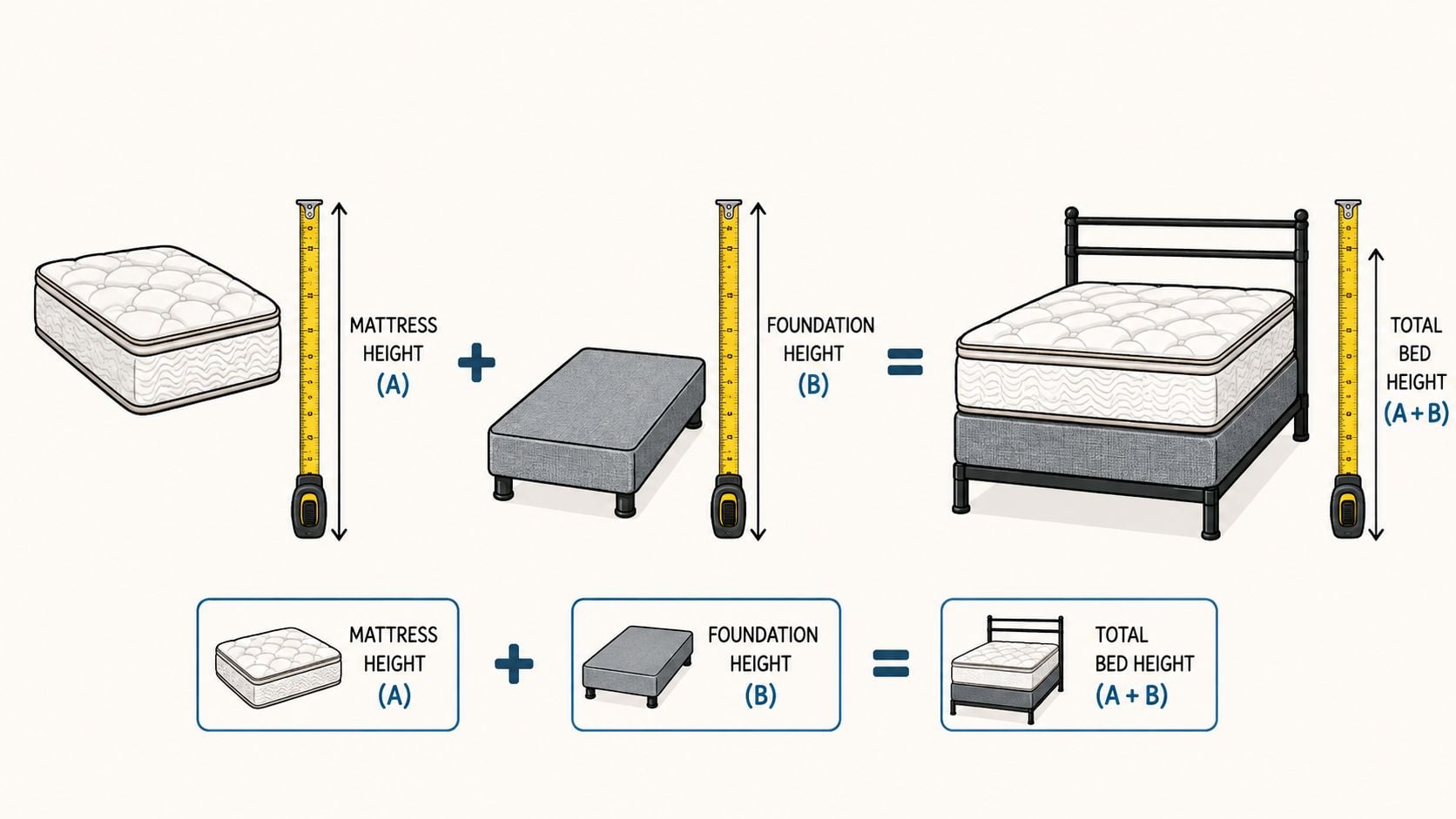
frame height + foundation height + mattress thickness = finished bed height
That figure helps you judge seated comfort before choosing a foundation. A low profile foundation can preserve the mattress you want while keeping the completed bed closer to a comfortable sitting level. It may also make a platform-style frame easier to use because the mattress begins nearer to the floor.
Practical rule: Choose the finished seated height first, then choose the foundation that helps create it.
Measure more than the mattress. Include the frame rails, foundation, mattress thickness, headboard proportions, support spacing, and the sleeper's mobility. A mattress-only measurement can leave you with a bed that looks manageable on paper but feels too tall in the bedroom.
Immediate availability matters, too. If a replacement foundation is in stock locally, you can confirm its fit and bring the height solution home without waiting for a long delivery cycle. That is especially useful when a thick modern mattress has already made the existing setup difficult to use.
A local decision can be a physical one
Online dimensions provide a starting point, but comfort and proportion are easier to judge in person. Sit on a display, check whether your knees fall comfortably, inspect how the foundation meets the frame, and compare the mattress edge with the nightstand.
The room itself belongs in the calculation. Guidance on creating a sleep sanctuary treats lighting, temperature, mattress comfort, and bedding as parts of one environment. Foundation height fits that same picture because it affects access and how the bed occupies the room.
A sound choice leaves you with a compatible foundation, a measured total height, and a bed that feels natural to use each day.
What a Queen Low Profile Foundation Really Is
A queen low profile foundation is a rigid support base that sits beneath a queen mattress while adding less height than a traditional box spring. Its footprint generally matches the queen mattress, but its shorter vertical profile leaves more room to manage the finished bed height. That matters when a modern mattress already has substantial comfort layers and the combined setup feels too tall for comfortable sitting.
The practical calculation is simple: foundation height plus mattress height equals the main part of your seated bed height. The frame may add more. A shorter foundation can lower the mattress without removing the firm, level support the mattress needs.

What sits beneath the mattress
Low-profile foundations commonly use a rigid platform or closely spaced slats rather than internal coils. Slat gaps should be narrow enough to support the mattress consistently, with many support recommendations keeping spacing within 3 to 4 inches, as explained in this low-profile foundation support guidance.
That construction works for many foam and hybrid mattresses, but the mattress manufacturer's requirements take priority. Check the permitted surface, slat spacing, weight capacity, and center support. A foundation can look like the right size and still flex too much if its slats are too far apart or its frame lacks adequate support.
A low-profile foundation differs from other bed bases:
- Platform bed: Its deck or slats may be built into the bed, so a separate foundation might not be needed.
- Slatted frame: It supports the mattress through slats, provided the spacing and construction meet the mattress requirements.
- Adjustable base: It changes position and requires a mattress designed to flex with it.
- Low foundation: It remains a separate support platform, lowering the mattress while preserving a dedicated foundation structure.
Thicker mattresses make total height easier to misjudge. Pairing one with a tall foundation can make sitting down, standing up, or reaching a nightstand less comfortable. A shorter foundation helps balance that added mattress height, especially when an immediately available local option lets you solve the fit without waiting for a long delivery cycle. For specialty-mattress compatibility context, see this 2026 guide to Tempur-Pedic support.
The same principle applies to larger room sizes, but their dimensions do not match queen specifications. Review California king foundations separately before choosing support for that mattress size.
Queen Low Profile Foundation Dimensions and Height Explained
A queen bed can feel too tall even when the mattress and frame fit correctly. Add the mattress height to the foundation height, then compare that total with the seated height that feels comfortable. The standard queen footprint is 60 inches by 80 inches, while low-profile foundations commonly measure 4 to 6 inches high.
Product specifications can vary slightly. One 5-inch queen foundation is listed at 60 inches wide by 79 inches deep by 5 inches high, with a listed weight of 46 pounds. Another 6-inch model measures 60 inches by 80 inches by 6 inches and lists a weight of 25 pounds. These examples appear in queen low-profile foundation product data.
A 79-inch length does not automatically mean the foundation is the wrong size. One manufacturer may report the usable support area, while another lists the outside frame dimensions. Construction tolerances can also affect the measurement. Confirm the foundation dimensions against the frame's interior space before placing the mattress.
Common height choices
Available queen profiles include 4-inch, 5-inch, 5.5-inch, and 6-inch options. A 5.5-inch model may measure 79 inches long by 59.5 inches wide, while a 4-inch model may measure 80 inches wide by 60 inches deep by 4 inches high, as shown in foundation specifications from a major mattress brand.
| Foundation Type | Typical Height | Queen Footprint Example | Height Difference vs Standard 9 Inch |
|---|---|---|---|
| Low foundation | 4 inches | 60 by 80 inches | 5 inches lower |
| Low foundation | 5 inches | 60 by 79 inches | 4 inches lower |
| Low foundation | 5.5 inches | 59.5 by 79 inches | 3.5 inches lower |
| Low foundation | 6 inches | 60 by 80 inches | 3 inches lower |
| Standard foundation | 9 inches | Queen footprint varies by construction | Reference height |
For the total-height calculation, subtract the foundation height from the standard 9-inch foundation reference. A foundation near 5 to 5.5 inches lowers the mattress surface by approximately 3.5 to 4 inches, according to foundation height information. That difference can make sitting on the edge and reaching a nightstand more comfortable with a thick mattress.
A low foundation remains separate support. A foundation-free frame uses its own deck or slats, so review platform bed base guidance before assuming the two setups work the same way. Immediate local availability can also matter when the goal is to correct an overly tall bed without waiting for a long delivery cycle.
Benefits and Drawbacks of Choosing Low Profile Support
Low-profile support solves a height problem, but it isn't automatically the right answer for every bedroom. The best choice depends on how sleepers use the bed, how thick the mattress is, and whether the room benefits from a lower visual line.
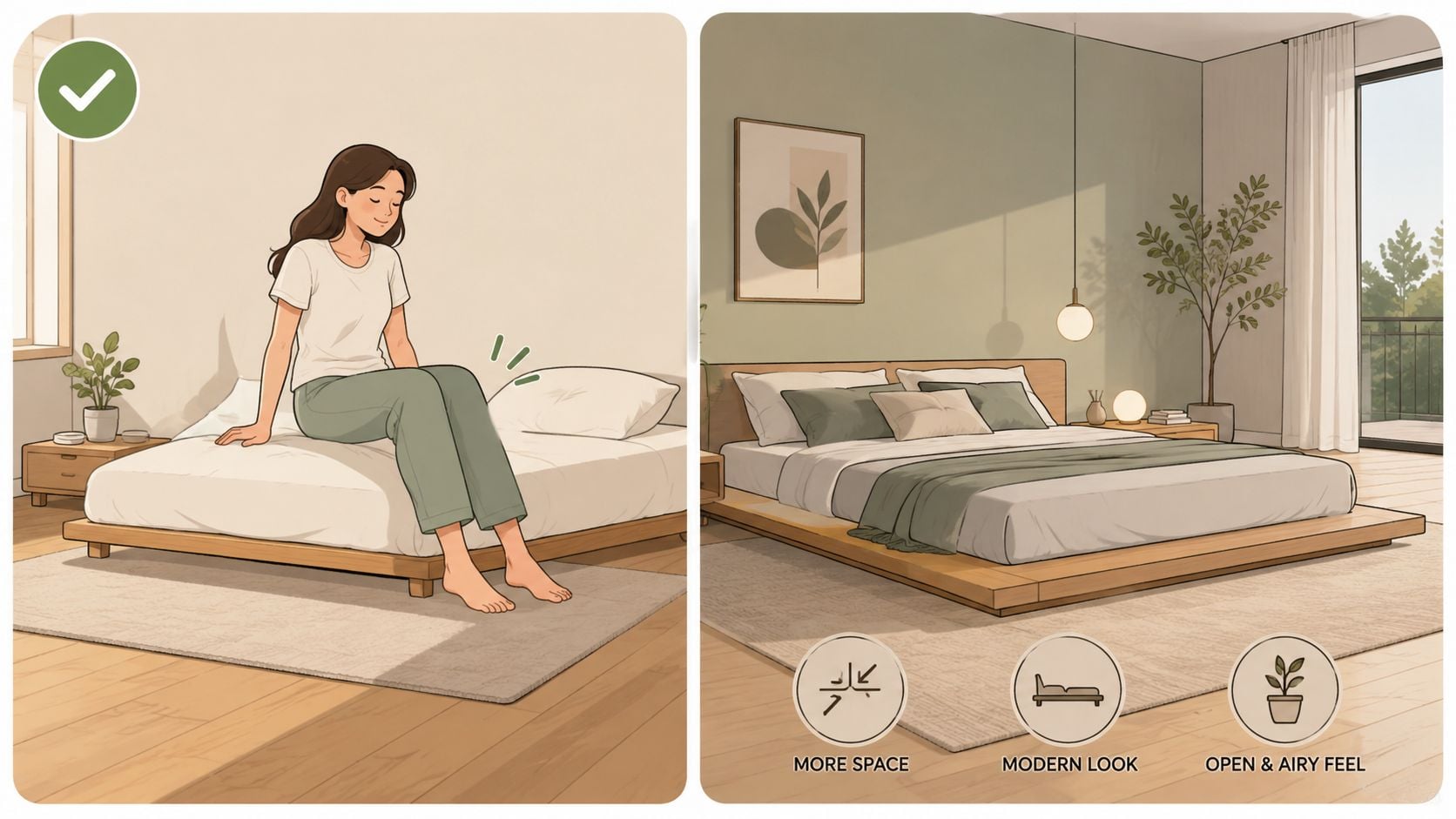
A lower foundation can make entry and exit feel more natural. Instead of bending to sit on a low mattress or climbing onto a tall one, the sleeper can aim for a balanced edge height. This is especially useful for right-sizers and active retirees who want easier movement without giving up a supportive mattress.
Where a lower foundation helps
A modern mattress can already provide substantial height through its comfort layers. Adding a tall base may create a bed that dominates a smaller bedroom or sits above the comfortable reach of the nightstand. A low foundation brings the top of the mattress down while preserving the queen sleeping surface.
Style-focused decorators often prefer the cleaner, lower silhouette. The bed can appear more sleek and modern, particularly with a simple frame, restrained bedding, or a room where windows and wall art should remain visually prominent.
Quality seekers should focus on construction rather than height alone. A shorter foundation can be durable when its platform or slat system is rigid, properly supported, and matched to the mattress. It isn't the number of inches that determines whether a base is dependable.
Where a taller foundation may work better
Traditional high beds remain appealing in rooms where under-bed clearance, a more raised appearance, or a substantial headboard matters. A lower base can reduce storage space beneath the bed, and a tall headboard may look proportionally higher once the mattress drops.
The trade-offs are easier to see side by side:
- Access: Low support usually makes a tall mattress easier to reach. A higher foundation may suit sleepers who prefer a higher seat.
- Appearance: Low profiles create a quieter, contemporary line. Taller foundations produce a more traditional presence.
- Storage: Lower assemblies can leave less usable space beneath the bed. Taller assemblies generally create more clearance.
- Frame pairing: A low foundation can work well with platform-style furniture, but the frame must still provide appropriate support.
- Adjustability: An adjustable base offers a different function entirely, so shoppers should review adjustable base comfort considerations rather than treating it as a shorter foundation.
The right decision is personal, but the reasoning should be objective. A sleeper who struggles with a tall mattress should prioritize access, while a decorator who needs storage may accept more height.
How to Choose and Measure for Your Mattress and Frame
You sit on the mattress edge and your feet land comfortably on the floor. That moment reflects the goal of a queen low profile foundation. Choose the foundation by calculating the complete bed height, not by looking at its label alone.
Total bed height = frame rail height + foundation height + mattress thickness.
A 5-inch foundation with a 12-inch mattress creates 17 inches before the frame rail is counted. The rail or deck can raise the finished sitting height, so adding only the foundation and mattress gives an incomplete answer. For general planning, low-profile foundation height guidance places a comfortable total bed height for many adults at roughly 20 to 26 inches. Leg length, mobility, mattress compression, and edge firmness can change the best result, so treat that range as a starting point.
Measure before shopping
Use this home checklist before choosing a foundation:
- Measure the mattress. Record its actual height, including pillow tops, quilting, and comfort layers. A thick modern mattress can make a standard setup feel too tall.
- Measure the frame. Check from the floor to the top of the supporting rail or deck.
- Inspect the opening. Measure the frame's inside length and width so the foundation fits without pressing against the rails.
- Find the center support. A queen frame generally needs stable support through the middle. Follow the foundation instructions and mattress warranty requirements if they differ.
- Check slat spacing. Keep gaps within the mattress manufacturer's limit. For low-profile support, expert guidance commonly places the maximum at 3 to 4 inches.
- Confirm headboard alignment. A lower mattress leaves more headboard visible above the bedding. A taller setup may cover part of its design.
Match the support to the mattress
Innerspring, memory foam, and hybrid mattresses distribute weight in different ways. Foam and hybrid models commonly need even support beneath the full surface, while a mattress used on a specialized base must follow its compatibility instructions.
A frame designed for a standard foundation may not accept a platform deck. An adjustable base also serves a different purpose and cannot replace rigid support unless the mattress is made for movement.
Measure the bedroom before committing to the final height. This room measurement guide helps you check walkways, door clearance, nightstands, and dresser placement. Then compare the complete height calculation with your seated comfort. If the mattress is already thick, an immediately available low-profile foundation can reduce the finished height without replacing the mattress.
Installation Care and Immediate Availability in Bloomington
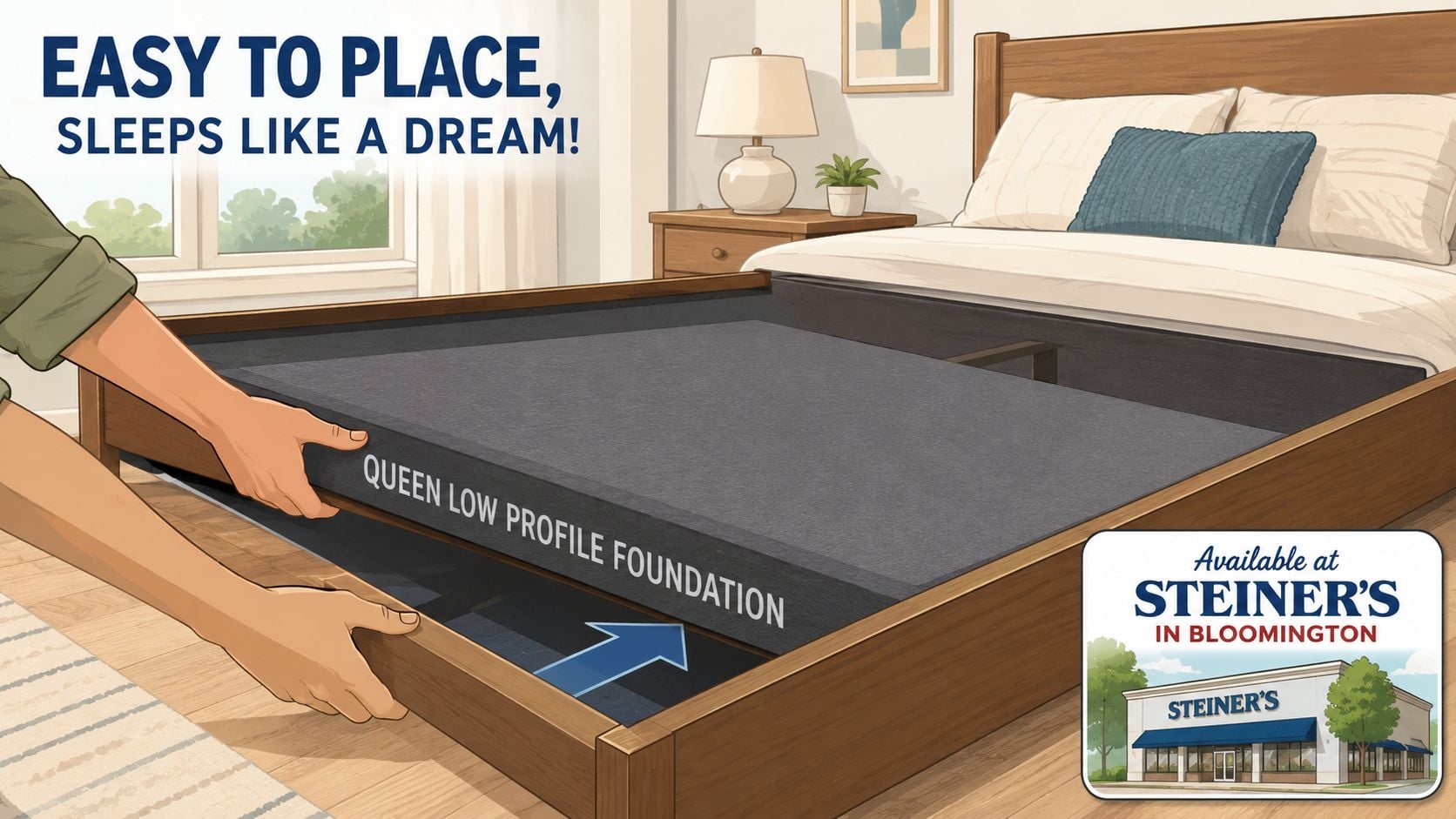
A low-profile foundation performs best when the entire support system works together. Setup starts with a level frame, a correctly oriented foundation, and secure contact between the base and the rails. If the frame includes brackets or fasteners, those connections should be tightened so the foundation doesn't shift during normal movement.
Center support deserves special attention. A queen foundation carries the mattress load across its width, so the frame should support the middle rather than relying only on the outer rails. Once the mattress is placed, the owner should check for rocking, visible gaps, and uneven contact before adding bedding.
Keep the support consistent
Mattress care is mostly about preserving even loading. Heavy objects shouldn't remain concentrated in one location, and the mattress should be rotated only when the manufacturer permits it. A periodic inspection of the frame, slats, center support, and foundation helps identify movement before it becomes a comfort problem.
The finished bed also deserves a comfort check. Sit at the edge, stand without pushing hard against the frame, and confirm that the mattress doesn't slide. Readers interested in broader sleep optimization through bedding can consider how sheets, protectors, pillows, and the support base work as one sleep setup.
Why local availability changes the decision
A local showroom makes the height question tangible. Stahl Home Center says it has served Bloomington for nearly 60 years, has been family-owned since 1967, and operates a modern 88,000-square-foot showroom, according to its company history. That scale gives shoppers room to compare bedroom furniture, mattresses, frames, and seating in one visit.
The store also identifies itself as Indiana's largest La-Z-Boy dealer, with a broad selection of La-Z-Boy recliners, sofas, sectionals, and custom seating. Its public materials describe thousands of in-stock pieces that customers can take home today, supporting an immediate-availability approach rather than an open-ended wait.
That matters for new homeowners and relocators who want to furnish a whole home over a weekend. The Good-Better-Best philosophy gives quality seekers a way to compare value, while Rowe Furniture and Design Your Way options, including hundreds of fabrics and configurations, serve shoppers who want custom sofas or a specific performance-fabric look. The in-person Sit-Test also lets shoppers feel comfort and see true color before choosing.
Find Your Perfect Fit and Take Comfort Home Today
The central choice is simple once the pieces are separated. The queen mattress keeps its familiar 60-by-80-inch sleeping footprint, while the low-profile foundation changes the vertical part of the bed. That makes it a practical solution for a thick modern mattress that feels uncomfortably tall on a standard base.
A height around 5 to 5.5 inches often provides a useful middle ground, based on the common product examples discussed earlier. It lowers the mattress without moving to the shortest available profile, and it leaves room to match the finished bed to the frame, sleeper, and bedroom design.
A confident final check
Before buying, the shopper should be able to answer four questions:
- Will the total height feel right? Add the frame, foundation, and mattress rather than guessing from one product label.
- Will the support match? Confirm slat spacing, center support, and mattress requirements.
- Will the room look balanced? Check the headboard, nightstands, storage needs, and visual proportion.
- Can the comfort be tested? Sit on a comparable display and judge edge access, firmness, and true fabric or finish color in person.
The last question is where a Bloomington showroom adds practical value. A shopper can compare mattresses, bedroom sets, custom sofas, power recliners, lift chairs, and recliners in stock in one setting, then choose between In-Stock Today availability and a custom order. Those options support both the immediate-gratification homeowner and the style-focused decorator who prefers to design a room carefully.
For a quality-conscious household, the choice doesn't need to be dramatic. A properly measured queen low profile foundation can preserve support, improve access, and keep a large mattress from overpowering the room. The right base is the quiet part of the bed that makes the entire setup feel intentional.
Visit the Westside Bloomington showroom today to see the massive selection in person, perform the Sit-Test, and choose either Take it home today availability or Scheduled professional delivery.
Stahl Home Center offers an 88,000+ sq. ft. showroom, thousands of pieces In-Stock Today, and personal guidance for finding the right mattress, foundation, bedroom set, or custom seating. Visit Stahl Home Center to compare comfort in person and find a queen low profile foundation setup that fits the room and the sleeper.