
Furniture Style Guide: Identify & Match Your Rooms

The first thing most shoppers feel isn't excitement, it's pressure. A room is empty, the phone is full of inspiration photos, and every sofa, chair, and table starts to look like it belongs to a different house. A good furniture style guide solves that problem by giving the eye a repeatable way to judge what a piece is, what room it belongs in, and whether it'll work once it gets home.
The Four Cues That Make Any Furniture Style Click
An empty room can make even a confident buyer second-guess every choice. One photo says mid-century, another says farmhouse, and a third seems to pull in a completely different direction. The fastest way to cut through that noise is to stop hunting for the style name first and start reading the piece itself.
Start with the four things that never lie
The most reliable identification cues are material, leg or base, silhouette, and finish. Those four details usually reveal more than a label tag, because they show how a piece was built, not just how it was marketed. A style guide that leans on those cues works better than one built on vague words like “classic” or “modern,” since the eye can verify them in seconds.
Material tells a lot about the period and purpose. Leg or base shape often gives away the family tree, especially when a piece uses straight square legs, cabriole legs, or a low floating base. Silhouette shows whether the piece wants to feel formal, boxy, light, or grounded. Finish helps separate something warm and traditional from something raw, sleek, or weathered.
Practical rule: if two pieces seem similar, compare the legs first, then the finish. Those details usually settle the question faster than the upholstery pattern does.
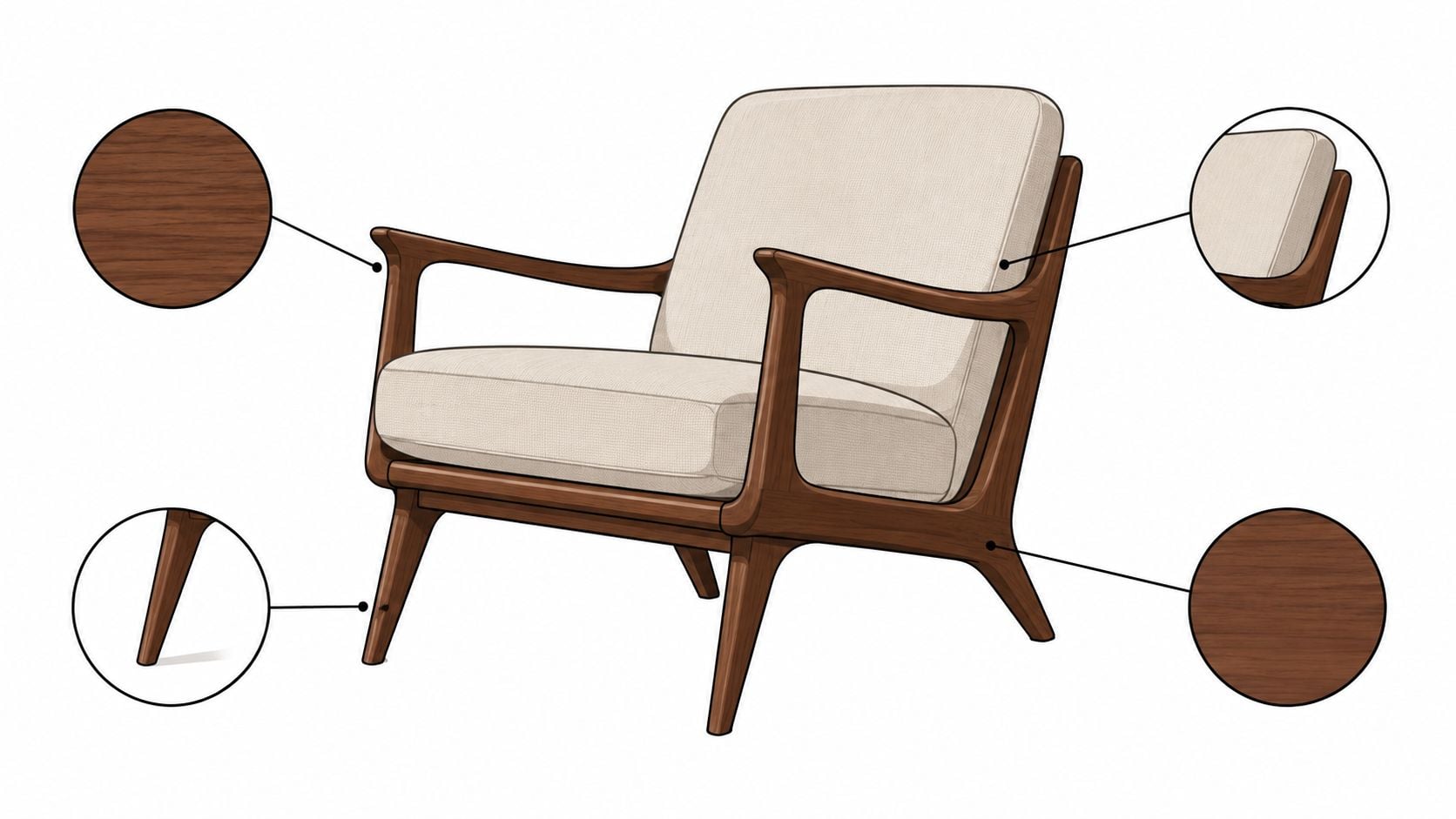
A shopper can test the system in under a minute. Look at one chair and ask four questions. Is the wood or metal the main story? Are the legs straight, curved, turned, or hidden? Does the shape feel airy, blocky, ornate, or spare? Does the finish look polished, matte, distressed, or natural?
For a broader design lens, the home's overall framework matters too. A useful companion read is Stahl's guide to the elements of a modern home, because the room around the furniture can reinforce or fight the style you're trying to build.
A quick practice check
A straight-lined chair with exposed wood and a simple finish usually reads differently from a plush, rolled-arm piece with carved feet. That's why the four-cue method beats memorizing names. It trains the eye to see the piece before the category.
A Practical Tour of the Major Furniture Styles
The easiest way to learn styles is to handle them one at a time and use the same checklist every time. That keeps the process grounded in what shoppers can see on a showroom floor. It also makes the differences between a set of close cousins much clearer.
The big families you'll see most often
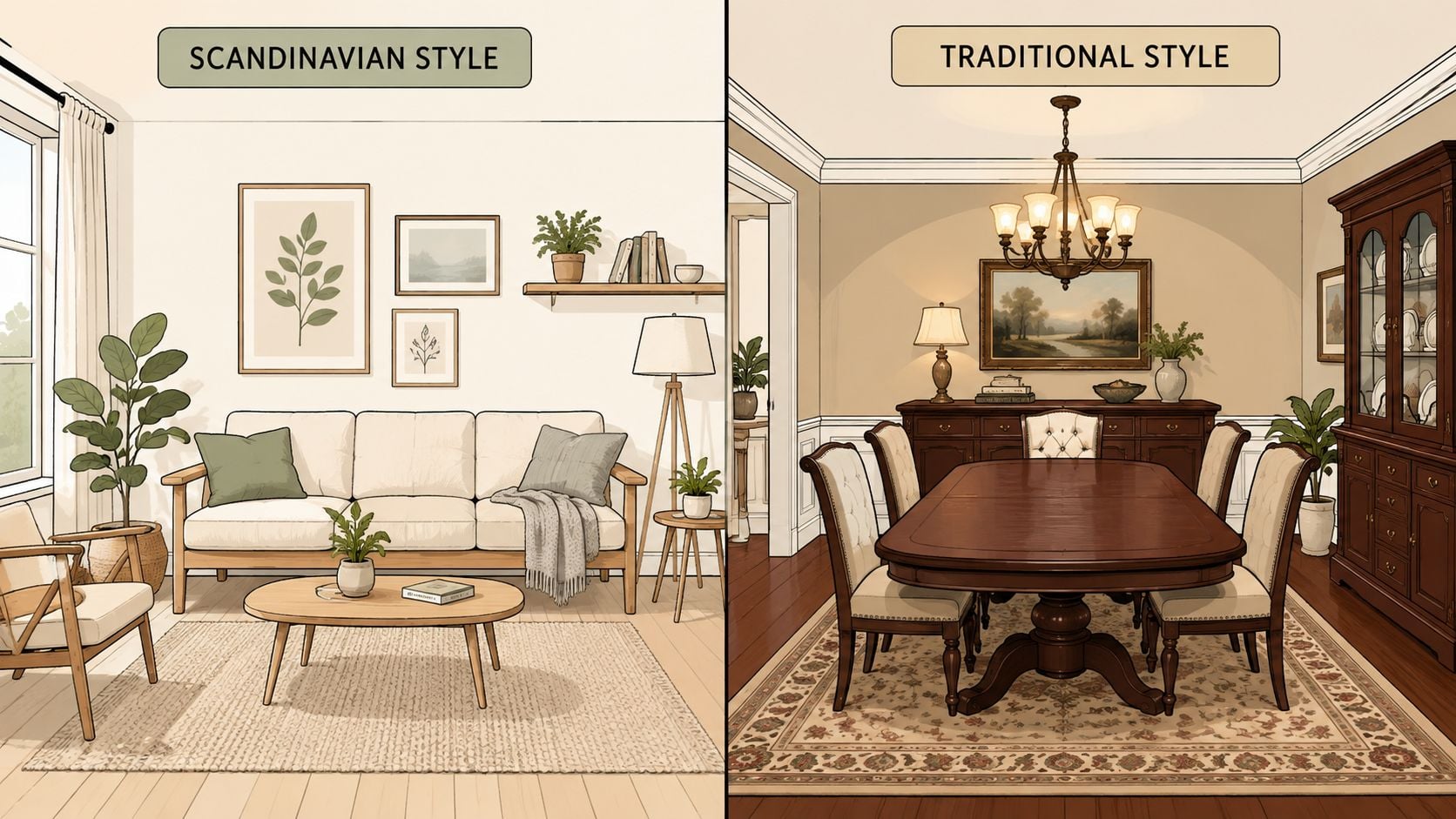
Traditional furniture leans into richer materials, shaped details, and more formal silhouettes. Expect darker wood tones, curved profiles, and finishes that feel polished rather than raw. Mid-century modern tends to show tapered or splayed legs, cleaner lines, and warm wood tones, with a lighter, more open presence. Contemporary often looks current and refined, with simpler shapes, mixed materials, and an emphasis on clean edges.
Farmhouse usually brings painted or weathered finishes, relaxed silhouettes, and a lived-in feel. Industrial is easier to spot by its metal presence, exposed structure, and tougher visual attitude. Scandinavian usually pairs pale, calm finishes with light woods and a spare silhouette that still feels soft. Transitional sits in the middle, borrowing from traditional and contemporary without committing fully to either side. Coastal often feels breezy and softened, with lighter finishes and a relaxed shape that suggests easy movement.
Mission style is a helpful worked example because it shows how specific traits become easy to read in person. A furniture-history guide describes Mission as popular from the late 19th to early 20th century, with horizontal and vertical lines, solid oak construction, exposed joinery, and simple hardware Mission style field guide. That combination makes it easier to identify than a generic “wood furniture” label ever could. It's also a good reminder that a style guide should teach recognition, not just naming.
One other useful lens is the broad grouping system. A furniture reference groups styles into traditional, transitional, contemporary, and modern, and notes that the broader style universe fits within those categories general furniture style categories. That framework helps buyers stay oriented when the room starts to contain more than one influence.
If the room itself is rustic, a deeper look at rustic design style can help a shopper decide whether a piece belongs in that family or just borrows a little of its texture.
A useful historical anchor
Style guides work better when they respect time periods. Common furniture timelines place Jacobean at 1600–1690, William and Mary at 1690–1735, Queen Anne at 1700–1755, Chippendale at 1750–1790, Federal at 1780–1820, Empire at 1810–1840, and Victorian at 1840–1910 historical furniture style guide. That kind of dating matters because adjacent styles overlap, so visual cues like cabriole legs, shell motifs, and carved feet do the heavy lifting. In practice, the eye starts learning how to separate one period from the next.
A Quick Reference Table to Tell Similar Styles Apart
Adjacent styles cause the most confusion because they share a few ingredients and part ways on the details. A shopper can like two looks at once, then get stuck because the differences feel subtle on a screen. A comparison table makes those differences visible fast.
A helpful side note for people moving or staging a room, short-term storage can create breathing room while furniture choices settle. Flexible storage between moves is a practical search term to keep handy when a home isn't ready for every piece at once.
Style Comparison at a Glance
| Style | Signature Material | Leg or Base | Defining Silhouette | Finish |
|---|---|---|---|---|
| Transitional | Mixed woods, upholstery, and neutral textiles | Simple, often understated | Balanced, neither too ornate nor too spare | Smooth, calm, versatile |
| Contemporary | Metal, glass, and mixed materials | Clean, often exposed | Sleek and current | Polished or matte, depending on the room |
| Scandinavian | Light woods and soft textiles | Slim, light-looking bases | Airy and minimal | Pale, natural, restrained |
| Mid-century Modern | Warm wood with occasional upholstery accents | Tapered or splayed legs | Low, streamlined, graphic | Warm wood grain, usually simple |
| Farmhouse | Wood with painted or weathered surfaces | Straight, sturdy supports | Relaxed and grounded | Distressed, washed, or matte |
| Coastal | Light woods, woven textures, upholstery | Easy, open bases | Soft, casual, breezy | Light, sun-washed, unfinished-looking |
| Industrial | Metal, wood, concrete-like surfaces | Pipe-like or heavy bases | Strong and structural | Raw, dark, or unfinished |
| Modern | Smooth wood, metal, laminate, or glass | Low floating base or simple support | Very clean and pared back | Sleek, low-contrast, minimal |
The fastest way to use the table is to isolate one feature at a time. If a piece has a floating base and almost no ornament, it's drifting modern. If it has pale wood and lots of empty visual space, it leans Scandinavian. If it uses heavier wood, more texture, and simpler lines, it may still be farmhouse rather than rustic or coastal.
This is also where many shoppers separate a look they like from a look they can live with. If two styles feel close, compare the finish and the base shape before anything else. That usually answers the question with less guesswork.
For shoppers comparing rougher textures to simpler ones, Stahl's industrial vs rustic furniture styles guide gives a cleaner way to tell those two apart without mixing them together.
Mixing Styles Without Making a Room Look Random
The old rule that every room must stay inside one style family is too rigid for real homes. Families inherit pieces, replace one item at a time, and often shop over years, not in one weekend. A mixed room can feel intentional if the key anchors stay consistent.
Three anchors that keep the room coherent
The first anchor is a unified color palette. Even when pieces come from different style families, the room feels calmer when the tones speak the same language. A farmhouse table, mid-century chairs, and a contemporary lamp can share a grounded neutral palette and still look related.
The second anchor is repeated finishes or materials. A room starts to connect when wood tones echo, metal finishes repeat, or upholstery colors show up more than once. That repetition gives the eye a route through the room instead of forcing it to start over at every piece.
The third anchor is balanced proportions. A large, heavy table needs chairs and lighting that can hold their own. A delicate chair beside a bulky cabinet makes the room feel lopsided, even when the style match is technically fine.
A collected room does not need identical pieces. It needs enough repetition for the eye to understand the plan.
A good example is a farmhouse dining table paired with industrial lighting and mid-century chairs. That mix works when the colors stay close, the wood tones don't fight, and the scale feels even. It breaks down when one piece brings a completely different visual weight or when every finish competes for attention.
A more layered approach is outlined in how to layer furniture and decor to make any room feel complete, and the idea fits especially well when inherited furniture needs to live beside new purchases.
What makes a mix feel deliberate
Traditional, transitional, and contemporary pieces can sit together without friction when each one has a job. Traditional pieces bring formality, transitional pieces bridge the gap, and contemporary pieces keep the room from feeling overly heavy. The mistake isn't mixing, it's mixing without a common thread.
That thread can be color, finish, or shape. It doesn't have to be complicated, and it doesn't have to be obvious. It just needs to repeat often enough that the room feels planned.
Matching a Style to Your Room, Budget, and Timeline
A style only matters if it works inside the actual room. Awkward corners, angled walls, narrow pathways, and small footprints can change the best choice fast. A piece that looks perfect online can become the wrong answer as soon as it has to share space with a doorway, an alcove, or a tight traffic lane.
Fit comes before style pride
Oddly shaped rooms usually reward modular seating, smaller profiles, floating layouts, and zone-based planning awkward room layout guidance. That means a sectional is sometimes the smartest answer, but not always. If the room bends or narrows in the wrong place, two smaller chairs or a curved sofa can solve the circulation problem much better.
A shopper in a rectangular room has more freedom. A shopper with slanted walls or an interrupted path needs to think about the room's natural lines and focal points first. Furniture that follows those lines usually feels calmer than furniture forced into symmetry.
Budget belongs in the same conversation as style. A buyer who likes one style family can often find options across a Good-Better-Best range without changing the look entirely. That makes it easier to choose a version that matches the room now, then upgrade later if needed.
For a style-forward room, the right materials matter too. If the goal is a loft-style space with visual edge, industrial canvas art for lofts can reinforce the room without forcing the furniture to carry every style cue.
Timeline decides the buying path
Some households need a room finished fast. In those cases, the smartest move is choosing from what's already available and taking the piece home or arranging scheduled professional delivery. Others want a specific color, scale, or performance fabric, and that's where custom ordering makes sense.
That tradeoff matters most for custom sofas, power recliners, lift chairs, bedroom sets, and mattresses because each one affects daily use. When the right fit is already on the floor, waiting rarely improves the decision. When the room needs a very specific shape or fabric, custom work becomes the better path.
This is also where the practical buyer separates style from timing. A family furnishing a new home this weekend needs different answers than a decorator refining one room over time. Both are valid, but they need different purchase plans.
What to Check When You Are Standing in Front of the Piece
A showroom visit should feel like a decision-making tool, not a guessing game. The quickest way to turn style knowledge into confidence is to test the piece with your body, your eyes, and a few direct questions. That matters whether the shopper is comparing living room furniture Bloomington options or narrowing down a single accent chair.
The showroom routine that saves regret
Start with the sit-test. Sit all the way back, feel the seat depth, and notice whether the support lands where it should. A chair or sofa can look right from across the floor and still feel wrong if the back angle, cushion support, or seat height does not match the body.
Then check the frame. Solid joinery, clean construction, and a stable feel matter more than a glossy finish. A well-built piece should feel steady rather than hollow or loose when handled.
Next, inspect the fabric. The right upholstery should match how the room gets used, especially if the household needs performance fabric or a finish that holds up to daily traffic. If the room is busy, that part of the conversation matters as much as the style name.
Simple showroom rule: if the fabric, frame, and sit-test all pass, the style choice gets much easier.
A style-aware shopper should also ask whether the piece is already in stock or if it needs to be custom ordered. That question decides whether the room gets finished today or designed over time. For shoppers who want custom style and performance, custom upholstery brands can be a natural fit for custom looks, while a floor sample can make sense when immediate use is the priority. If you want a short checklist to use before you buy, these five things to look for in your new sofa or chair keep the decision grounded in comfort, construction, and everyday use.
The practical value of a store like Stahl Home Center is that its 88,000+ sq. ft. showroom and in-stock floor selection let a buyer compare a lot of options in one stop. For a household trying to furnish a whole home this weekend, that kind of immediate access matters more than browsing for weeks. For a style-savvy decorator, it also means there is room to compare finishes in person instead of guessing from a screen.
Questions worth asking before checkout
- Is this piece ready to take home today, or is it a custom order?
- Does the fabric need performance features for daily use?
- Will the size work with the room's traffic path and focal point?
- Does the style still feel right after sitting on it for a few minutes?
Those questions keep the process honest. They also separate a purchase that looks good on paper from one that fits the home.
Bringing It Home with a Confident Next Step
A strong furniture decision usually comes down to four things. First, the eye reads the piece through material, leg or base, silhouette, and finish. Second, the room stays coherent when the palette, repeated finishes, and proportions hold together. Third, the piece has to fit the room's layout and the household's timeline. Fourth, the sit-test and frame check settle comfort and quality before anyone signs off.
The Good-Better-Best mindset makes that decision easier because it keeps the buyer inside a style family instead of forcing a false choice between taste and budget. A household can start with an in-stock version now, move up to a custom configuration later, or choose a performance-ready fabric for a room that gets hard use. That flexibility helps new homeowners, right-sizers, and style-focused decorators make progress without waiting for the perfect moment.
For shoppers who want the room finished now, the takeaway is simple. Pick the piece that fits the space, passes the comfort test, and matches the household's timeline. For shoppers who want a specific look, custom ordering is worth considering when the style is right but the fabric or configuration needs to be customized.
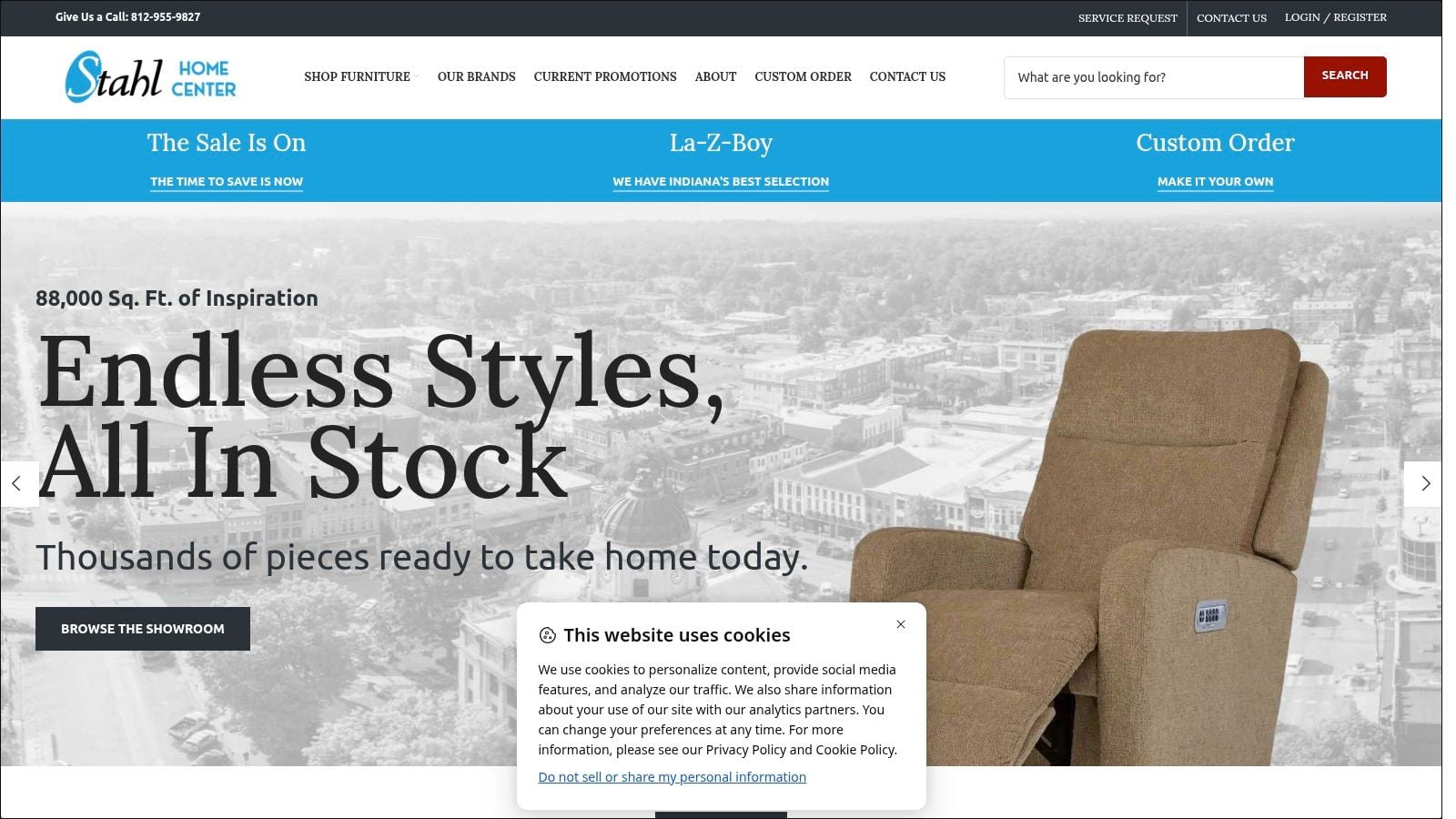
If the next step is to see the styles in person, visit Stahl Home Center on Bloomington's west side. The showroom pairs large-scale selection with local service, plus in-stock pieces, custom options, and the kind of side-by-side comparison that makes a furniture style guide useful in real life.