
Nightstand Bedside Table Guide: Styles & Storage

You’ve got the bed. The mattress is right. The bedding finally looks pulled together. Then you look at the empty space beside the bed and realize the room still feels unfinished. That’s usually the moment a nightstand bedside table stops feeling optional and starts feeling necessary.
A good bedside piece does more than hold a lamp. It catches your glasses at night, keeps water within reach, hides the charger mess, and gives the bedroom a sense of balance. It’s one of the most used surfaces in the house, even though it rarely gets the same attention as the bed or dresser.
That’s one reason this category keeps growing. The global nightstand market was valued at $6.8 billion in 2025 and is projected to reach $11.2 billion by 2034, according to Dataintelo’s nightstand market report. People still need these pieces, and they’re using them in more ways than ever.
Table of Contents
- Your Guide to the Perfect Nightstand
- Nightstand vs Bedside Table What Is the Difference
- Getting the Perfect Fit How to Measure for Your Nightstand
- Finding Your Style Materials and Design
- Function First Storage and Smart Features
- The Stahl Advantage Find Your Perfect Nightstand Today
- How to Style Your Nightstand Like a Pro
Your Guide to the Perfect Nightstand
One of the most common bedroom scenarios is this. A homeowner finishes the major purchases first, bed, mattress, chest, maybe a mirror, then waits on the nightstands because they seem like a small decision. Later, that “small” decision becomes the piece that affects the room every single day.
The right nightstand bedside table has to do three jobs at once. It needs to fit the room, work with the bed, and serve your routine. If it misses on any one of those, you’ll notice it fast. Too low, and you’re reaching down every night. Too deep, and it crowds the walkway. Too decorative, and there’s nowhere to put what you use.
That’s why it helps to shop with a practical filter first, then a style filter second. If you’re replacing several pieces at once, this kind of planning gets easier when you follow a broader smart furniture shopping guide from Stahl.
A nightstand isn’t filler furniture. It’s part of how the room functions when the lights are off and you need something in one reach.
A lot of customers start by asking what style they should buy. A better opening question is simpler. What do you need beside your bed every night, and how much room do you really have to work with? Once those answers are clear, the choice gets much easier.
Nightstand vs Bedside Table What Is the Difference
People use the terms nightstand and bedside table almost interchangeably now, and in most furniture conversations that’s perfectly fine. In day-to-day shopping, both terms point to the same basic idea. A small piece that sits beside the bed and keeps essentials close.
Historically, there was a difference.
According to Laurel Crown’s history of nightstands, the term “night table” appeared in written records in 1772, while “nightstand” was first recorded in 1852. The early nightstand was an enclosed cabinet used to hide a chamber pot before indoor plumbing became common.
What changed over time
Once plumbing changed the way homes functioned, furniture makers changed the design. The enclosed cabinet no longer needed to serve that original purpose, so drawers and open storage became more practical. What had been a private utility piece gradually turned into a visible part of bedroom design.
That evolution still shows up in how people talk about these pieces today:
- Nightstand often suggests a bedroom storage piece with drawers or a cabinet.
- Bedside table can sound a little lighter, more open, or more decorative.
- In real store conversations, customers use both terms for the same category.
What the difference means for shoppers now
For practical shopping, the name matters less than the function. If you need concealed storage, look for drawers or a door. If you want a more open feel, a table-style piece may be enough. If you need both, a mixed design with one drawer and one shelf often lands in the sweet spot.
Practical rule: Don’t get stuck on the label. Focus on height, storage, and scale first. That’s what determines whether the piece works.
So if you’ve been searching both phrases online, you’re not doing it wrong. Whether you call it a nightstand or a bedside table, you’re looking for the same outcome. A bedside piece that feels right, looks right, and makes your bedroom easier to live in.
Getting the Perfect Fit How to Measure for Your Nightstand
Most nightstand mistakes start with proportion. A piece can be beautiful on a showroom floor and still feel wrong at home because the height or depth is off. A little measuring can prevent a lot of frustration.
Before you buy, take a few minutes to measure the room and the bed. If you want a solid method, this furniture measuring guide from Stahl is a useful place to start.
Start with height, not style
The most important measurement is the distance from the floor to the top of your mattress. The ideal nightstand height is level with or 2 to 4 inches above the mattress top, according to Flowyline’s nightstand height guide. That alignment makes it easier to reach a phone, lamp switch, or glass of water without awkward stretching.
The same source notes that most common nightstands are 24 to 26 inches tall, but that doesn’t mean they’re automatically right for your bed. Modern mattresses are often thicker, and many beds sit higher than people expect once you include a foundation or topper.
Use this sequence:
Measure floor to mattress top
Include any topper you sleep on. Don’t guess.Compare that height to the nightstand top
Aim for level or slightly higher.Check how you use the bed
If you read, charge devices, or keep medication nearby, access matters more than looks.
If you have to sit up and reach down blindly every night, the nightstand is too low for the job.
Then check width, depth, and clearance
After height, the next issue is footprint. A nightstand bedside table should support the scale of the bed without taking over the room.
Here’s a quick reference based on the verified sizing guidance:
| Bed size | Recommended nightstand width |
|---|---|
| Twin | 17 to 20 inches |
| Queen | 20 to 26 inches |
| King | 24+ inches |
Depth matters too. A very shallow piece may look neat but won’t hold much more than a lamp. A very deep one can interrupt traffic flow.
Keep these points in mind:
Depth sweet spot
Depth typically ranges from 16 to 20 inches for useful surface area without crowding movement.Bedside clearance
Leave 3 to 6 inches from the mattress edge to the nightstand.Walkway comfort
Open drawers mentally before you buy. If the room is tight, a bulky case piece may be more trouble than it’s worth.
In real bedrooms, what fails most often is oversized furniture in undersized rooms. The opposite happens too. A small, narrow piece beside a larger bed can look like an afterthought and feel skimpy in use.
Measure first. Then buy the piece that fits the room you have, not the photo you liked online.
Finding Your Style Materials and Design
Once the proportions are right, style gets a lot easier. This is the part shoppers usually enjoy most because now you’re choosing personality, not solving a math problem. The key is to pick a nightstand bedside table that relates to the bed and other case pieces without making the whole room feel too matched.

If you’re coordinating several pieces at once, this bedroom furniture selection guide can help you think through the room as a whole rather than shopping one item at a time.
How materials change the look and feel
Material choice affects both appearance and daily wear. It also changes how formal, casual, heavy, or clean-lined the room feels.
Here’s how the main style directions usually play out:
Traditional wood pieces
These often feel grounded and familiar. Rich wood tones, framed drawer fronts, and classic hardware pair well with upholstered or paneled beds. If you like the timeless look often associated with La-Z-Boy Indiana shoppers, this direction usually ages well.Modern and contemporary designs
Cleaner lines, simpler profiles, and combinations like wood with metal create a lighter visual footprint. This works especially well in bedrooms that already lean uncluttered.Rustic and farmhouse looks
Textured finishes, visible grain, and a softer worn-in character create warmth. These pieces can make a newer home feel more settled.Industrial styles
Dark metal details and thicker silhouettes can add contrast, especially if the room needs a stronger shape next to a simple bed.
Matching the nightstand to the rest of the room
The biggest mistake here is trying too hard to match everything exactly. Bedroom furniture looks more natural when the pieces relate to one another instead of copying one another.
A simple way to evaluate options is to compare them side by side:
| If your bed looks like this | Nightstands that usually work | What often misses |
|---|---|---|
| Upholstered and soft | Wood, mixed material, or tailored painted case pieces | Overly ornate carved pieces that compete |
| Heavy wood with classic details | Substantial drawer nightstands with visible hardware | Thin metal tables that look under-scaled |
| Low-profile platform bed | Cleaner, lower-profile tables | Tall bulky pieces that tower over the bed |
Good bedroom design usually comes from repeated cues, not exact duplication. Similar finish tone, related hardware, or matching visual weight is often enough.
For style-focused decorators, custom options matter too. Rowe Furniture is often part of that conversation because people want control over the larger upholstered pieces in the room, especially when they’re choosing from custom sofas, accent seating, or fabrics that need to coordinate with bedroom tones elsewhere in the home. Performance fabrics are especially useful when homeowners want attractive materials that are easier to live with.
If you’re furnishing multiple rooms, this same approach helps connect the bedroom to the rest of the house. That matters for buyers looking for living room furniture Bloomington shoppers can coordinate with bedroom sets, or for relocators trying to furnish the whole home in one weekend without ending up with rooms that feel disconnected.
Function First Storage and Smart Features
Storage changes whether a nightstand feels calm or cluttered. The right choice depends less on trend and more on how you live at the bedside every night.
The practical dimensions matter here. According to Mix & Match Design’s nightstand sizing guide, nightstand width should stay proportional to the bed, with 20 to 26 inches working well for a queen. The same guidance notes that depth typically falls in the 16 to 20 inch range, and a 3 to 6 inch clearance from the mattress is recommended.
If storage is a big part of your decision, this guide to bedroom furniture storage features is worth reviewing before you narrow your options.
What works for different lifestyles
Not every bedroom needs the same kind of storage. The best setup depends on what lands on that surface every day.
Consider these common use cases:
Minimalist setup
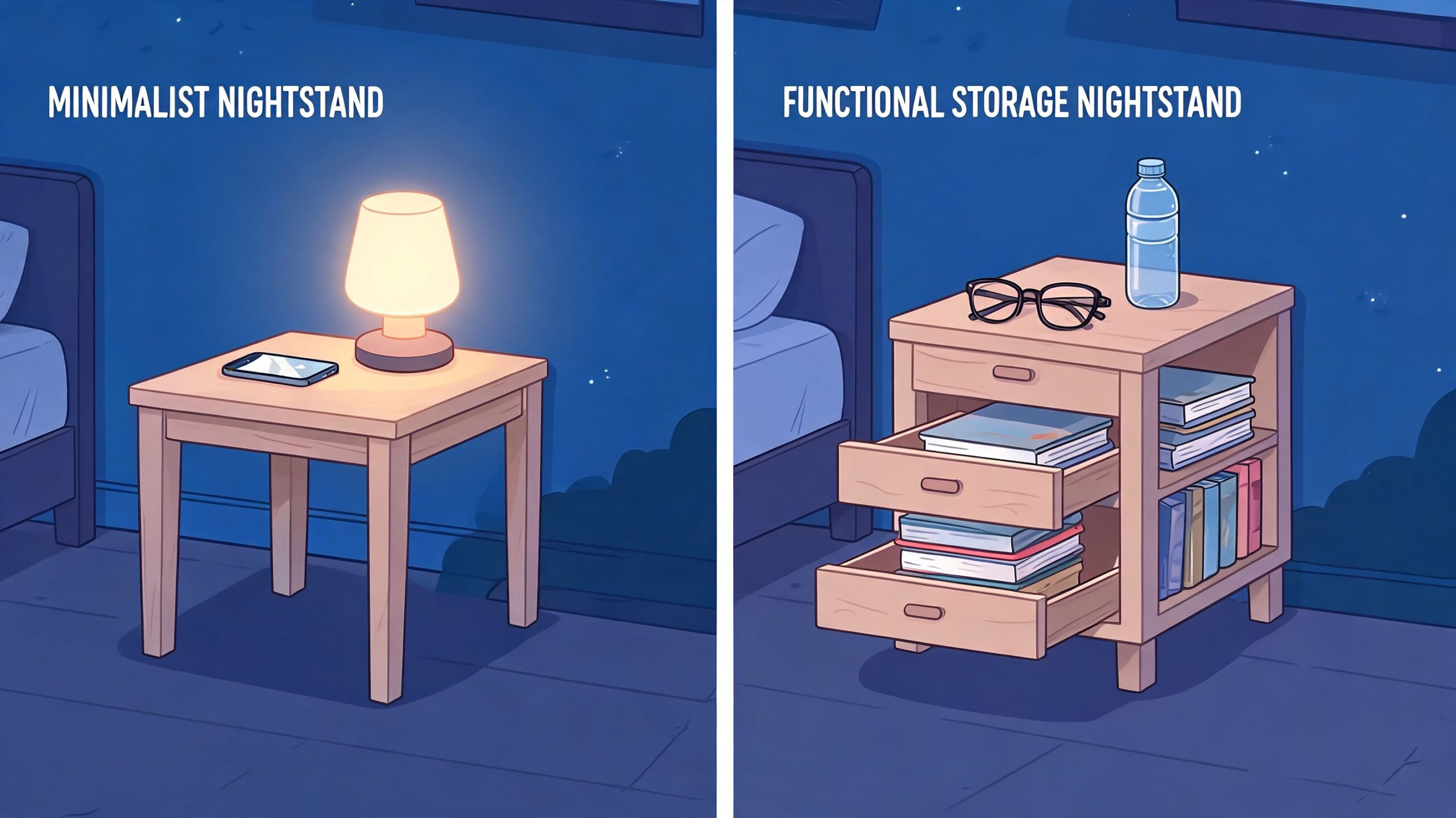
If you keep only a lamp, phone, and water glass nearby, an open table or one-shelf piece can work well. It looks lighter and keeps the room from feeling crowded.Everyday storage setup
If you need a place for chargers, glasses, medication, hand cream, remotes, or a notebook, at least one drawer makes life easier. This is the most versatile option for most households.Mixed-use setup
One drawer plus a lower shelf works well for people who want hidden storage up top and visible storage below for books or decor.Shared bedroom setup
Couples often need different functions on each side. One person may want drawer space. The other may prefer a more open piece. Matching isn’t mandatory if the scale and finish relate.
Smart features that actually help
Some features sound good in a product listing but don’t change the user experience much. Others are useful.
The most practical smart features are usually the simple ones:
Built-in charging access
Helpful when you don’t want cords trailing across the bed edge.Cord management
Often more valuable than flashy electronics because it keeps the top cleaner and the room neater.Touch lighting or easy-access switches
Useful for reading and for middle-of-the-night convenience.
The smartest feature in a nightstand is often the one that removes friction from your nightly routine, not the one with the longest feature list.
What doesn’t work as well? Very shallow decorative pieces for people who need real storage. Oversized deep cabinets in tight bedrooms. Tiny drawers that look nice but don’t fit the things you need. Function should lead here. Otherwise, the top becomes a drop zone and the room starts feeling messy fast.
The Stahl Advantage Find Your Perfect Nightstand Today
Online furniture shopping creates the same frustrations again and again. The finish looks warmer on the screen than it does in person. The drawer glide feels flimsier than expected. The scale is harder to judge than the product page makes it seem. By the time the piece arrives, you’re either relieved or planning a return.
Why in-person shopping still matters
A nightstand is a hands-on purchase. You want to open the drawer, check the finish, see the true color, and judge the scale next to other bedroom pieces. That’s difficult to do from a phone screen.
For shoppers in south-central Indiana, Stahl Home Center offers a practical alternative: an 88,000+ sq. ft. showroom, thousands of items In-Stock Today, and the ability to compare bedroom sets, mattresses, and accent pieces in one trip. That matters for people searching for a Furniture store Bloomington IN option where they can furnish more than one room at once, including bedroom sets, mattresses, and even immediate delivery furniture for larger home projects.
Who benefits most from this approach
Different shoppers solve different problems here.
New homeowners and relocators
They often need to make several decisions quickly. Seeing options in person makes it easier to furnish a whole home this weekend instead of waiting on scattered shipments.Quality seekers
They want to compare construction and finish levels across a good-better-best range. That’s especially relevant for buyers already familiar with La-Z-Boy Indiana quality and those shopping recliners in stock, power recliners, or lift chairs in other areas of the home.Style-driven buyers
Some want immediate solutions. Others want a specific look. For that group, Rowe Furniture and other custom lines can make sense because Design Your Way options open up hundreds of fabrics and configurations.
There’s also a simple service difference that matters. A local, family-owned business that’s served Bloomington since 1967 tends to approach the sale differently. Customers usually need clear guidance, not pressure. They want someone to help them judge fit, finish, and function, then let them choose with confidence.
How to Style Your Nightstand Like a Pro
Once the nightstand bedside table is in place, styling is what makes it feel intentional instead of merely useful. This is the finishing layer. It should look composed, but it still has to leave room for the things you use at night.
If you like simple decorating formulas, this coffee table styling guide translates surprisingly well to bedside surfaces too.
Four simple styling rules
Start with one anchor piece
Usually that’s the lamp. It gives the arrangement height and purpose. Choose that first, then build around it.Mix heights, not clutter
A taller lamp, a medium frame or vase, and one lower item creates shape. If everything is the same height, the top looks flat.Group in small numbers
Three items often look more natural than two or four. A lamp, a small plant, and a tray is a reliable combination.Contain the loose items
Chargers, rings, lip balm, and earbuds look messy when they spread out. A small tray keeps them together and makes the surface feel tidy.
Leave some breathing room. A nightstand that’s styled edge to edge stops functioning like a nightstand.
One more practical note. Don’t decorate away your habits. If you always keep a book and a water glass nearby, style around that reality. Bedrooms feel more finished when they reflect how people live in them.
Visit Stahl Home Center and see your options in person at the Westside Bloomington showroom. If you want a nightstand you can measure against your bed, touch before you buy, and often take home the same day, that’s the easiest next step.