Your Guide to Furniture for Apartments: Style & Space


Getting the keys to a new apartment feels great until the furniture questions start. Will the sofa fit through the hallway. Is the bedroom too tight for a queen. Do you buy something fast, or wait and hope it looks the way it did online.
That tension is common. A 2025 survey of 5,000 U.S. renters found that 68% prioritize immediate delivery or in-stock options when buying apartment furniture, yet only 12% find local stores adequately stocking apartment-sized pieces. People want furniture for apartments that fits, feels right, and doesn’t leave them sitting on the floor for weeks.
The good news is you don’t have to choose between speed and good decisions. With the right measurements, a few smart furniture categories, and a willingness to test comfort in person, you can furnish an apartment in a way that feels settled from day one.
Table of Contents
- Your New Apartment Deserves the Perfect Furniture Today
- Measure Twice Buy Once A Practical Layout Blueprint
- Choosing Smart Multifunctional and Apartment Sized Furniture
- The Sit Test Advantage Why Quality and Comfort Cannot Be Clicked
- Design Your Way Custom Furniture for a Perfect Fit
- Furnish Your Apartment This Weekend The Stahl Experience
Your New Apartment Deserves the Perfect Furniture Today
You get the keys on Friday, friends are coming by Sunday, and the old sofa suddenly looks too bulky for the new living room. That is how apartment furnishing usually starts. Not with a style crisis, but with a deadline.
Apartment furniture has to solve real problems fast. It needs to fit the room, clear the hallway, arrive on time, and hold up to daily use. If a piece looks good online but eats up the walkway or shows up three weeks late, it missed the job.
I tell shoppers to start with three questions before they fall in love with a fabric or finish:
- What do you need working right away: a bed, comfortable seating, a small dining setup, or a desk.
- What should do more than one job: storage, guest sleeping, pet-friendly durability, or flexible placement.
- What is worth waiting to customize: a special size, a sectional layout, or a specific fabric.
That order matters.
A lot of apartment buyers default to online shopping because it feels fast. In practice, waiting on backorders, guessing at scale, and dealing with hard returns can slow the whole move down. Walking a large local showroom gives you a different advantage. You can compare apartment-sized pieces side by side, check comfort in person, and often find in-stock options you can bring home this weekend.
Good planning also protects the budget. One wrong purchase in a small apartment costs more than the price tag. It can mean a return fee, a delivery delay, or living around furniture that never fit in the first place. If you need a refresher before shopping, this guide on how to measure furniture for your apartment will help you avoid the common mistakes.
The goal is simple. Buy for the room you have, the life you live, and the timeline you are on right now.
Measure Twice Buy Once A Practical Layout Blueprint
You get the keys on Friday, walk into the apartment, and realize the living room is smaller than it looked in the listing photos. That is the moment measurements stop feeling optional.
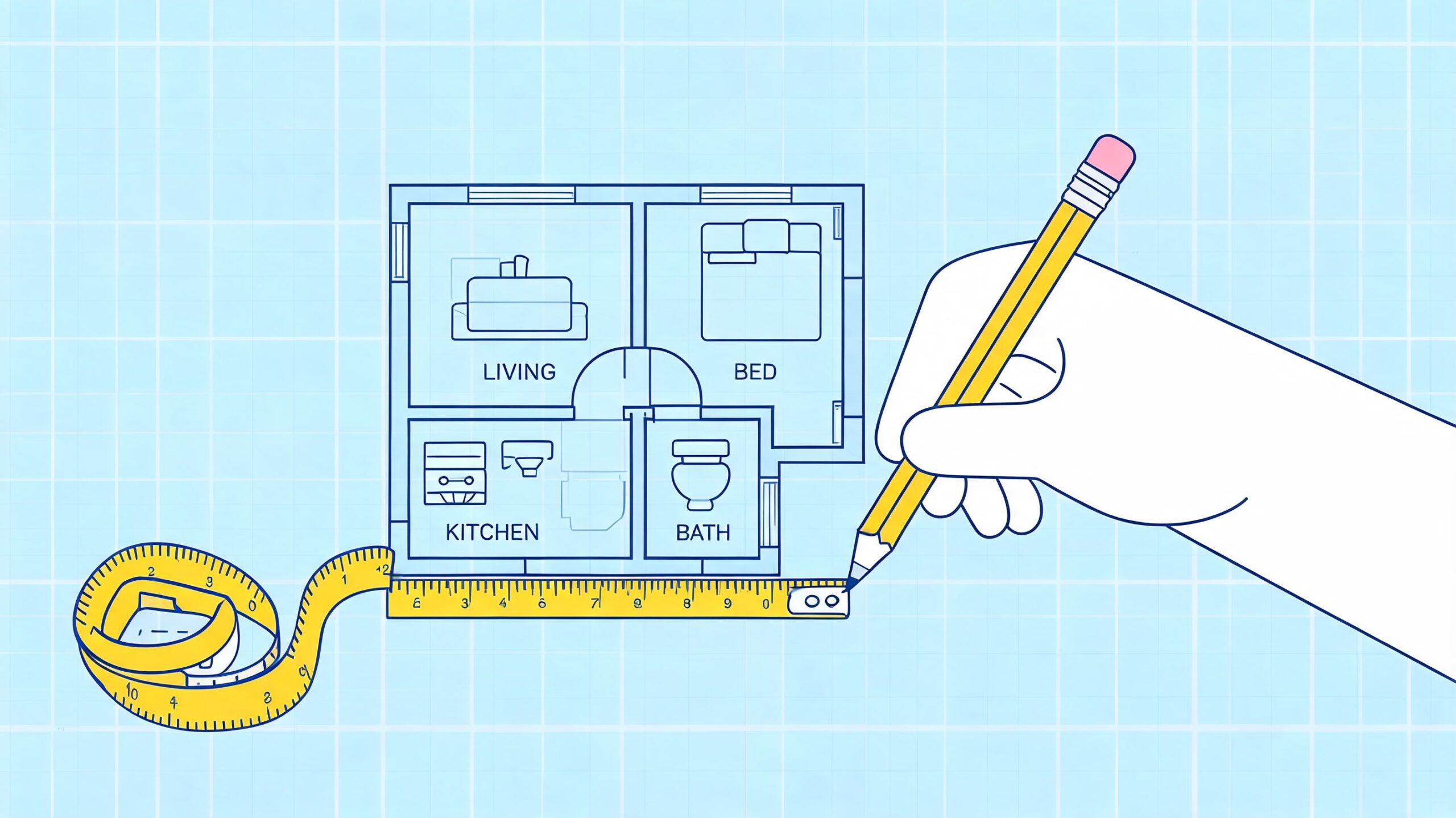
Good layout planning saves time, return fees, and the frustration of buying a sofa that fits the room but not the hallway. Before you shop, map the room you have and the path each piece has to travel. If you want a solid measuring checklist, keep this apartment furniture measuring guide handy while you sketch.
Start with usable space, not just room size
Wall-to-wall dimensions are only the starting point. In apartments, the actual layout is shaped by the things you cannot move. Radiators, baseboard heaters, window trim, vents, closet doors, and low sills all cut into usable space. A room may measure twelve feet wide, but the furniture-safe zone can be much tighter.
Measure and note these details:
- Usable floor area: the length and width you can furnish.
- Vertical clearances: ceiling height, window height, and sill height.
- Delivery path: front door, interior doors, stair turns, hall width, and elevator depth.
- Fixed obstacles: columns, bulkheads, thermostats, outlets, and door swing paths.
A simple pencil sketch works fine. Mark the doors, windows, outlets, and anything that sticks out from the wall. Then block in your main furniture pieces as rectangles so you can see the room before you buy.
Keep the room comfortably furnished
A reliable apartment layout leaves open space around the furniture. As noted earlier, many shoppers use a rough sixty-forty balance as a planning check. Around sixty percent of the room can be occupied by furniture, with the rest left open for walking, opening drawers, pulling out chairs, and handling daily routines.
That is not a strict formula. It is a quick way to catch a crowded plan before you spend money on it.
If your sketch only works when the sofa, table, and chairs are packed tightly together, the room is already telling you to scale down. In our showroom, apartment shoppers often do better with a slightly narrower sofa, a round dining table, or armless chairs that tuck in cleanly. A few inches back in the room often gives you far better flow every day.
Map movement before you fall for a piece
A pretty layout is not enough. The room has to work on a Monday morning when you are carrying laundry, getting ready for work, charging a laptop, and trying to open the closet without banging into a nightstand.
Use this order when planning:
- Place the largest piece first. Usually that is the bed or sofa.
- Protect the daily paths. Entry to kitchen, bed to closet, sofa to media unit, desk to outlet.
- Check real clearances. Leave enough room to recline, open drawers, make the bed, and pull out dining chairs.
- Define zones with placement. A rug, a slim console, or a desk behind the sofa can separate functions without eating up floor space.
This step matters even more if you want furniture in stock now. Shopping local only helps if the pieces fit the first time. A clear floor plan lets you walk a large showroom with purpose, compare sizes quickly, and bring home something this weekend that suits the apartment you live in.
Choosing Smart Multifunctional and Apartment Sized Furniture
Smart furniture for apartments usually falls into two camps. Pieces that do more than one job, and pieces that are scaled correctly for smaller rooms.
Both matter. Multifunction solves storage and flexibility. Apartment-sized construction solves proportion.
For shoppers comparing categories, this article on how to choose multi-functional furniture for modern homes gives a useful starting point.
What earns its footprint
In an apartment, every piece should justify the floor space it takes.
A lift-top coffee table works well when the living room doubles as a casual work zone. A storage ottoman helps if blankets, games, or pet supplies tend to drift around the room. Nesting tables are useful when you want occasional surface area without permanently sacrificing walking room.
Sleeper sofas can be helpful, but they aren’t automatically the best answer. If guests are rare, a compact sofa with a cleaner silhouette may serve you better every day. If guests stay often, then the extra function earns the deeper frame and heavier build.
A few categories consistently work well:
- Storage ottomans: useful in living rooms that need hidden storage.
- Lift-top coffee tables: practical for eating or laptop use.
- Nesting end tables: easy to spread out when needed and tuck away later.
- Beds with storage: strong choice when closet space is limited.
- Small dining sets with flexible chairs: better than oversized tables that become clutter magnets.
Why apartment sized seating works
Apartment-sized sofas aren’t just standard sofas with a marketing label. They typically measure 70 to 80 inches wide compared with 85 to 95 inches for standard sofas, and that reduced length can free up 10% to 15% more open floor space.
That difference is substantial in a compact living room. A shorter sofa can preserve better circulation, keep sightlines open, and leave space for a side table or accent chair instead of swallowing the whole wall.
This is one of the best examples of what works versus what doesn’t:
- A full-size sofa may look impressive in the showroom but dominate a one-bedroom apartment.
- An apartment-sized sofa often feels more balanced because it supports the room instead of competing with it.
A smaller footprint doesn’t have to mean less comfort. Good apartment-scale seating keeps the seat depth and support where your body feels it most.
Apartment-Friendly Furniture Solutions
| Furniture Type | Primary Function | Best For |
|---|---|---|
| Apartment-sized sofa | Seating with reduced width | Small living rooms, studios, narrow walls |
| Storage ottoman | Seating, surface, hidden storage | Living rooms with limited closets |
| Lift-top coffee table | Table and work surface | Remote workers, casual dining |
| Sleeper sofa | Seating and guest sleeping | Frequent overnight guests |
| Nesting tables | Flexible surface area | Tight seating groups |
| Bed with storage drawers | Sleeping and concealed storage | Bedrooms with minimal dresser space |
| Compact dining set | Dining without visual bulk | Eat-in apartments, multipurpose rooms |
One caution. Don’t buy multifunctional furniture just because it sounds efficient. If the extra feature is awkward to use, hard to access, or adds too much visual bulk, it won’t improve daily life. The best apartment pieces feel simple in use and proportional in the room.
The Sit Test Advantage Why Quality and Comfort Cannot Be Clicked

Online shopping works well for lamps, baskets, and accessories. It’s much less reliable for the pieces your body uses every day. Sofas, recliners, dining chairs, mattresses, and bed frames need an in-person check.
That’s where the sit test matters. You learn quickly whether the seat is too deep, the back support hits the right place, the arms are comfortable, and the cushion feel matches how you relax.
If you want a smart checklist for comparing listings before you shop in person, this guide on how to read furniture product descriptions and buy with confidence is useful.
Comfort is personal and specs only go so far
A product page can tell you dimensions. It can’t tell you whether the cushion feels springy or stable. It can’t show how a fabric feels against your skin in everyday use. It can’t tell you if the recline motion suits the way you watch TV, read, or nap.
This is especially true with La-Z-Boy Indiana shoppers looking at recliners in stock, power recliners, or lift chairs. The mechanism, seat height, arm shape, and head support all need a real test.
Color is another trap online. Screen settings change undertones. A gray that looks soft and warm on a phone can read much cooler in an apartment with north light. The same problem shows up with wood tones in bedroom sets and dining tables.
Seeing scale in person prevents expensive mistakes
Bedroom buying is where scale mistakes get painful fast. In apartment bedrooms, maintaining at least 24 inches of walk-around clearance is important for safety and comfort, and physically seeing how a full bed versus a queen fits in a 10×10 room helps avoid bottlenecks.
That’s why floor models matter. You can stand beside a full bed and a queen. You can judge whether the extra width is worth the tighter path. You can compare bed height, headboard bulk, and how much visual weight the frame adds.
If you’re torn between two sizes, test the one you think you want and the one slightly smaller. In apartments, the better choice is often the one that makes the room easier to live in.
Use a good better best mindset
Quality doesn’t require buying the most elaborate piece on the floor. A better method is to shop with a Good-Better-Best mindset.
- Good: dependable, straightforward pieces for a value-focused setup.
- Better: stronger materials, improved comfort details, or more durable upholstery.
- Best: long-term comfort, upgraded tailoring, advanced motion options, or custom design potential.
That framework works especially well when furnishing a whole apartment at once. You might choose a better sofa because it gets daily use, then go with a good dining set and a value-conscious nightstand. That’s a far smarter mix than overspending in one room and cutting corners where comfort matters most.
Design Your Way Custom Furniture for a Perfect Fit
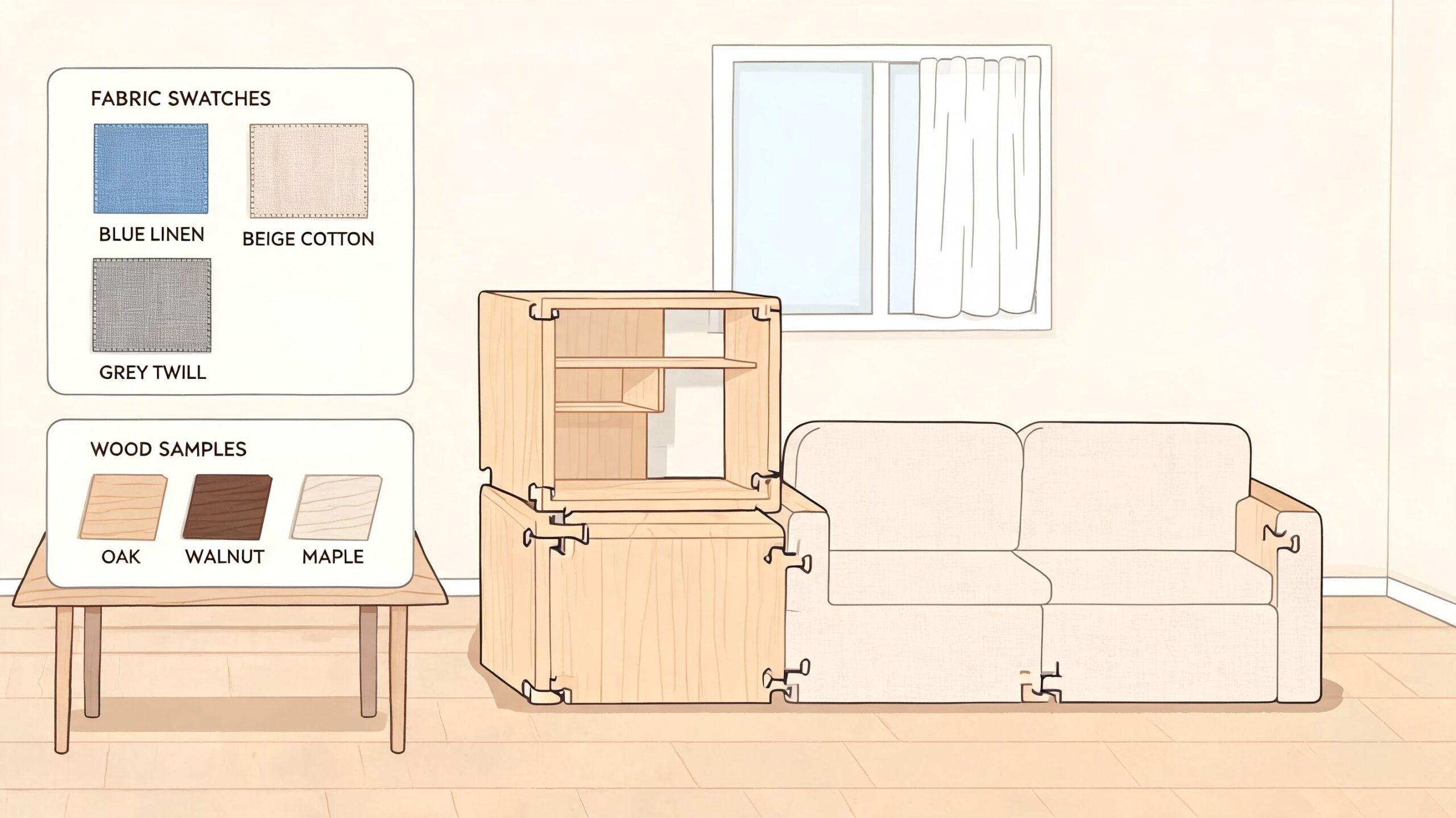
Stock furniture solves speed. Custom furniture solves precision. If your apartment has an awkward wall, a narrow living room, pets, children, or a very specific color palette, custom options can be the difference between “good enough” and exactly right.
For a straightforward look at the process, this guide to custom furniture made simple helps demystify fabric, configuration, and finish choices.
Custom solves problems stock pieces sometimes cannot
Some rooms need a left-facing sectional, not a right-facing one. Some need a sofa in a tighter width but with a more structured arm. Some need a cleaner back profile because the piece floats in the room and is visible from every angle.
That’s where custom sofas and configurable seating become useful. Brands such as Rowe Furniture are often strong choices for people who care about silhouette, fabric personality, and a more designed look. La-Z-Boy can also appeal to shoppers who want comfort features with more control over finish and upholstery.
Custom is also practical, not just decorative. In apartment living, small design decisions have outsized impact. A lower arm can make a room feel less crowded. A performance fabric can make everyday maintenance easier. A sectional configuration can improve movement instead of cutting it off.
Performance fabric matters more in apartments
Apartment households often put a lot of life into one main room. The sofa may handle movie nights, pets, snacks, guests, and work-from-home hours in the same week. That’s why fabric performance matters.
Recent data shows a 15% year-over-year increase in multi-generational apartment households, and only 8% of small-space furniture guides address the availability of custom fabric options that can resist stains, pets, and high traffic. That gap is easy to recognize in real shopping. Plenty of guides talk about size. Far fewer talk about how the fabric will hold up when real people live on it.
Look closely at these trade-offs:
- Soft textured weaves: beautiful and inviting, but they may need more care depending on household habits.
- Performance fabrics: better choice for pets, kids, shared living, and frequent entertaining.
- Light colors: airy and spacious looking, though they demand more discipline unless the fabric is designed for easier cleanup.
- Dark or patterned fabrics: often more forgiving in busy apartments.
Custom works best when you solve a real problem. Start with layout, durability, and comfort. Then choose the color and texture that finishes the room.
For style-focused shoppers, custom also avoids the sameness that can creep into apartment interiors. A thoughtful fabric choice, a cleaner frame, or a better sectional layout can make the room feel collected rather than temporary.
Furnish Your Apartment This Weekend The Stahl Experience
Apartment furnishing gets easier when one shopping trip can answer the major questions. Does it fit. Is it comfortable. Is it in stock. Can I compare quality levels side by side. Can I see real colors instead of guessing from a screen.
That’s the advantage of shopping in a store built for real decision-making instead of endless scrolling. For anyone setting up a home quickly, this guide on how to shop for furniture smartly an ultimate guide pairs well with an in-person visit.
What a better apartment furniture trip looks like
The strongest local experience combines scale with service. You want enough inventory to compare styles, sizes, and comfort levels in one place. You also want people who understand that apartment buying is practical buying. There’s no point in selling a beautiful piece that won’t clear the hallway or overwhelms the room.
That’s where Stahl Home Center stands out. The 88,000+ sq. ft. showroom gives shoppers room to compare living room furniture Bloomington shoppers use, from recliners in stock and power recliners to bedroom sets, mattresses, and apartment-friendly seating. As Indiana’s Largest La-Z-Boy Dealer, the store offers unusual depth for anyone searching for La-Z-Boy Indiana options with genuine variety.
The biggest advantage is speed. Thousands of items are In-Stock Today, which means you can furnish key rooms without falling into the usual wait cycle. If you’re a relocator, a new homeowner, or setting up a rental property, that no-wait factor changes the whole process.
Who benefits most from shopping this way
Some shoppers need a single sofa. Others need to furnish a whole apartment in one weekend. A large local showroom with both stock and customization serves both kinds of buyers well.
This approach especially helps:
- New homeowners and relocators: they can handle living room, bedroom, and mattress decisions in one trip.
- Quality seekers: they can compare Good-Better-Best options instead of guessing from product photos.
- Style-focused decorators: they can shop stock pieces now and still explore Design Your Way custom orders through Rowe Furniture and La-Z-Boy.
- Shared households and pet owners: they can look closely at performance fabrics and durable construction.
- Right-sizers: they can find apartment-scale seating, lift chairs, and supportive comfort without sacrificing proportion.
A strong Furniture store Bloomington IN should make apartment furnishing feel clearer, not harder. It should let you test, compare, decide, and move forward with confidence.
Visit Stahl Home Center at the Westside Bloomington showroom to see the 88,000+ sq. ft. selection in person. If you want living room furniture Bloomington shoppers can take home quickly, recliners in stock, bedroom sets, mattresses, custom sofas, or expert help comparing La-Z-Boy Indiana and Rowe Furniture, this is the kind of local store that makes furnishing your apartment feel simple. Stop in today, do the sit-test for yourself, and find the right fit without the long wait.