

What Is a Chaise Sectional: A Practical Buyer’s Guide


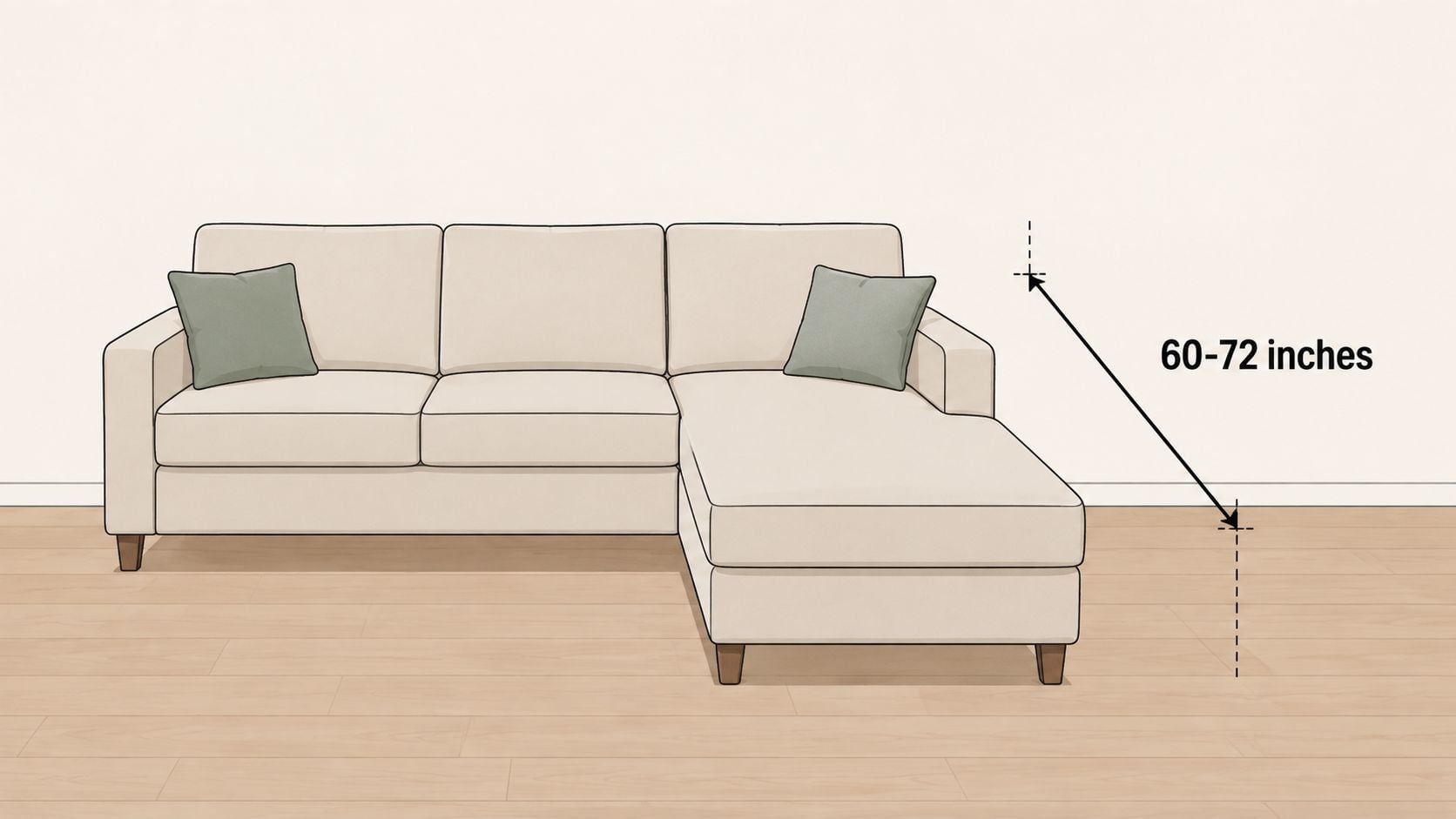
A chaise sectional is a sectional sofa with an extended lounge seat on one side, typically projecting 60 to 72 inches so one person can stretch out without a separate footrest. That extended seat is the feature that separates it from a standard sectional, creating a built-in lounging position rather than stopping at a conventional sofa arm.
A shopper usually starts looking after realizing the living room needs to do several jobs at once. It needs upright seating for conversation, a comfortable place for television, room for family members to spread out, and enough structure to keep the space from feeling improvised. A chaise sectional can solve those problems, but only when its footprint, orientation, and construction match the room.
The right purchase starts with room planning, not fabric color. A showroom advisor should help the shopper determine where the chaise points, how people walk around it, whether the lounge depth is usable, and whether the piece should be In-Stock Today or built through a custom program. The following guide breaks down those decisions, including alternatives, dimensions, upholstery, care, and the practical difference between choosing a floor model and ordering a custom configuration.
What a Chaise Sectional Actually Is
You are choosing more than a sofa when you bring home a chaise sectional. You are assigning one side of the room to full-leg lounging, so the first question is whether that footprint works with the doorway, walkway, and other furniture.
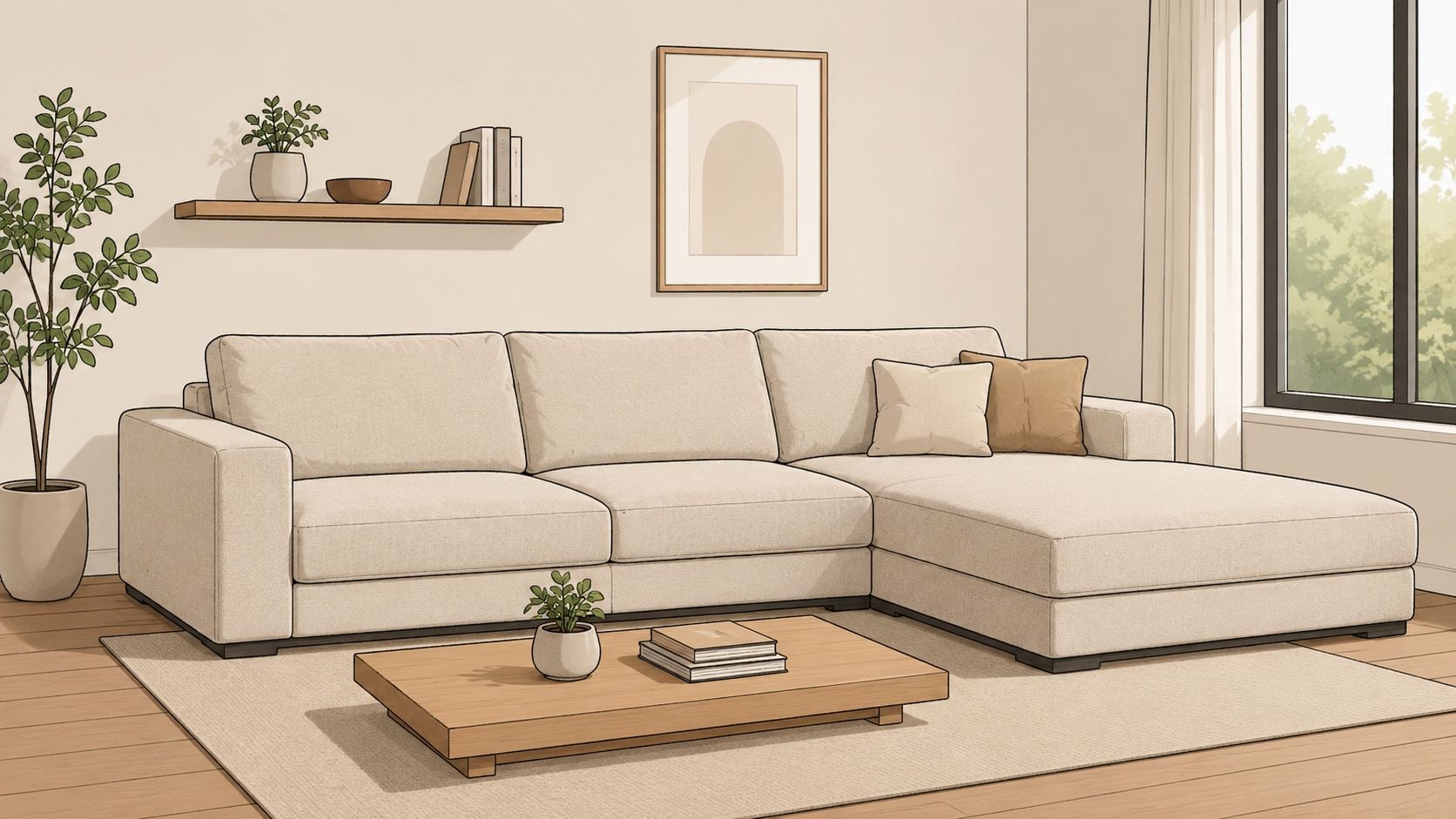
A chaise sectional is a multi-seat sofa with an extended seat platform attached to one end. That extension lets one person sit sideways or recline with the legs supported, without pulling an ottoman into position. L-shaped designs are common, while curved, U-shaped, compact, and modular versions are also available.
The chaise is the defining feature. A regular sofa provides seated places but no dedicated full-leg lounge position. A standard sectional may add seats or a return, while a chaise sectional combines everyday seating with a built-in one-person recline zone.
The feature that changes the room
Buying guidance commonly places the chaise extension at 60 to 72 inches long, with the sectional seating area measuring roughly 36 to 40 inches deep. Depending on its frame, arms, cushions, and back construction, the chaise can reach approximately 68 to 72 inches in total depth. Use those measurements to separate a true chaise sectional from a sofa with a merely deep seat. (Chaise sectional dimensions and planning guidance)
Raw projection does not tell you how comfortable the lounge zone will be. Thick arms, angled ends, and bulky back cushions can reduce usable reclining space. Stretch out on the showroom floor model before judging the chaise by its listed depth. If the position feels cramped, choose another in-stock piece or specify a different build through Design Your Way. (Usable chaise depth and circulation guidance)
Practical rule: A chaise sectional earns its footprint only when it replaces separate lounging furniture and keeps the main walkway open.
Fixed chaise cushions maintain a unified appearance and keep the lounge area ready. Movable ottomans, reversible cushions, and modular connections provide more flexibility when the room may change. That choice affects whether an In-Stock Today model suits the room now or a custom configuration makes more sense.
Readers, television watchers, nappers, and households wanting an occasional overnight lounging surface can all benefit from a chaise. The extended side also takes more floor space than a conventional sofa arm, which can complicate cleaning, rearranging, and relocating.
For broader purchase planning, review this sectional buying guide before visiting the showroom. Measure the room, mark the open traffic path, and confirm which side can accept the chaise before choosing upholstery or placing a custom order.
Chaise Configurations Worth Knowing
Configuration determines more than appearance. It controls which wall receives the long sofa run, where the chaise projects, and whether people can move naturally between an entry, kitchen, patio door, and television.
Fixed left and right chaises
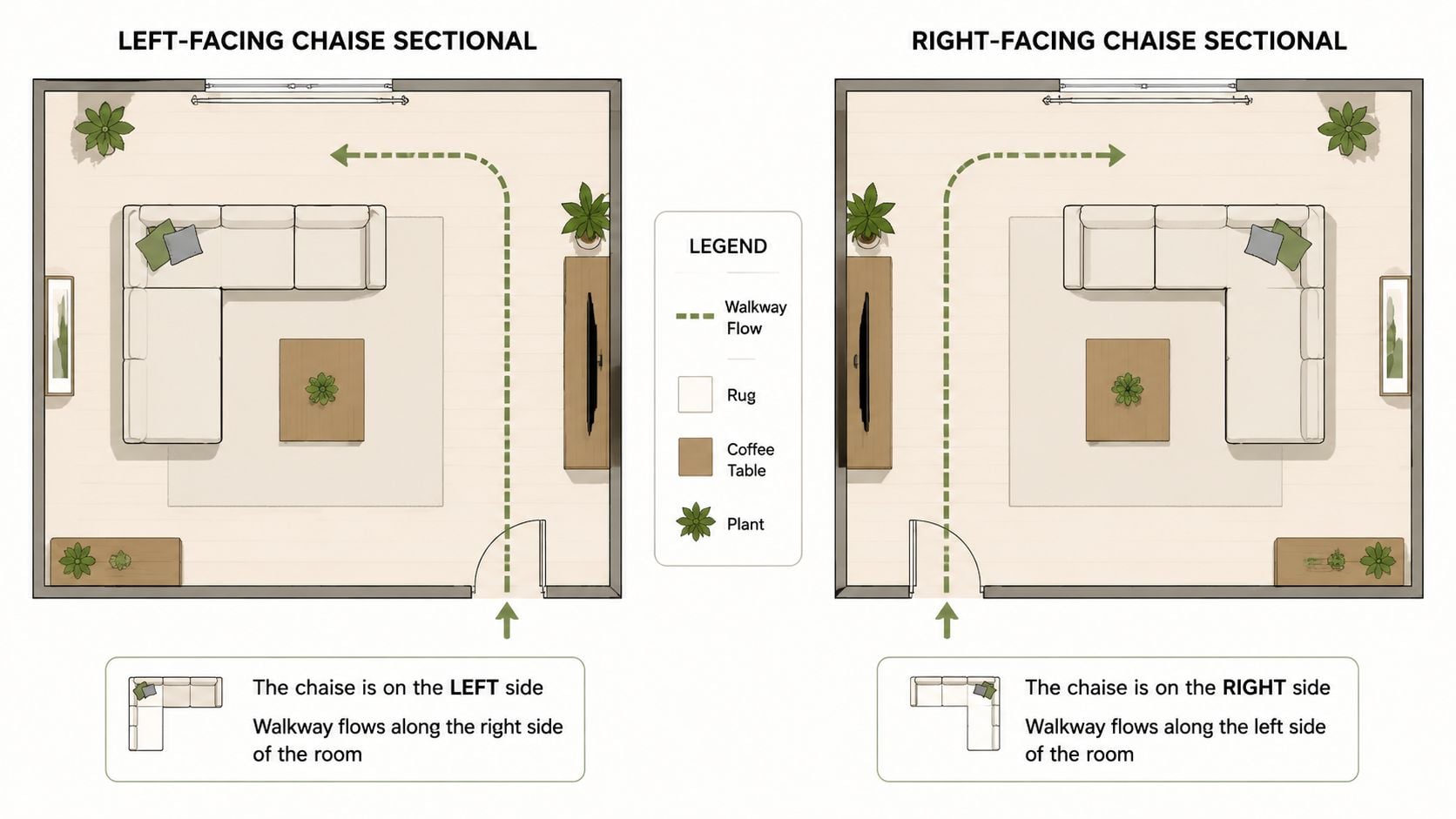
“Left chaise” and “right chaise” are named from the viewer's position while standing in front of the sofa and facing it. A right-facing chaise therefore extends toward the viewer's right, not necessarily the right side of the room as seen from the doorway. (How right- and left-facing chaise labels work)
Choose the side that protects circulation. If the room's main walkway runs along the right side of the seating area, a right-facing chaise may create an obstruction, even if the room looks visually balanced that way. The nearest wall, window, door, and open route should make the decision, not a casual glance at the floor plan.
Reversible and modular arrangements
A reversible chaise can switch sides by repositioning cushions or an ottoman base. That flexibility helps renters, relocators, and households that expect to change the room later. It also reduces the risk of buying a piece that works only in one permanent arrangement. (Reversible chaise planning guidance)
A modular chaise sectional uses separate pieces that can be rearranged, expanded, or transported independently. Modular construction can make delivery access easier, but connectors and seams deserve close inspection. Separate components should align securely, and each piece needs to fit through the home's doors, hallways, stairs, or elevator.
Match the shape to the room
An L-shaped chaise sectional is the practical starting point for most living rooms. U-shaped layouts increase seating but demand more open space, while curved designs soften the visual effect and often require more careful placement. Compact two-piece models can suit smaller spaces, while larger modular groupings belong in open layouts with room for circulation.
A showroom test should include every seat. Sit upright on the sofa portion, stretch out on the chaise, check the arm height, and notice whether the back cushion pushes the body forward. Shoppers considering custom layouts can review custom sectional sofa options with room measurements and photographs in hand.
Before ordering, record the assembled footprint and the dimensions of each separate piece. A configuration that fits on paper can still fail at delivery if the largest section can't turn through a hallway.
Chaise Sectional vs Sofa, Recliner, and Ottoman
Choose a chaise sectional when the room needs shared seating plus a permanent place to stretch out. It creates a strong anchor and keeps the footrest attached, but that convenience consumes floor space and fixes the room's orientation. As noted earlier, the chaise projection typically measures 60 to 72 inches, so treat the extension as part of the room plan, not an accessory.
A standard sofa is easier to place, move, and pair with chairs for conversation. It gives up the built-in full-leg lounge zone. A recliner offers one person adjustable leg support and back movement, but it takes a separate chair position and creates a more individual seating experience.
A sofa with a separate ottoman gives the room more control. Move the ottoman as a footrest, occasional seat, or surface for a tray. The built-in chaise looks more unified and stays ready without repositioning, while its fixed extension can make cleaning underneath and future furniture changes harder.
| Option | Best For | Main Trade-Off |
|---|---|---|
| Chaise sectional | Movie nights, reading, naps, and households wanting a permanent lounge zone | Uses more floor space and fixes the room's orientation |
| Standard sofa | Smaller rooms, conversation areas, and flexible furniture groupings | Doesn't provide a dedicated full-leg lounge position |
| Recliner | Individual back and leg adjustment | Requires a separate chair footprint |
| Sectional with ottoman | Frequent rearranging, occasional lounging, and flexible layouts | The footrest must be moved and stored within the room |
Where the chaise wins
Recommend the chaise when one person regularly reclines while others remain seated. It also suits households with limited accessory storage because the lounging surface is part of the main piece. Families watching television can spread across the sofa and chaise without adding another chair.
A chaise works best when the showroom model already matches the room's orientation and footprint. Take it home today only after confirming that the extension leaves the intended walking path open. If the room may change, custom-order through Design Your Way instead of committing to a fixed side that could limit future arrangements.
Where the ottoman wins
Choose an ottoman when the room is small, furniture moves often, or guests need a more face-to-face arrangement. It keeps the center of the room adjustable and can preserve a clearer path. A large square ottoman provides a useful comparison for shoppers who want lounge comfort without a fixed extension.
Test both options in the Bloomington showroom. Sit at the actual seat depth, check chaise width and arm height, and judge the full projection. Base the decision on how the room must function today, then custom-order only when the showroom floor cannot provide the right orientation or configuration.
Dimensions and Room Planning Basics
A chaise sectional can look manageable on the showroom floor and still block a doorway at home. Treat the purchase as a room-planning decision first. Measure the full footprint, the traffic route, and the delivery path before choosing a fabric or finish.
As covered in the earlier dimension guide, chaise projections typically measure 60 to 72 inches. What matters here is how that projection fits your clearance needs. Add the sofa's wall length, the side return, the chaise extension, and the open space required for people to move around the end.
Typical sectional footprints run about 95 to 130 inches wide. Seat height near 17 to 19 inches suits standard sitting, while seat depth determines the posture. A 20 to 22 inch depth feels more upright. 24 to 26 inches supports a deeper lounge position. Use this sectional footprint and ergonomic sizing guidance when comparing showroom models.
Clearances that protect daily movement
Keep one clear traffic lane beside the open end. Plan roughly 30 to 36 inches where people regularly pass, and preserve enough additional room for doors to swing without striking the chaise or arm. The goal is one usable movement zone, not separate clearance measurements that compete with each other.
Check the television position as well. Leave approximately 18 inches between it and the sectional, based on the supplied planning benchmark. Measure beyond the walls. Baseboards, trim, registers, architectural bumps, and the true arc of the door swing can reduce usable space.
A quick room-sizing check
A room around 10 by 12 feet can accommodate a compact two-piece chaise sectional when the door and walkway are favorably positioned. A mid-size family room can support a three-piece L-shaped design, while an open layout may suit a deeper four-piece modular arrangement. These are starting points, not guarantees. Windows, doors, and circulation determine the space you can use.
Before purchase: Mark the full footprint with painter's tape. Walk from every entrance to every destination. If the taped chaise forces a detour, the finished sectional will do the same.
Use this furniture measuring guide before scheduling pickup or professional delivery. Measure stairways, halls, turns, and door openings, not just the living room. If a showroom model fits both the room and access route, taking it home today makes sense. If the orientation or footprint fails, custom-order through Design Your Way rather than forcing the wrong configuration.
Choosing Fabrics, Frames, and Features
Once the footprint works, construction determines whether the chaise still feels right after months of use. The showroom feel matters, but shoppers should also ask what supports that feel: upholstery, frame, cushion package, and mechanisms all change the ownership experience.
Start with the household routine
Everyday woven upholstery can suit a calmer household, while performance options such as iClean and pet-friendly covers make more sense where spills, claws, or frequent use are part of daily life. A tight-weave microfiber may be the more sensible choice than a fashionable boucle when the sectional will face heavy family traffic. Fabric should match behavior, not just the room's color palette.
For a deeper look at upholstery choices, this guide to sofa support and construction tips helps shoppers focus on the structure behind the surface. A manufacturer-backed warranty also deserves attention because it clarifies what the frame, mechanisms, and upholstery are expected to withstand.
Compare the feel before choosing the fill
High-resilience foam provides firmer support and a more upright seat. Wrapped foam offers a middle ground, while a down blend creates a softer, sink-in experience that suits long lounging. The chaise commonly uses a longer cushion than the sofa portion, so the same sectional may feel different from one end to the other.
| Feature | Standard | Performance | Custom |
|---|---|---|---|
| Fabric | Everyday upholstery for ordinary use | Resilient covers for pets, children, and spills | Broad fabric choice matched to the room and routine |
| Cushion | Familiar support and standard comfort | Materials selected for frequent use | Fill chosen for firmness or sink-in lounging |
| Frame | Core structural construction | Construction suited to demanding use | Configuration and finish selected around the household |
| Layout | Fixed showroom configuration | Practical power or sleeper features | Tailored sectional shape, fabric, and features |
Add only features that earn their space
Power recliners can suit movie-focused rooms, while console storage helps households that need a place for remotes and drinks. A sleeper mechanism makes sense when overnight guests are common. A reversible chaise earns consideration when a move or future floor-plan change is likely.
La-Z-Boy offers durable comfort and reclining expertise, while Rowe Furniture supports custom style and performance-focused upholstery choices. Shoppers can also compare fabric, leather, power, sleeper, and modular configurations according to the home's actual needs. The best configuration isn't the one with the longest feature list. It's the one that supports the routine without adding mechanisms nobody will use.
For a household with children and pets, performance fabric and resilient cushion support should take priority over a delicate finish. For a style-focused decorator, Design Your Way can provide access to hundreds of fabrics and configurations when a floor model doesn't deliver the desired proportion or color.
Placement, Styling, and Everyday Care
A chaise sectional should look intentional from the room's entrance, not merely pushed against the first available wall. The longest sofa run usually belongs along the main wall, while the chaise should point toward a low-conflict area. In an awkward layout, a reversible chaise can float or angle more effectively than a fixed configuration.
Keep the path between the entry, television, kitchen, and patio doors open. Side tables should sit within arm's reach of both the standard sofa seats and the chaise seat, because a lounge position without a convenient surface quickly becomes impractical.
Make the large form feel balanced
A console table behind the sectional can add structure when the sofa floats away from the wall. A console approximately 12 to 18 inches deep can create a useful visual layer without overwhelming the walking route. Styling should remain functional:
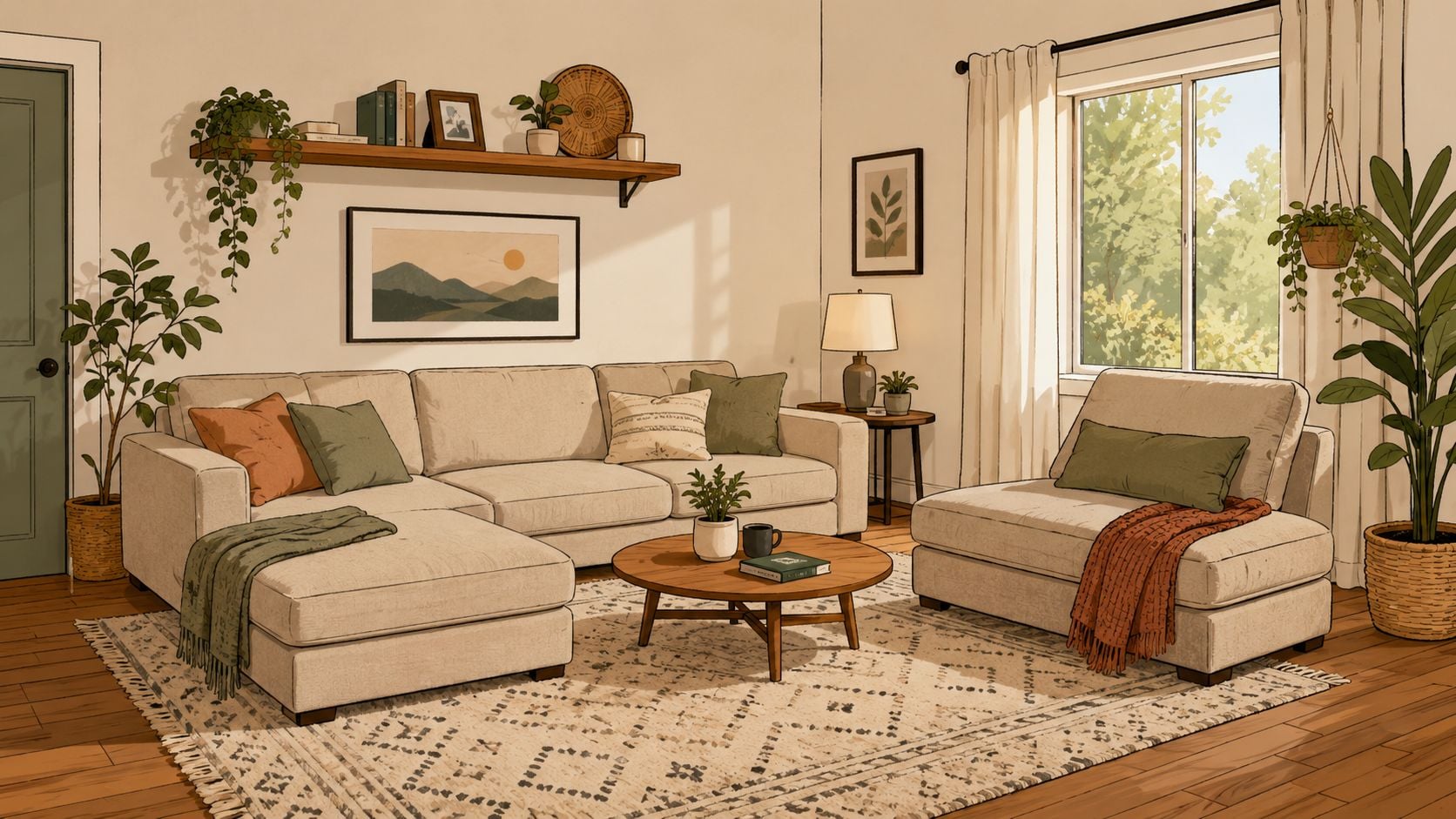
- Pillows: Use two contrasting toss pillows per seat, then add one lumbar pillow on the chaise.
- Throw placement: Layer a soft throw where feet naturally land instead of draping it across every cushion.
- Table access: Keep drinks, books, and remotes reachable from both seating zones.
- Visual height: Use lighting, art, or shelving to draw attention above the sectional's broad silhouette.
A reader looking for restrained, practical room updates can also browse this budget interior design guide for ways to balance a substantial sofa with smaller decorative changes.
Keep the chaise ready for real life
Vacuum upholstery weekly with an upholstery tool, and blot spills instead of rubbing them into the fibers. Rotate reversible chaise cushions monthly when the design allows it, and check legs and brackets at the six-month mark. Follow the fabric-care instructions and warranty terms selected at purchase, because aggressive cleaning can create problems even on durable upholstery.
The chaise should remain a usable lounge zone, not become a permanent storage shelf. Regular care protects the comfort, appearance, and support that justified choosing a sectional in the first place.
Finding the Right Chaise Sectional in Bloomington
A Bloomington shopper should sit on the actual furniture before deciding. Stahl Home Center keeps La-Z-Boy and Benchmark chaise sectionals on the showroom floor, allowing shoppers to test seat depth, chaise support, reclining options, and cushion feel rather than guessing from an online photograph.
The store operates an 88,000+ square foot showroom in Bloomington, a scale that supports broad room-by-room selection. Stahl is also Indiana's Largest La-Z-Boy Dealer, with Rowe Furniture available for custom style and performance. Thousands of items are in stock and ready to take home today, including living room furniture, bedroom sets, mattresses, recliners in stock, power recliners, and lift chairs.
Choose speed or customization
The showroom floor suits a homeowner who needs to furnish a whole home this weekend, replace a sofa quickly, or avoid an extended wait. A floor model can be taken home by customer pickup today or arranged through scheduled professional delivery, subject to the selected piece and service plan.
A shopper with a specific vision can use Design Your Way to custom order from hundreds of fabrics and configurations. That route makes sense for a style-focused decorator who needs a particular chaise orientation, performance fabric, cushion feel, or sectional shape and isn't in a rush.
Bring practical information to the appointment:
- Room measurements: Include wall lengths, ceiling details, door swings, and access routes.
- Room photos: Show windows, vents, outlets, and the walking path.
- Comfort priorities: Identify preferred firmness, seat depth, power features, and lounging habits.
- Household demands: Mention pets, children, overnight guests, and expected daily use.
For delivery planning, shoppers can use a general furniture removal service checklist as a reminder to clear paths, protect floors, and measure access points before arrival. Stahl's in-house financing, delivery, and setup support can keep the move from showroom selection to living room placement straightforward.
Stahl Home Center combines an 88,000+ square foot showroom, thousands of pieces ready to take home today, and custom ordering through Design Your Way for shoppers who want a specific chaise sectional. Visit the Westside Bloomington showroom to take the sit-test, compare La-Z-Boy and Rowe Furniture, and see whether an in-stock model or custom configuration fits the room. Visit Stahl Home Center to start planning your chaise sectional in person.